Understanding the Two Integrations
 Facebook
 Twitter
 Linkedin
 Google +
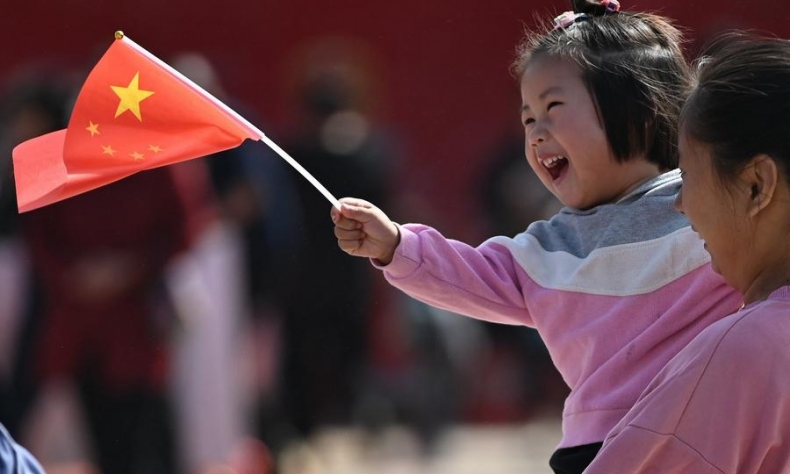
The two integrations concept shapes how the Party understands its own historical and cultural legitimacy, and it directly informs policy decisions across education, cultural affairs, economic restructuring and international communication.
One of the most important concepts in Chinese Marxism that has been introduced since Xi Jinping became top leader of the Communist Party of China (CPC) in 2012 is liangge jiehe, commonly translated the “two integrations.” These two integrations are: integrating the basic tenets of Marxism with China’s specific realities and integrating the basic tenets of Marxism with China’s fine traditional culture.
While integrating Marxism with China’s national conditions has been one of the Party’s core objectives since its founding in 1921, the objective of integrating Marxism with traditional Chinese culture was not introduced until 100 years later, when Xi unveiled it in a 2021 speech marking the centenary of the Party. At the following year’s CPC National Congress, the concept of the “two integrations” was written into the Party Constitution and now also features prominently within the framework of Xi Jinping Thought on Socialism with Chinese Characteristics for a New Era.
The first integration
The first integration—between Marxism and China’s specific realities—was forged and strengthened in response to devastating setbacks, particularly the Kuomintang party’s escalating attacks in the late 1920s. In the early years of the CPC, Chinese Marxism generally hewed to Soviet-guided theory and classical Marxist texts, even as figures like Li Dazhao and Mao Zedong were already developing new, more locally grounded directions. This orientation changed dramatically in the 1930s. A major turning point came at the Zunyi Conference in 1935, held during the Long March—the CPC’s strategic retreat from its base areas in Jiangxi and other provinces to a new revolutionary base area in Shaanxi Province. There, Mao consolidated his leadership, and the stage was set for major theoretical breakthroughs, especially the “two classics” of 1937: On Practice and On Contradiction. These works are now widely recognized as being some of the most significant, perhaps unparalleled, innovations in Marxist dialectics. Thereafter, Chinese Marxism emerged as a distinct yet authentic Marxism, one specifically suited to China’s conditions.
The second integration as innovation
On the one hand, the second integration is the newer and perhaps more theoretically interesting element. On the other hand, what it accomplishes is an explicit articulation of what was already always true in Chinese Marxism.
For example, when Mao was rethinking Marxist dialectics in 1937, he did so under the influence of the Chinese concept of yin and yang. When Chinese leader Deng Xiaoping established the goal of achieving a xiaokang or moderately prosperous society in the late 1970s, he was influenced by Confucian wisdom found in the Book of Rites. The Theory of Three Represents, introduced by then President Jiang Zemin in 2000 to define the role of the CPC in society, acknowledges the need to preserve and promote advanced elements of Chinese culture. When Xi’s predecessor Hu Jintao promoted the value of harmony, he emphasized one of the most important “concrete universals” found in Chinese political philosophy, articulated in the earliest writings in Chinese history, during the Shang Dynasty more than 3,000 years ago.
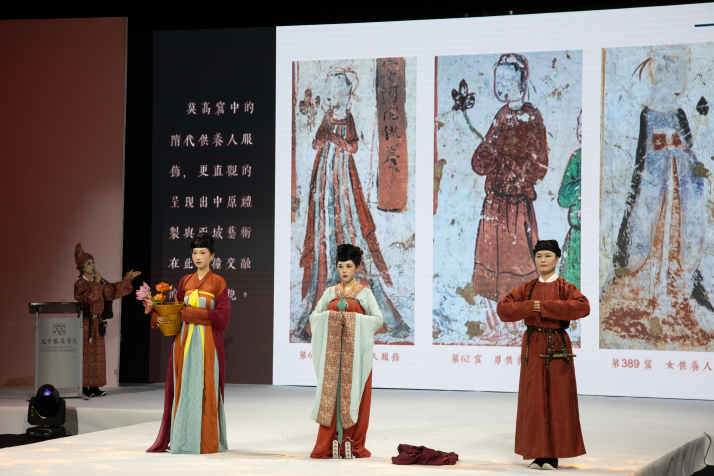
When Xi formally integrated Chinese Marxism with the first principle of Daoism (Taoism)—harmony between humanity and nature—we see again the influence of Chinese wisdom that long-predated Karl Marx and the development of Marxism, providing not only valuable insights that have been useful for strengthening Marxism and making it more Chinese, but also demonstrating how millennia of Chinese civilizational experience in many respects prefigure many of the core values of Marxism.
Why then is the second integration an innovation? It marks a clear departure from more tentative adoption, occasional ambivalence and general suspicion of what some Marxists considered cultural practices associated with backward, “feudal traditions.” Today, official discourse treats the recovery of traditional wisdom as a “new cultural mission,” in part recognizing that Chinese Marxism was always already deeply Chinese, but likewise opening the door to even more productive Sinicization, including concepts like datong or great harmony, tianxia or all-under-heaven, meaning the whole nation or the whole world, and the people-as-foundation minben tradition.
Examples
Let us examine more closely how the second integration shapes Chinese Marxism’s call for ecological civilization, beginning with the value of harmony between humanity and nature. Ecological civilization is one of the five aspects of civilization Xi emphasizes, along with material, political and social aspects, as well as cultural and ethical aspects.
The Daoist concept of tianrenheyi, or harmony between heaven and humanity, is explicitly framed as prefiguring Marxist ecology with tian, or heaven, a synonym for nature. Official discourse argues that the Daoist principle daofaziran, meaning the Dao (the Way, or the correct path) follows nature, aligns with Marx’s critique of the rift between humanity and nature under capitalism. Likewise, the traditional view of nature as an “interconnected whole,” rather than merely an exploitable resource, is seen as resonating with dialectical materialism. This integration directly supports concrete policies, from carbon neutrality targets to the maxim that “lucid waters and lush mountains are invaluable assets,” all of which respond to the people’s desire for a better environment and improved living standards.
The second integration reworks the value of social harmony through a synthesis of Confucianism and classical Marxist class analysis, which sees society as being divided into two main social classes contending with each other. Hu laid important groundwork with his harmonious society concept, but this has since been developed further. Today, Confucian principles such as “harmony is precious” and “harmony in diversity” are presented as distinctively Chinese approaches to social contradictions—approaches resolvable through mediation rather than antagonistic struggle.
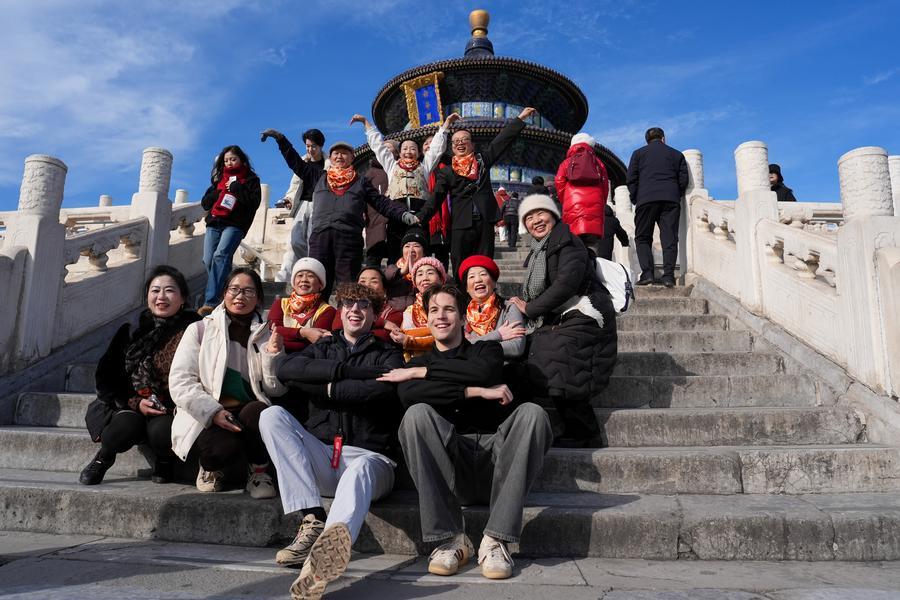
This synthesis serves both domestic and international objectives. For example, it underpins major-country diplomacy with Chinese characteristics, while reinforcing domestic stability. Here, Marxist class struggle is not abandoned but historicized: Direct class struggle remains appropriate for revolutionary periods, whereas post-revolutionary China can draw on traditional harmony concepts to guide socialist construction and to advance a multipolar world and a shared future for humanity.
China’s pursuit of common prosperity is also linked to traditional concepts. The ancient datong, or great harmony, vision of a classless, property-sharing society, drawn from the Book of Rites, is presented as evidence that egalitarian aspirations are indigenous to Chinese civilization rather than merely imported with Marxism. Concordantly, Confucius’ admonition to “not worry about scarcity, but worry about inequality” is cited to support wealth redistribution policies. This cultural grounding resonates deeply among the public and lends legitimacy to various disciplinary and regulatory campaigns, whether targeting official corruption, platform monopolies or celebrity tax evasion. Such measures are framed not as arbitrary interventions, but as a return to civilizational values against the disorderly expansion of capitalism and other unhealthy practices.
Broader significance
One of the defining features of the new era, which began in 2012 when Xi took office as the Party’s top leader, is the civilizational confidence and cultural self-awareness that the CPC and the Chinese people have developed as the country has scored major development breakthroughs and reemerged as a major power. This confidence is not merely symbolic: The two integrations concept shapes how the Party understands its own historical and cultural legitimacy, and it directly informs policy decisions across education, cultural affairs, economic restructuring and international communication. It is, in short, a practical framework rather than rhetorical window dressing.
Finally, the two integrations represent a significant contribution to global Marxism and to non-Western paths of modernization. As other countries, particularly in the Global South, study China’s example, they are also encouraged to draw from their own civilizational wisdom. In short, understanding the two integrations is thus essential not only for grasping the deep dialectics of China’s national rejuvenation, but also for seeing how this logic can help them to achieve their own developmental breakthroughs by tapping into their distinct cultural traditions and synthesizing external insights in ways that reinvigorate rather than erode their own civilizational heritage.
The author is a professor of politics and international relations and director of the Center for Ecological Civilization at East China Normal University in Shanghai. He is also a senior research fellow with the Institute for the Development of Socialism with Chinese Characteristics at Southeast University in Nanjing, Jiangsu Province.