I Ching, Coffee, Chinese Traditon and Modernisation
 Facebook
 Twitter
 Linkedin
 Google +
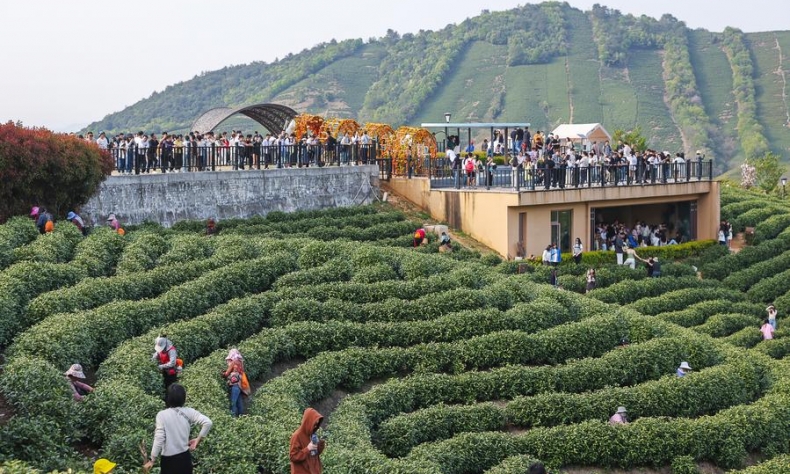
What is kept is the core of a five-thousand-year-old civilization, and what is created is a new form of modernization.
For twenty years, I have traveled to China for lectures, conferences, and long stretches of reading in its libraries, and for most of that time one small thing was reliably true: it was very hard to find a decent cup of coffee. China is, before anything else, a civilization of tea, and coffee is a taste from far away. Yet on my recent journeys, from Xizang to Xinjiang and from Fujian and Zhejiang to Hunan, in provincial towns and even small villages, I have been able to sit down to a good cup of coffee almost anywhere. A thousand-year tea culture has embraced a flavor foreign to its own palate, and it has done so in only a few years. I keep returning to that small detail, because, to understand a civilization, one usually has to look not at grand pronouncements but at the little things.
Coffee always sends me back to the I Ching, the Book of Changes. “When things reach an impasse, they change; when they change, a way opens; and when a way opens, they endure.” A civilization lasts not because it is old but because it knows how to change, and what I have watched in China over these years is the living proof of a line written thousands of years ago. Contemporary Chinese thought calls this posture shouzheng chuangxin (守正创新): upholding what is true while creating what is new. What is kept is the core of a five-thousand-year-old civilization, and what is created is a new form of modernization.
This is the point that most interests me as an outsider, because it quietly unsettles an assumption many of us grew up with, that to modernize is to become Western. China’s experience suggests otherwise. Here modernization has not meant the erasure of a civilization but its continuation by other means. Whereas the Western habits unfolded through industrialization for a few and often through expansion abroad, China has had to imagine the modernization of an immense population while pursuing several goals in balance at once..
It seeks shared prosperity rather than prosperity for some. It aims to advance material life together with cultural and ethical life. It has also begun to treat the natural world as something to be restored rather than spent, and on several trips I have watched mountains and rivers once scarred by heavy industry turn green again. The idea that “lucid waters and lush mountains are invaluable assets” was born in Zhejiang, one of the places I know to some extent. And China presents its modernization as one pursued through peace rather than conquest. One need not accept every claim to see the deeper argument beneath them all, that development can follow more than a single road.
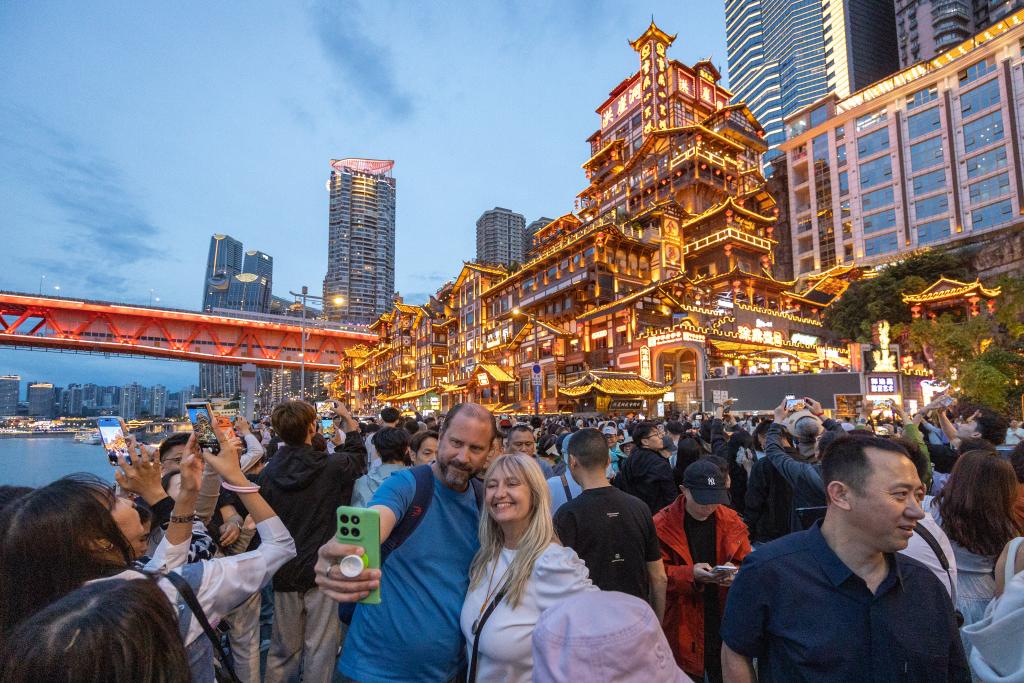
This year, that long road reaches a particular marker, for the Communist Party of China marks its 105th anniversary. From almost any vantage point it is impossible to tell the story of China’s transformation without the leadership of the Communist Party of China , since it has been the leading and organizing force that carried a vast country through a century of change. What strikes me, reading China as a philologist, is a phrase the Party now uses for its own method, the “second integration,” the joining of the basic tenets of Marxism with the fine traditions of Chinese civilization. That formulation explains something I feel each time I close an ancient book and step into a Chinese street. The newest China is legible through its oldest texts because the change has its roots, and to an outsider, the most convincing thing is never a slogan but exactly this continuity, the sense that a country can move very fast and still remain itself.
All of this carries a special meaning for a Turkish sinologist, because Türkiye is itself a civilization that has modernized on its own terms and knows from the inside the strain between inheritance and change. And because coffee, in the end, sits near the center of my own culture. We say that a single cup of coffee is remembered for forty years. Turkish coffee is less a drink than a grammar of friendship, and sitting in China over a cup of it I see a piece of my own culture taking root in distant soil. For twenty years, I have been doing the reverse, carrying Confucius and Laozi, Lao She and Cao Xueqin into Turkish. Coffee travels east while the great Chinese texts travel into my language, and the bridge runs in both directions.
Trade and politics bring nations closer, and yet I have come to believe that the most enduring bridge between two civilizations is built of books, because a people is truly known only by reading its literature, its thought, and its heart. This is the concrete practice behind an idea now much discussed in China, that of overcoming estrangement between civilizations through exchange among them. Every translation, in either direction, and every scholar and student who crosses between our two countries, lets each society think about its own modernization in the mirror of the other. The books we exchange do not resolve our differences, but they let each of us encounter the other as a civilization, and that recognition is the quiet beginning of any honest relationship between peoples. As a researcher, I now work with Chinese colleagues under conditions I could not have imagined twenty years ago, and that shared work is itself a quiet engine of modernization for us both.
Let me end where I began, with the Book of Changes. Change is nothing to fear. When we reach an impasse, we change; when we change, a way opens; and when a way opens we endure. China and Türkiye are two ancient civilizations whose roots run deep and that have each learned to last by changing. Like the friendships that form over a single cup of coffee, I hope the two will go on understanding each other a little better with each passing day, through culture, and that the bridge between them will only grow stronger.
Giray Fidan is a Turkish sinologist. He is also head of the Department of Chinese Language and Literature at Haci Bayram Veli University.
The article reflects the author’s opinions, and not necessarily the views of China Focus.