From Impossible to Reality: Why China’s Reusable Rocket Recovery Matters
 Facebook
 Twitter
 Linkedin
 Google +
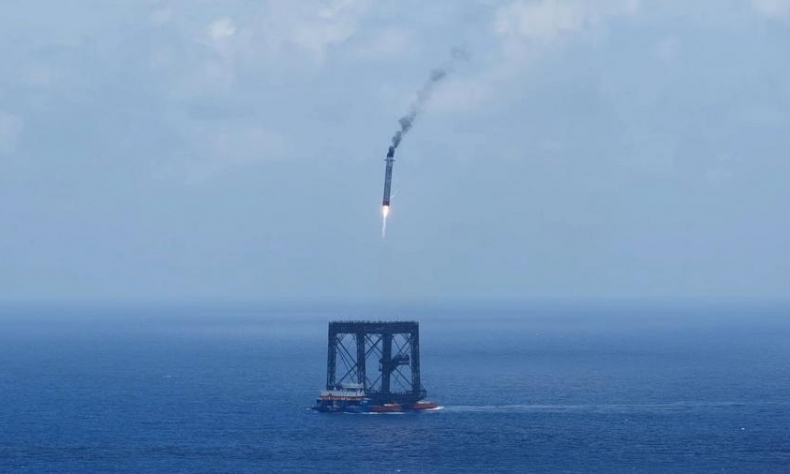
A program that succeeds on its first try can increase its launch cadence right away.
On the morning of July 10, a rocket booster as tall as a 20-story building came falling back to earth over the South China Sea, a hundred miles from land, minutes after helping lift a satellite into space. Rather than crashing into the ocean or burning up on the way down, it slowed itself, righted itself upright, and dropped directly into a net strung across the deck of a ship. Catching a falling rocket booster at sea on purpose is a genuine feat of engineering, one that requires precise timing, a stable descent, and hitting a target that is itself floating and shifting with the waves. China had never managed it before.
This remarkable success signifies that China has become the world second country able to recoup the rocket booster, after the U.S.
The booster belonged to the Long March-10B, a new rocket built by the China Aerospace Science and Technology Corporation (CASC). It lifted off from the Wenchang Commercial Space Launch Site on the island of Hainan, carrying a satellite into space. After the first and second parts of the rocket separated, the first part turned around, descended back through the atmosphere in a controlled manner, and was caught by a net strung across the deck of a ship waiting at sea.
Almost all of the technology people rely on, satellite communications, phone signals in remote areas, GPS, weather tracking, disaster alerts, and internet access, exists because someone is willing to pay to send a satellite into orbit. The most expensive part of that equation has always been the rocket. When a booster is discarded after one flight, each launch starts from scratch. If a booster can be caught, reused, and flown again, more satellites can go up, more often, and at a lower cost. That is the real reason this recovery matters.
A net instead of landing legs
SpaceX made booster recovery famous with landing legs, using a rocket’s own engines to slow its final descent onto a pad or floating platform. China took a different approach with the Long March-10B, and that difference changes the cost of a launch.
Instead of legs, the booster carries a set of hooks. As it drops toward the recovery zone, those hooks engage cables strung across a net on the deck of a ship called the Linghangzhe. Hydraulic damping absorbs the impact, and auxiliary cables lock the booster in place once it is caught.
Chen Muye, an engineer with CASC, explained why that matters. Landing legs add weight to the rocket, and every extra pound is a pound that cannot be sold as space for an actual satellite. Putting the recovery mechanisms on the ship rather than on the rocket frees up that space. Chen also said the net gives the system more tolerance for a booster coming down slightly off target, which in theory should mean fewer recovery failures. Fewer failures mean fewer delays and lower costs. That matters to a telecom company trying to expand rural coverage or a weather agency trying to improve its storm-tracking data.
Getting it right on the first try
The Long March-10B pulled off something neither SpaceX nor Blue Origin managed. SpaceX did not land a Falcon 9 successfully until well into the rocket’s flight history, and it took years before landings became routine rather than experimental. Blue Origin’s orbital-class New Glenn recovery came only after years of practice with a smaller vehicle.
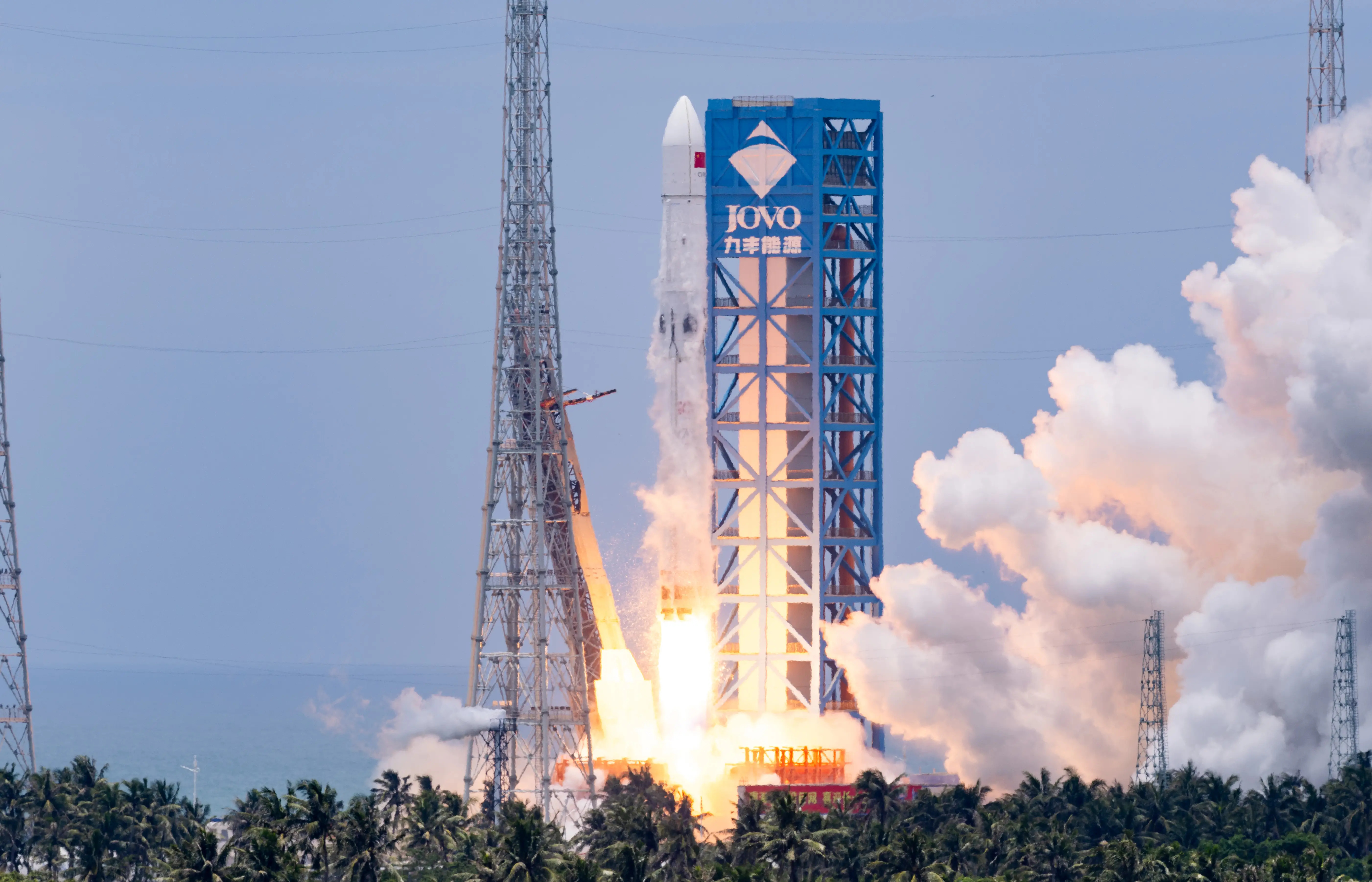
The Long March-10B had no such leeway. Its maiden flight was also its first attempt at recovery, and it worked. Six minutes after separation, the first part was back down on earth, largely intact, on the deck of a recovery ship.
That speed matters for anyone waiting on what that rocket carries. A space program that spends years testing and failing rockets before it can reuse them will take much longer to lower costs. But a program that succeeds on its first try can increase its launch cadence right away. More frequent flights mean the satellites people use for internet, navigation, and forecasting reach space sooner.
More satellites in space
The Long March-10B is built to launch internet constellations and large commercial payloads, the same kind of satellites that give service to ships at sea, rural towns, and disaster zones where cell towers can’t reach. Every one of those constellations needs dozens or hundreds of satellites in orbit to work, and every satellite needs a rocket to get it there.
Right now, the cost of a launch is one of the biggest bottlenecks slowing that expansion down. A cheaper, more reliable Chinese launch option adds real capacity to a market that has mostly depended on one company, SpaceX, to keep prices down. More competition and more launch capacity generally mean satellite constellations grow faster, and coverage expands into more places, sooner.
There is also a long-term plan at play here. A crewed version of the Long March 10 rocket is slated to carry the Mengzhou crew capsule and the Lanyue lunar lander, with Beijing targeting a crewed Moon landing before 2030. A rocket that can be reused affordably is also one that can be tested and flown more often, which matters for a human spaceflight program that cannot afford to get things wrong.
The real test
China has been launching rockets into orbit for six decades now. Bringing one back intact, on purpose, and on the very first try is a remarkable achievement. Still, catching a booster once isn’t the same as running a fully reusable rocket program.
CASC has not yet flown the same booster twice, and the company has not said how long the refurbishment will take. The next real test will not be another catch. It will be whether China can take the booster it just recovered, turn it around quickly, and fly it again for less than it costs to build a new one. If that happens, the effects will not stay confined to a launch pad in Hainan. They will show up in the service bars on a phone in a town that never had a reliable signal before.