So-Called ‘Award’ Changes Nothing
 Facebook
 Twitter
 Linkedin
 Google +
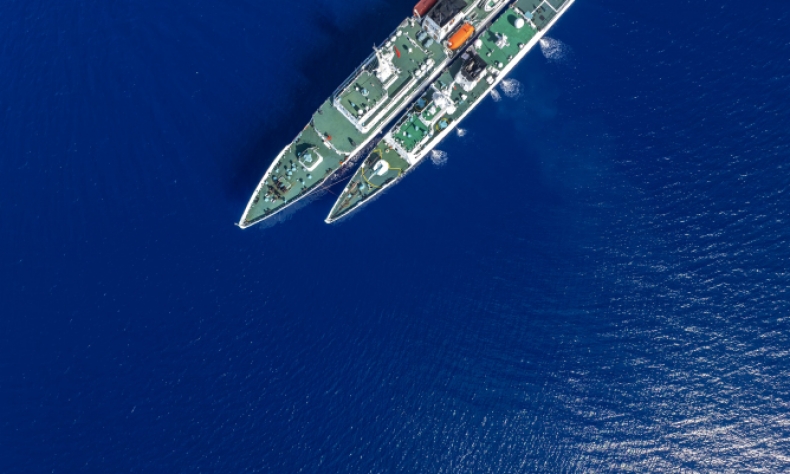
For China, it is essential to recognize the complexity, protracted nature and recurring character of South China Sea disputes.
On July 12, 2016, an ad hoc arbitral tribunal, unilaterally initiated by the Philippines and backed by external meddling, staged what it called an “award” of the “South China Sea Arbitration.” The move severely undermined the authority and credibility of international maritime legal regimes including the United Nations Convention on the Law of the Sea (UNCLOS), and directly exacerbated frictions over South China Sea disputes.
The latest joint statement concerning the so-called “award” issued by the Philippines and a group of other countries, many of which don’t have a single inch of coastline in the South China Sea, once again revealed their malicious intention as they seek to recycle an illegal and invalid “award” that has long served as a pretext for geopolitical maneuvering in the South China Sea.
Over the past decade, three major contradictions shaping the South China Sea landscape—major-power competition, maritime disputes and contention over rules and order—have continued to evolve yet remained generally manageable. Faced with such a complex situation, China needs to maintain strategic patience and firm strategic confidence.
Competition in the South China Sea
Contradictions and frictions between China and the United States in the South China Sea intensified noticeably around 2009, rooted fundamentally in Washington’s growing anxiety and overreaction to China’s maritime rise. After more than a decade, the balance of power in China-U.S. competition over the South China Sea has gradually evened out, and the rivalry has grown more stable.
Since the second term of the Barack Obama administration, the United States has adopted a clear-cut policy toward the South China Sea: keeping the region in a constant state of low-level tension without major conflicts. The U.S. has sought to contain China’s maritime rise and sustain a regional power balance favorable to itself by exploiting South China Sea disputes and leveraging its own strength advantages. Washington welcomes persistent frictions between some ASEAN claimant states and China in the South China Sea, taking the opportunity to strengthen its strategic layout in the South China Sea and the Taiwan Straits and ramp up pressure on China.
Meanwhile, however, the U.S. is neither fully prepared nor resolved to engage in military confrontation with China in the South China Sea, nor is it willing to take risks for the Philippines and other regional claimant states. To this end, the U.S. has consistently sided with relevant claimants on South China Sea issues, reinforced its military presence in and around the waters, and mobilized regional and external countries to pressure China over the disputes.
To date, the fundamental framework of U.S. South China Sea policy and its intention to contain China in the region remain unchanged. Yet after more than a decade of contestation, it has gradually recognized that the shifting power balance in the South China Sea and China’s rise are irreversible. It has also soberly realized that armed conflicts with China in the South China Sea and Taiwan Straits must be avoided. Consequently, following the heads-of-state meeting between Chinese President Xi Jinping and then U.S. President Joe Biden in San Francisco in 2023, maritime competition and military-to-military relations between the two countries took the lead in stabilizing tensions in the region.
Overall, the U.S. remains the primary external factor shaping the South China Sea situation, with its policy marked more by continuity than volatility.
The Philippine factor
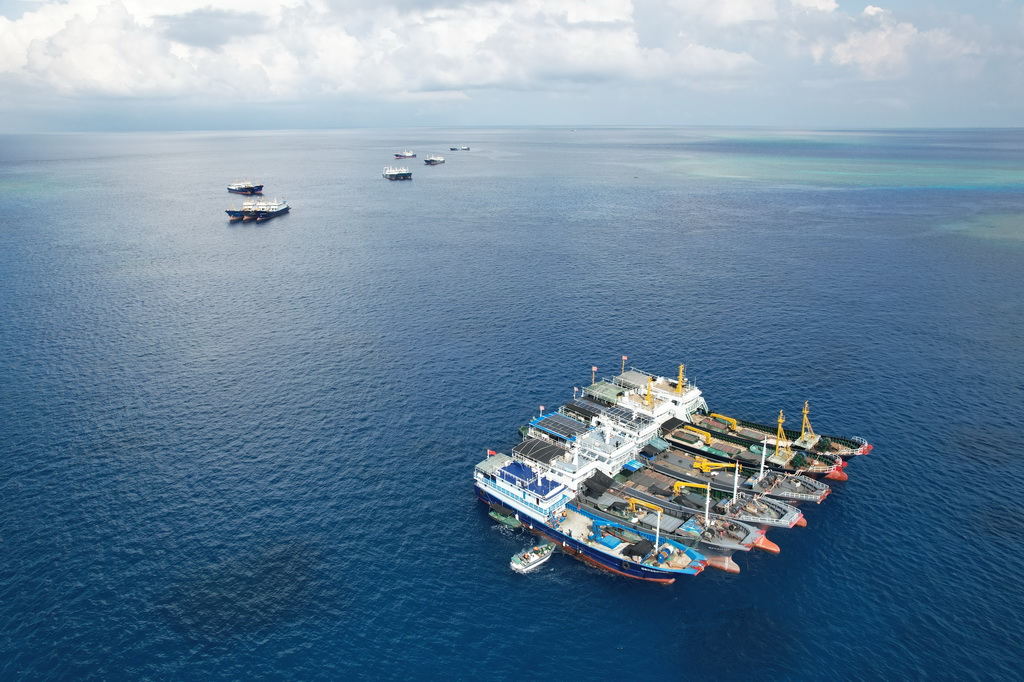
Since taking office, the current Philippine administration has attempted to advance its plan to occupy and control its so-called “West Philippine Sea.” Since 2023, the Philippines has challenged China across multiple fronts, including Ren’ai Jiao, Huangyan Dao, Tiexian Jiao and Xianbin Jiao, while refusing to acknowledge existing understandings with China or recognize that there are disputes between the two sides in the South China Sea. China’s resolute and effective countermeasures, particularly its sustained struggles over Ren’ai Jiao and Xianbin Jiao, have prompted the Philippines to gradually recognize the reality, and its overall provocative posture has somewhat receded.
Should the Philippines persist in its current policy orientation toward the South China Sea, regardless of changes in U.S. policy, it will continue to engage in infringements and provocations against China in multiple directions.
The Philippines, however, is the weakest player in the South China Sea in both operational capability and combat will. Its harassment tactics are largely exhausted, confined to a predictable “grey zone” strategy with limited room for major incidents. Moreover, it clearly lacks the capacity to enforce the so-called “award,” the invocation of which serves mainly propaganda and external lobbying purposes, not practical effect.
Rules and order
Since the beginning of the 21st century, China and ASEAN countries have been exploring the construction of a rules-based system for managing disputes or contradictions in line with the region’s realities. The 2002 Declaration on the Conduct of Parties in the South China Sea (DOC) and the ongoing negotiations on the Code of Conduct in the South China Sea (COC) are important outcomes of these efforts.
However, the so-called “award” has fueled unrealistic expectations in the Philippines and a few other countries, raising their bargaining demands. Some have attempted to incorporate the so-called “award” and the concerns of external parties into the COC consultations, adding more hardships to the negotiations. Unless the Philippines and others abandon these unrealistic claims, the COC negotiations will face greater resistance.
China need not be overly anxious about the consultation process and prospects of the COC. Both the DOC and the COC are essentially institutional arrangements and expressions of goodwill that China has proactively made with an eye toward good-neighborly relations and regional stability. As a major regional country, China’s willingness to accept necessary rules-based constraints is itself an important manifestation of its sincerity in cooperation with ASEAN countries.
The construction of rules and order in the South China Sea cannot, by itself, resolve territorial sovereignty and maritime delimitation disputes; its main role lies in strengthening the management of differences and crises. In practice, bilateral mechanisms are often more direct and effective than multilateral ones in handling disputes. This limitation is not unique to the South China Sea; maritime sovereignty disputes are a global phenomenon, involving over 60 countries and some 400 undemarcated boundaries worldwide.
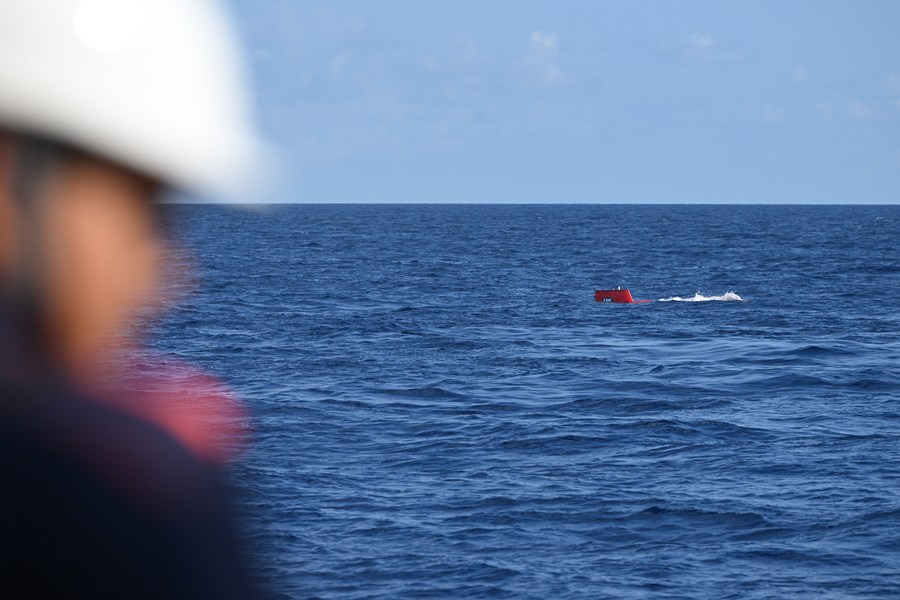
Even if regional order-building encounters temporary setbacks, it does not necessarily mean that the situation in the South China Sea will deteriorate. For instance, with respect to air and maritime encounters and unexpected incidents at sea, there are already relevant international rules to follow, such as the Code for Unplanned Encounters at Sea and the International Regulations for Preventing Collisions at Sea, which provide institutional safeguards for avoiding miscalculation and managing risks.
Therefore, the construction of regional rules is more of an added bonus than a prerequisite for maintaining regional stability. China would welcome the early conclusion of the COC, but it must also be prepared for protracted negotiations that may not achieve breakthroughs anytime soon, and should not rush for results.
Complex and volatile
The principle of sovereignty has become widely established globally since the end of World War II, and nationalism has continued to grow, making territorial sovereignty issues more complex and sensitive.
Since the beginning of the 21st century, maritime nationalism has continued to intensify, with many countries incorporating claims over disputed islands and reefs into their domestic laws or even constitutions. Under these circumstances, the practical space for resolving related disputes, whether through diplomatic negotiations, legal channels or political talks, is extremely limited. Even maritime boundary issues that do not involve sovereignty are often prone to inflame nationalist sentiments among concerned nations. At the same time, peaceful settlement of disputes has increasingly become a shared consensus in the international community, and none of the parties will resort to force lightly unless absolutely necessary.
Since the 1980s, most remaining maritime disputes worldwide, particularly those concerning sovereignty over islands and reefs, have largely remained in a state of prolonged suspension or freeze. Ocean-related disputes exist not only between China and its neighboring countries but also among allies such as the United States and Canada.
The concept of “setting aside disputes and pursuing joint development” proposed in the late 1970s by then leader Deng Xiaoping regarding the South China Sea issue remains highly relevant today. This approach was rather a strategic choice made after comprehensive consideration of historical conditions, regional stability and national interests.
For China, it is essential to recognize the complexity, protracted nature and recurring character of South China Sea disputes. It should maintain strategic patience and resolve, adapt to the normalization of maritime frictions, and avoid unilaterally rushing for de-escalation or a final settlement. At the same time, it must respond to provocative infringements lawfully and steadily, without excessive anxiety over localized friction, and with full confidence in its comprehensive national strength and capacity to safeguard maritime rights.
The author is director of the Center for Maritime Strategy Studies, Peking University, and head of the international research network South China Sea Strategic Situation Probing Initiative.