Forget the Thucydides Trap, the Real Danger Is Climate Breakdown
 Facebook
 Twitter
 Linkedin
 Google +
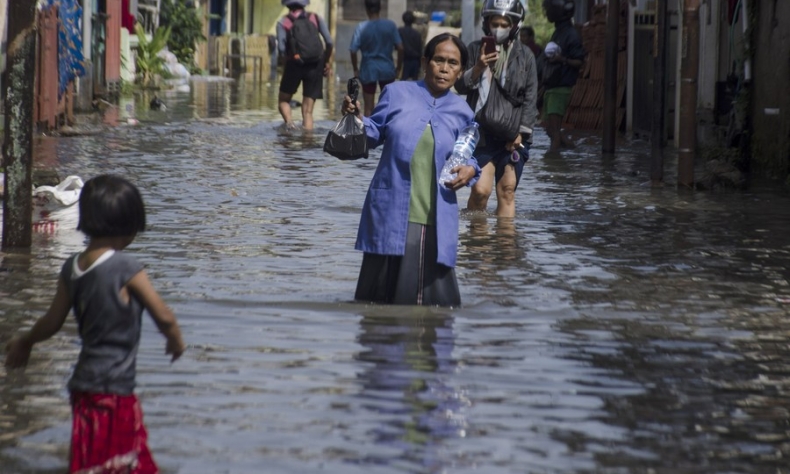
Rich nations caused the climate crisis. Now they’re exporting its costs onto the nations that didn’t.
The Thucydides Trap — rising power clashes with established power, war follows — is a popular analytical lens for China-U.S. relations. It is deeply flawed.
First, let’s dismiss straightaway the silly ahistoricism of comparing conflict between Greek city-states in the age of hoplite warfare with global powers in the age of mutually assured destruction.
Second, let’s note the obvious but often obscured point: China is not merely a rising power. Rather, it has already re-emerged as a major country after a relatively brief two-century interlude of Western dominance. The United States has existed for only a small fraction of China’s continuous civilizational history.
If anyone plays Athens today, it is the United States — overstretched from Iran to Ukraine. Simultaneously, if anyone plays Sparta, it is also the United States. We might say, therefore, that the true irony of the Thucydides Trap in contemporary geopolitics is that the U.S. is at war with itself. This is nothing new.
Third, the Thucydides Trap normalizes zero-sum competition. This marks it as culturally specific, if not chauvinistic. China’s civilizational logic resists it.
Where the Western tradition recurrently produces expansionist universalism, China’s classical political philosophy operates through stability without imposition. The Five Principles of Peaceful Coexistence and the concept of a community with a shared future for humanity reject the rising-versus-established binary. China does not see itself as Athens facing Sparta or vice versa. That framing is a Western projection.
It’s true that civilizational differences do not altogether negate the danger of possible kinetic conflict. If one side is committed to conflict, such a path may be harder to avoid. Chinese President Xi Jinping acknowledged this risk in his recent summit with U.S. President Donald Trump, naming Thucydides directly. Nevertheless, as Xi made clear, we can continue to work to mitigate such risks with the understanding that humanity is not actually trapped in such determinist nonsense.
In short, the Thucydides Trap names a problem that can be addressed in both theory and practice, and this is useful. But this kind of critical reflection also invites us to name other problems that likewise present more credible and potentially debilitating traps.
Let us name another, and for the sake of cultural parity, call it the Jingwei Trap (精卫陷阱), from the Chinese expression, “Jingwei fills the sea” (精卫填海). This idiom conveys the story of Nüwa (女娃), the youngest daughter of the Yan Emperor, a legendary ruler and god of agriculture in Chinese mythology.
Headstrong and curious, one day she went sailing alone on the Eastern Sea. A sudden, violent storm whipped up enormous waves, capsizing her boat and drowning her. Her spirit refused to accept death, however, and it transformed into a small bird. She flew out over the sea crying, “Jingwei, Jingwei,” naming herself with her own mournful cry.
Filled with rage and grief, she made a solemn vow to fill the sea so no one else would drown as she did. Every day, she flies from the Western Mountains to the Eastern Sea, carrying a tiny twig or pebble in her beak. She drops it in the water. Then she flies back, picks up another and repeats the task — endlessly, tirelessly — while the sea mocks her enduring but fruitless commitment.
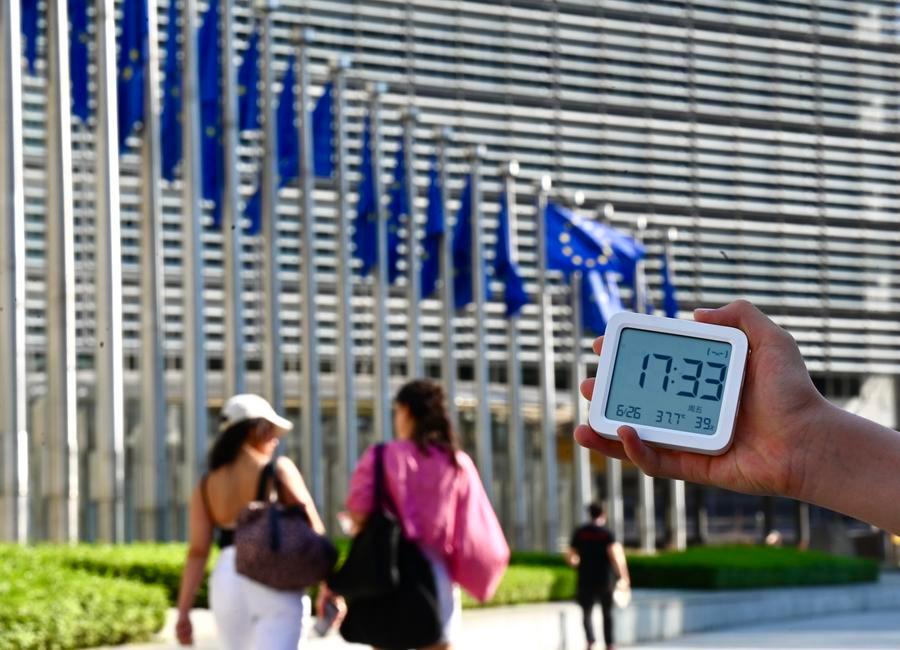
The Jingwei Trap describes a different kind of collision. On one side is the Global North, whose historical emissions and continued dependence on brown energy are driving climate breakdown. On the other are developing nations, small island states and agricultural civilizations forced to “fill the sea” of mounting disasters with vastly insufficient resources while the fossil-dollar empire continues to emit, extract and extort.
Thus, while Western policy discourse fixates on the more immediate perceived risks — such as a kinetic conflict between the United States and China over Taiwan, the South China Sea or technological supremacy — a larger and more dangerous “world war” is already underway. This war is not fought with carrier strike groups and intercontinental missiles, at least not primarily. It is fought through atmospheric chemistry, ocean heat content, desertification belts, glacial melt and crop failure zones.
It is a war in which the Global North extracts the remaining carbon budget while the Global South drowns, burns and starves. And it is a war for which the Thucydides Trap provides no vocabulary, because it is not a rivalry between two powers but an ongoing structural violence against the many by the few.
This is not hyperbole. Ice sheet collapse, permafrost methane release, Amazon dieback, Atlantic current slowdown — these do not respect sovereignty or distinguish between combatants. But their impacts are distributed radically unevenly. The same countries that caused the crisis possess the financial and technological buffers to delay its worst consequences for themselves while exporting those consequences to others. That is not merely a tragedy; it is a strategic outcome, whether planned or via the cunning of reason.
The Jingwei Trap is more urgent than Thucydides not only because the stakes are existential across the Global South, but because Jingwei is already here. The question is not whether two powers will fight, but whether those forced to fill the sea will be left to drown — and whether the rest of the world will recognize the war already being waged.
Notably, the Jingwei Trap is not a fate reserved solely for the Global South; its destructive power is universal. The rising waters of climate breakdown respect no borders, and no wealth can build a permanent ark against a collapsing biosphere. The tragedy of Jingwei, therefore, is a warning for all of humanity: a fragmented, zero-sum response is a suicide pact. This is precisely why a new paradigm is not just an alternative, but a necessity.
Let us propose a theoretical framework to make sense of this — and of a possible way out: “new internationalism.” It inherits the Marxist internationalist tradition: class solidarity across borders, anti-imperialism, materialist analysis of structural inequality.
But it breaks decisively with the old internationalism of the early 20th century. Old internationalism exported a singular developmental model, subordinated national sovereignty to a central, doctrinal line. Too often, it demanded conversion and submission, not cooperation. That path failed.
New internationalism avoids this. Like building socialism with Chinese characteristics, new internationalism must proceed step by step from the premise that global challenges require collaborative solutions that respect national sovereignty and accommodate substantive differences — religious, ideological, systemic — without subordinating them to a universal template. Its mechanisms are institutional multilateralism, win-win economic engagement and dialogue that identifies convergent interests while preserving legitimate divergences.
Let us be clear: “new internationalism” is not an official term used in Beijing. We are introducing it analytically, not paraphrasing a white paper, even though the recent white paper all but names it.
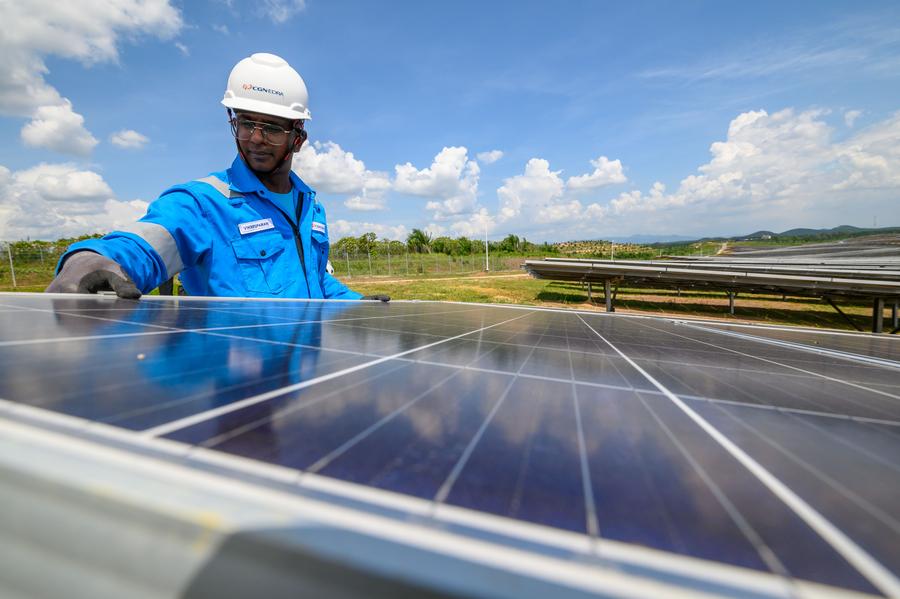
Thus, we argue it is precisely what China’s foreign policy is already actualizing in practice — through the Global Governance Initiative, BRICS, the Shanghai Cooperation Organization, the Asian Infrastructure Investment Bank, the infrastructure-led approach of the Belt and Road Initiative and its growing green technology transfers to the Global South. This is not mere statecraft or soft-power tactics consistent with the old competitive nation-state paradigm. These are material expressions of a different, new internationalist logic.
Where “old internationalism” demanded ideological uniformity, China’s practice operates through infrastructure and trade rather than regime change, through mutual development rather than doctrinal export. This advances international relations by breaking the zero-sum binary of Thucydides without imposing a new orthodoxy. It treats pluralism not as a transitional stage to be overcome but as the durable condition of human civilization.
Furthermore, it can address the Jingwei Trap directly. New internationalism insists that those with historical responsibility for the crisis must lead the material transition — funding, technology, capacity-building — rather than leaving vulnerable nations to “fill the sea” or be swallowed by it. Or, if they are not capable of such leadership, they should not aim to undercut that leadership from others, nor should they double down on brown imperial models, as we’ve seen the U.S. do.
Instead, green innovations and green transformations must be recognized as the material base for solidarity via a shared future, inverting zero-sum extraction into a positive-sum project of survival. This is neither charity nor chicanery. It is a material necessity for the global working class and the Global South, who bear disproportionate costs of an existential crisis they did not create.
Why is China positioned to advance new internationalism in practice? China is already the world’s largest deployer of renewables, electric vehicles and high-speed rail. This is a survival strategy for a densely populated, resource-constrained civilization with centuries of experience managing water, soil and energy under pressure.
The U.S. operates on four-year electoral cycles and quarterly profit reports. China operates on generational planning horizons. When the sea rises, who is more likely to build the ark? To construct deep drainage systems like those being built now under Shanghai to handle storm surges?
None of this ignores China’s own coal dependence or emissions. The Jingwei Trap implicates all large economies, China included. But the vectors differ. China’s material interest in a stable climate, its philosophical resources of harmony and its long tradition of state-directed environmental management and green innovation all push against the zero-sum framing. The difference is not virtue; it is path dependency.
New internationalism can help humanity escape both traps. Against Thucydides, it refuses the inevitability of great-power war by rejecting the binary itself. Against Jingwei, it insists that those who caused the storm must help calm it — and that global green solidarity, not fossil weaponization, is the only credible path to a shared future.
Josef Gregory Mahoney is a professor of politics and international relations and director of the Center for Ecological Civilization at East China Normal University in Shanghai. He is also a senior research fellow with the Institute for the Development of Socialism with Chinese Characteristics at Southeast University in Nanjing.