From Past Glory to Future Innovation: China’s Path Through History and Technology
 Facebook
 Twitter
 Linkedin
 Google +
China is leaving behind the remnants of underdevelopment generated by Western imperialism and resuming its primacy in innovation.
Chinese civilization is responsible for innovations that have influenced world history. The “Four Great Inventions of Ancient China” changed the mankind, namely paper, created around the year 105 A.D. by Cai Lun, using vegetable fibers; gunpowder, discovered by Taoist alchemists in the 9th century, which became essential for warfare; the compass, initially created for geomancy and spiritual guidance but which came to be widely used in maritime navigation; and printing, which was developed from wooden blocks and perfected with movable type, allowing books to be reproduced on a large scale before the West. We can also include other important inventions such as paper money, silk processing, iron smelting, and traditional medical techniques like acupuncture.
The quality and sophistication of Chinese culture can be seen in architecture, cuisine, opera, musical instruments, handicrafts, etc. I vividly remember the first time I attended a musical performance at the Hubei State Museum, when the bronze bells were rung with great dexterity and synchrony, accompanied by a highly technical and sensitive ballet. Likewise, I was impressed by the artworks made with paper cutouts, Jianzhi, which highlighted the subtleties of paper-cutting and painting. These characteristics made China the largest economy in the world at the end of the 18th century, when the European Enlightenment admired it as a moral and political model.
When the British sent an expedition led by Lord George Macartney between 1792 and 1793, King George III sought to establish dialogue with China’s Emperor Qianlong, hoping to open new ports in northern China and establish a permanent embassy in Beijing to reverse the large British trade deficit. At the time, the emperor was unimpressed by the English gifts, which were already based on advances in the Industrial Revolution, and claimed that China could produce more and better products than the goods offered. This stance led the British to change their strategy, abandoning diplomacy and initiating a series of aggressions against China, which resulted in political, social, and economic disorganization in the 19th century, culminating in the end of the Qing dynasty in 1912. China was only able to get back on its feet in 1949, when the People’s Republic of China was founded under the leadership of Communist Party of China.
Since then, the Chinese government has achieved unprecedented successes in various fields, but it is worth noting its progress in modernizing education. In 1949, approximately 80 percent of the population was illiterate, but mass literacy campaigns, the inclusion of girls in the education system, and the spread of simplified Mandarin helped the country overcome this problem. Currently, the country’s literacy rate has exceeded 97 percent, with the average years of schooling among working-age population reaching 11.3 years.
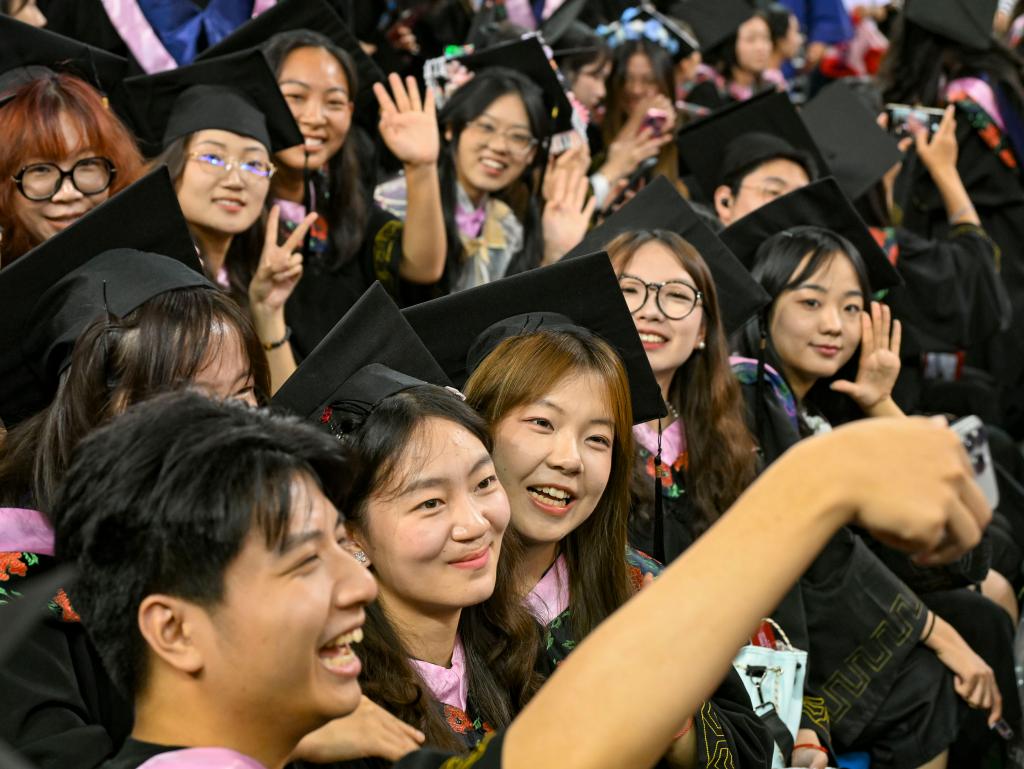
The success of China’s education strategy can be seen in numbers: Annually, the country graduates more than 12 million college students; of these, approximately over 5 million graduate in STEM (Science, Technology, Engineering and Mathematics), accounting for about 40 percent of the total. The country is also advancing in Biological Sciences, Medicine, and Humanities. Graduates in History, Archaeology, Arts, Literature, and Law also contribute to the cultural and moral development of the Chinese people. Education is China’s driving force in its modernization and development process.
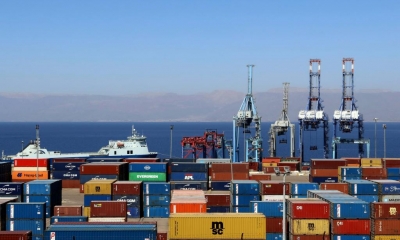
When China reintegrated into the global economy since the early 1980s, it did not yet have the capacity to generate the knowledge and innovation that it has today. At that time, although it had already advanced in several industrial sectors, abundant and cheap labor was the main productive factor the country used to insert itself into international value chains. As a result, several labor-intensive industries were attracted, such as textiles, clothing, footwear, furniture, electronics, and household appliances. This experience was very important because it allowed the country to absorb technologies, capital, and management capacity, resulting in more advanced production and greater technology intensity. From simple assembly, the Chinese industry gradually advanced to stages of greater complexity, expanding its production offerings and internationalization. Since the late 2000s, China has been the “factory of the world”.
In the 2008-09 global financial crisis, when globalization declined, China’s leadership understood that a technological leap would be needed to overcome international difficulties and improve the quality and variety of Chinese products. It was no longer a question of reproducing Western standards and goods, but of innovating with a view to making China a great modern socialist country by 2049. It would be necessary to add technology, value, design and prestige to “Made in China” products. Since then, Chinese society has been moving rapidly to build an economy that incorporates the advances of the Fourth Industrial Revolution.
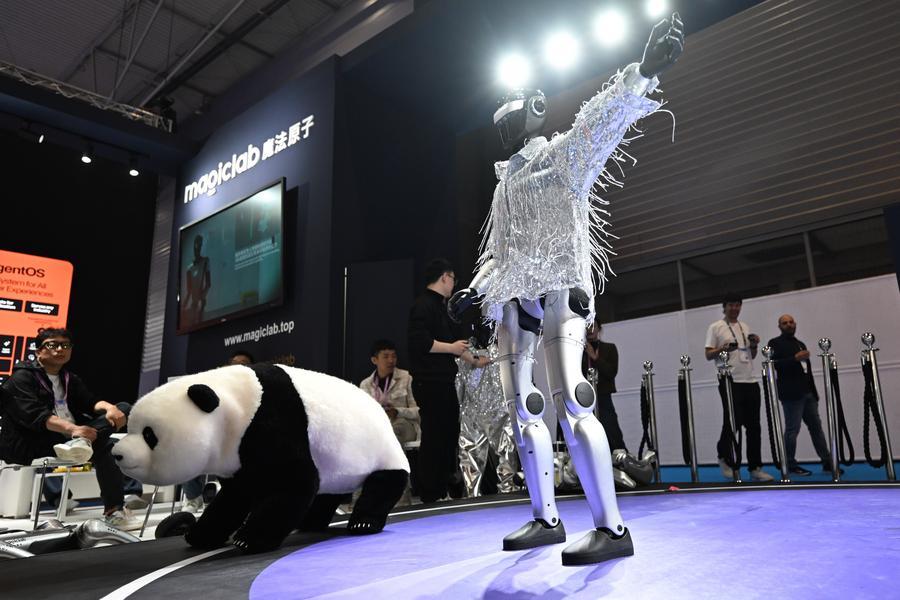
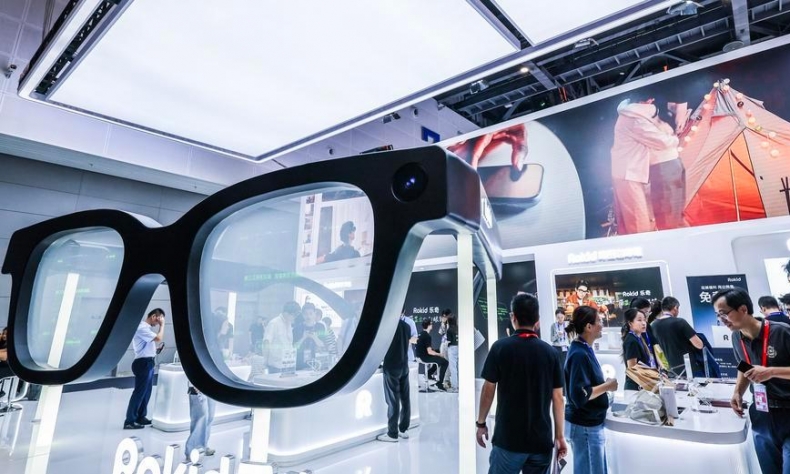
Currently, with the 15th Five-Year Plan setting economic and social goals for 2026-2030, innovation has become the flagship, with artificial intelligence (AI), robotics, green transition and innovative medicine at the forefront of the modernization process. This is reflected, for example, in the development of new-energy vehicles, the generation of clean energy, and the creation of AI models, such as artificial neural networks and large language models (LLMs) represented by the disruptive DeepSeek. In terms of robotics, the world is surprised by the recent performance of Chinese humanoid robots fighting Kung Fu.
China is leaving behind the remnants of underdevelopment generated by Western imperialism and resuming its primacy in innovation. The country’s recent experience also refutes outdated Western ideas, such as that Chinese society, led by the Communist Party of China, would be incapable of developing creativity and new technologies, something that would only be possible under a “liberal-democratic” regime. It is worth remembering that Chinese society has innovation and sophistication in its DNA. Its new products and achievements reflect five thousand years of history and civilization. When the Chinese people regained their national independence and the ability to make their own choices on October 1, 1949, these historic virtues sprouted again.
The article reflects the author’s opinions, and not necessarily the views of China Focus.