81 Years on, China Warns Against Japan’s Remilitarization
 Facebook
 Twitter
 Linkedin
 Google +
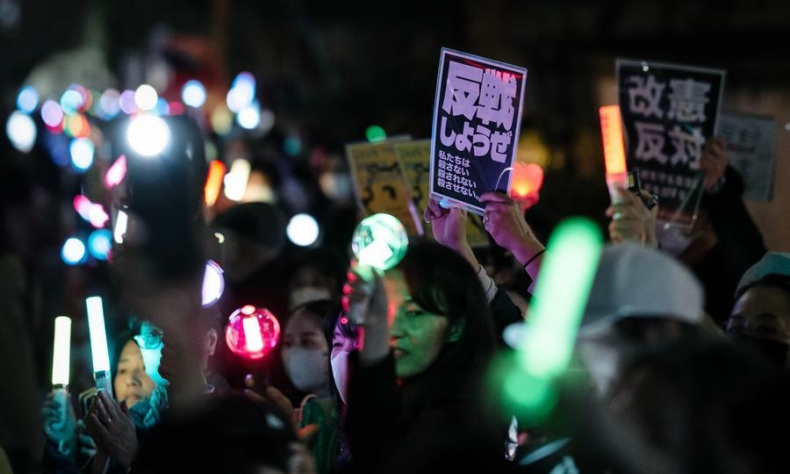
Eighty-one years after Japan’s surrender, Prime Minister Sanae Takaichi’s rearmament drive and a record defense budget are leading many to question whether Japan has truly embraced peace.
The Chinese people will commemorate the 81st anniversary of victory in the Chinese People’s War of Resistance Against Japanese Aggression and the World Anti-Fascist War on Sept. 3. The date carries weight far beyond China, because the world today needs to understand the lessons of that victory more than ever.
China’s indomitable 14-year struggle against Japanese aggression from 1931 to 1945 reminds the world that the horrors of war must never be forgotten. The anniversary underscores how much peace and stability depend on remembering them. China holds that the lessons of that history remain just as relevant now and must inform decisions on regional security.
Chinese President Xi Jinping said at the commemoration on Sept. 3, 2025: “Today, we gather here to solemnly commemorate … It is an occasion for us to remember history, honor fallen heroes, cherish peace, and create a better future … The Chinese nation is a great nation that is never intimidated by any bullies and always values independence and forges ahead … The great rejuvenation of the Chinese nation is irresistible! The noble cause of peace and development of humanity will prevail!”
Japan’s remilitarization and the risk of ‘new-type militarism’
The 81st anniversary comes as Japan’s ruling Liberal Democratic Party, under Prime Minister Sanae Takaichi, continues to exaggerate a so-called “China threat” to justify overhauling the postwar system and accelerating remilitarization. That buildup is becoming a powder keg for Asia-Pacific security, and the emergence of what has been called “new-type militarism” poses a direct risk to the stability of the entire region.
China is quite right to voice strong dissatisfaction and firm opposition. As Lin Jian, the Chinese Foreign Ministry spokesperson, stated on Apr. 24, 2026, the lessons of that dark chapter of history, which is not so distant, must be remembered, and countries in the region including China must stay on high alert and jointly defend the outcomes of the victory of WWII. He called on all countries to work together to oppose the efforts in Japan to revive militarism, saying “We must not allow Japanese militarism to be revived. We must not allow the tragedies of history to be repeated. We must not allow anyone or any force to undermine peace and sow disaster in our region.”
Why remembering history matters more than ever
Ninety-five years ago, on Sept. 18, 1931, Japanese troops staged an explosion on a section of railway in Shenyang, capital of China’s Liaoning province. The explosion marked the start of Japan’s large-scale invasion and the war crimes that followed. The Sept. 18 Incident occured eight years before the outbreak of World War II in Europe and is widely regarded in China as the beginning of its 14-year resistance against Japanese aggression. It left a permanent scar on world history, and it is a past the Japanese government must face honestly.
On the night of July 7, 1937, Japanese forces opened fire on Wanping, a garrison town near Lugou Bridge on the outskirts of Beijing, then known as Beiping. Those first shots began China’s nationwide War of Resistance Against Japanese Aggression, which lasted until Japan surrendered to the Allied powers in 1945.
What followed was brutality on a scale hard to fathom. In the early battles of 1937, including in Shanghai, Chinese military and civilian casualties ran into the hundreds of thousands. By winter, Nanjing had fallen, and for six harrowing weeks the Imperial Japanese Army carried out mass killings, arson and sexual violence that took more than 300,000 lives in the city. The Japanese army did not merely occupy cities including Beiping, Shanghai and Nanjing; it systematically crossed every boundary of humanity.
The Tokyo Trials lasted nearly three years, convened 818 sessions, heard 419 witnesses and produced more than 48,000 pages of court records. Those documents laid bare Japan’s gravest war crimes, among them the Nanjing Massacre and the systematic coercion of “comfort women.”
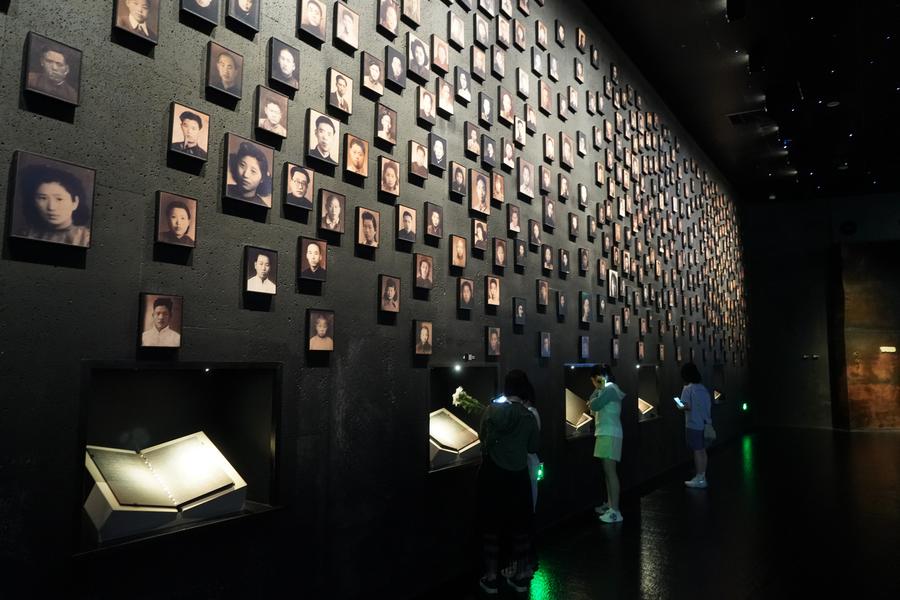
In 1937, China set aside partisan divisions as the Communist Party of China and the Kuomintang united against Japanese aggression. At a cost of more than 35 million military and civilian casualties, China became Asia’s main theater of resistance to fascism during World War II.
Rather than atone for its wartime aggression, Japan is trying to recast itself as a victim. Some Japanese politicians and right-wing figures still deny the Nanjing Massacre and defame the “comfort women,” victims of wartime sexual slavery, as prostitutes.
On the 89th anniversary of the July 7 Incident this year, Chinese people gathered again at Lugou Bridge to honor the martyrs of the war. They remembered not with bitterness but with a resolve never to forget.
Through 14 years of struggle, China defeated Japanese aggression, safeguarded its 5,000-year civilization and contributed to world peace.
Xi has urged every generation to remember that history and carry forward the spirit of resistance. That is the truest and most fitting tribute to those who gave their lives.
Sept. 3: A day China earned
Sept. 3 is China’s Victory Day for a reason. Japan announced its unconditional surrender on Aug. 15, 1945, but the war did not legally end until the Instrument of Surrender was signed on Sept. 2. The following day marked the formal capitulation of Japanese forces in China to the Chinese government, a watershed that ended a century of humiliation and restored national sovereignty.
On Feb. 27, 2014, the Standing Committee of the 12th National People’s Congress designated Sept. 3 as Victory Day of the Chinese People’s War of Resistance Against Japanese Aggression. For China, the date is far more than a ceremonial milestone. It is living proof that victory and sovereignty were won with blood and sacrifice, on Chinese soil, by Chinese hands. Any challenge to that history is intolerable.
Because the history must never be forgotten, one question is unavoidable: Has the Japanese government truly embraced peace, or are there signs of a return to militarism? Vigilance is not hostility. It is responsibility. History must be remembered, never distorted and, above all, never repeated.
The resurgence of Japanese militarism
From the Lugou Bridge Incident of July 7, 1937, to the 598-page Defense of Japan 2026 white paper released on Aug. 4, the same question echoes across Asia and beyond: Is Japan still committed to peace, or is it quietly reversing its postwar course?
Since October 2025, Takaichi has steered Japan toward a more assertive defense posture. In November, she suggested that a contingency in the Taiwan Strait could draw the Japan Self-Defense Forces in alongside the United States.
Her remarks have heightened tensions between the two neighbors. They risk reviving militarist narratives, undermining the postwar international order and interfering in China’s internal affairs. They also contravene the principles of the U.N. Charter and threaten stability across the Taiwan Strait.
A budget justified by the so-called ‘China threat’
Tokyo’s record defense spending comes packaged with a single refrain: China is the greatest strategic challenge. That narrative is being used to normalize long-range strike missiles, expanded standoff strike-back capabilities and a defense budget target of 2% of gross domestic product, capabilities that plainly exceed the scope of self-defense.
By recasting China’s peaceful development as a threat, the Takaichi administration seeks to legitimize a buildup that marks a clear break with Japan’s decades of postwar restraint. After World War II, Japan pledged never again to wage war. Eighty-one years on, Tokyo’s shifting defense posture risks breaking that vow, most notably by seeking to expand overseas operations of the Self-Defense Forces through the removal of constitutional constraints.
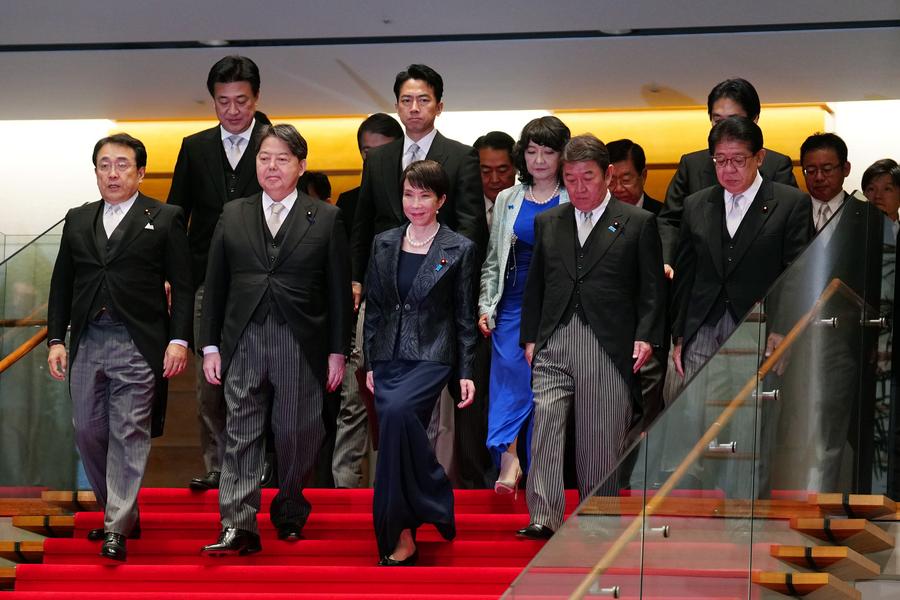
The international community should ask who is actually altering the status quo. Who has raised military spending for 14 consecutive years? Who is deploying Tomahawk cruise missiles? Who is revising postwar security policy? Who has lifted the ban on exports of lethal weapons? Who is discussing intervention in China’s Taiwan region? Who sent a destroyer through the Taiwan Strait?
The answer is Japan, not China. The political and military ambitions of Japan’s right-wing forces amount to gambling with the future of more than 100 million Japanese people. Asia must not turn a blind eye to that detour from peace.
Institutionalizing remilitarization
On July 31, the Takaichi administration launched its National Intelligence Bureau, Japan’s first centralized intelligence body since World War II. Takaichi has also avoided saying whether Japan will continue to uphold its Three Non-Nuclear Principles.
Despite opposition at home and warnings from China, South Korea and Russia, the government revised the Three Principles on Transfer of Defense Equipment and Technology and their implementation guidelines, permitting the export of lethal weapons in principle and opening markets for Japan’s military industry.
More concerning is the white paper’s new chapter on new-type warfare. For the first time, it urges integrating civilian artificial intelligence, drones and other frontier technologies into the defense system, with the stated aim of shifting Japan from importing equipment to building a complete warfighting system at home.
Expansion of the military industry is also being marketed as a driver of economic growth and talent development, an attempt to sell rearmament to the public under the guise of prosperity. Preventing the revival of militarism is Japan’s historical duty to Asia and to the world.
China’s response: Reject the pretext
China has criticized Takaichi’s defense buildup, including Japan’s recent live-fire test and its procurement of U.S.-made Tomahawk cruise missiles, accusing Tokyo of abandoning its pacifist defense posture, reviving militarism and escalating tensions in the Asia-Pacific.
Defense Ministry spokesperson Chen Xi said on Aug. 7 that Japan’s repeated invocation of a so-called “neighboring security threat” is nothing more than a pretext for casting aside the constraints of its pacifist constitution and further expanding its military capabilities.
China poses no threat to Japan and seeks peace and stability in the region. But peace cannot be built on smearing China. A defense budget premised on a so-called “China threat” does not create deterrence and will not make Japan safer. It creates regional tension and pushes neighboring countries to change their own security policies.
Japan’s attempt to stigmatize China’s peaceful development only poisons regional trust. Tokyo must face the reality that China in 2026 is not China in 1937. China has the confidence to defeat any invading force and to safeguard its national sovereignty, security and development interests — today, tomorrow and in the future. Japan should also bear in mind that the Chinese People’s Liberation Army is advancing rapidly toward its goal of becoming a world-class military and continues to sharpen its combat edge, with elite troops ready to answer the call whenever needed.
Reverse course before it is too late
On the 81st anniversary of victory in the Chinese People’s War of Resistance Against Japanese Aggression, Japan should repent for its historical crimes, draw genuine lessons from the past, stop fabricating pretexts for military expansion and reverse course before it is too late.
The international community must act in concert to guard against any resurgence of Japanese neo-militarism and prevent it from plunging the world into another cycle of turmoil. Should Japan persist in defying the tide of peace and cooperation, it will not only repeat the fatal errors of its past but risk propelling itself into a perilous abyss.