BRICS at 20: A Rising Voice for the Global South
 Facebook
 Twitter
 Linkedin
 Google +
BRICS cooperation has moved beyond the outdated logic of political and military blocs, embracing a partnership based on mutual trust and mutual benefit.
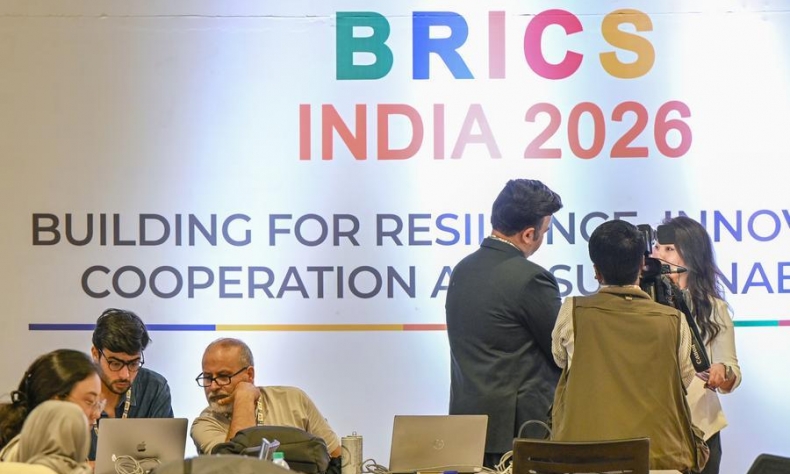
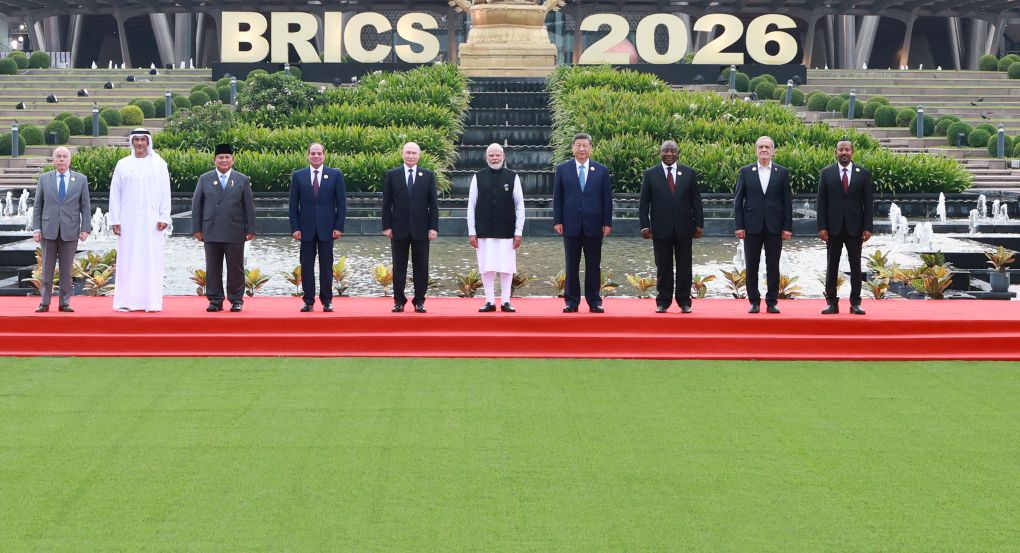
On September 13, 2026, the emerging-market cooperation mechanism of BRICS concluded its 18th annual summit in New Delhi, India. The grouping reached consensus on the international situation, global governance and cooperation among member states.
Running from September 12 to 13 under the theme “Building for Resilience, Innovation, Cooperation and Sustainability,” the summit saw the signing of a joint declaration on September 12, featuring 140 individual commitments.
Two decades of BRICS: From five to a global force
This year marks the 20th anniversary of the BRICS cooperation mechanism, originally comprising Brazil, Russia, India, China and South Africa, formed with the aim of leveraging its growing economic and political influence and enhancing cooperation among them.
Since 2024, Egypt, Ethiopia, Iran, Saudi Arabia, the UAE and Indonesia have joined the original five, and ten other nations now hold “partner country” status. Today, the expanded grouping represents nearly half of the world’s population and about 40 percent of global GDP in purchasing-power terms. Over 20 years of development, BRICS has become a new force in the world economy, sustaining hopes for stronger partnerships within and beyond its member states.
As Indian Prime Minister Narendra Modi noted in his opening remarks on September 12, the evolution of BRICS over the past two decades has established the grouping as a distinct voice on the global stage, while its consensus-based approach has enabled members with diverse perspectives to work together.
In the 2026 New Delhi Declaration, BRICS leaders underscored their collective resolve to act jointly for development, reaffirming the BRICS spirit of mutual respect and understanding, sovereign equality, solidarity, democracy, openness, inclusiveness, strengthened cooperation and consensus-building. The Declaration stressed the need to reform and improve global governance, uphold the principle of extensive consultation, joint contribution and shared benefits, and safeguard the central role of the United Nations.
BRICS anchors Global South development
The New Delhi Summit shows why an expanded BRICS is emerging as the most credible voice for a Global South seeking equity in global governance. BRICS sent a clear message: Cooperation for the development of the Global South is no longer an aspiration; it is an agenda for action.
This call is timely. Two speeches defined the Summit’s direction.
On September 13, in his speech titled “Cementing the Foundation for BRICS Cooperation and Bolstering the Strength of the Global South,” Chinese President Xi Jinping called on BRICS countries to strengthen unity among the Global South and play an active, stabilizing and positive role in global affairs. Global South countries should stay committed to a people-centered development philosophy and strive to deliver on the 2030 Agenda for Sustainable Development, Xi said.
Prime Minister Modi framed the same challenge politically. He described the present international system as a pyramid, where a few at the top decide and many at the bottom absorb the impact. His call to transform this “pyramid of privilege” into a “platform of partnership” captured the core demand of the Global South today: to move from the front row of crises to the front row of decision-making.
At a time of geopolitical fragmentation and protectionist headwinds, the Summit did not project BRICS as an anti-West bloc, but as a pro-development grouping — one that insists on mutual respect, sovereign equality, solidarity, and consensus, and that sees the Global South not as a beneficiary, but as a driver of positive global change. The Global South deserves a bigger say in global affairs.
Opposition to the weaponization of trade and technology
In the New Delhi Declaration, BRICS leaders did what few multilateral groupings have dared to do recently. They took a clear and unanimous position on the fault lines shaping the world, including conflicts, terrorism, and barriers on trade, climate change, technology and development.
That clarity reflects the economic reality behind the grouping. BRICS is not a bloc of the future. It is the engine of the present global economy, commanding growing weight and prestige. But its argument at New Delhi was not about power; it was about principle.
The leaders reaffirmed their commitment to an open and inclusive world economy and came out firmly against protectionism, not as an abstract slogan but as a lived concern. As President Xi Jinping put it, “Facts will prove that decoupling and cutting off supply chains will not hold back our development process, and espousing ‘small yard, high fences’ will only box oneself in and divide the world.”
The Declaration expressed serious concern over the surge in unilateral tariff and non-tariff measures that distort trade and violate WTO rules. It pushed back against protectionism disguised as environmental policy and condemned unilateral economic sanctions and secondary sanctions not authorized by the UN Security Council.
The leaders of 11 BRICS countries warned that weaponizing trade, technology and critical minerals comes at a collective cost. As Prime Minister Modi noted on September 13, the closing day of the summit, “The weaponization of technology and critical minerals can hinder our shared progress.”
In essence, New Delhi was a call for de-weaponization of the global economy.
Stronger BRICS cooperation to bolster the strength of the Global South
Amid global turbulence and rapid transformation, the “Greater BRICS” comprising 11 members and 10 partner countries has emerged as a vital force defending a multipolar world. Its strength lies in its method. BRICS cooperation has moved beyond the outdated logic of political and military blocs, embracing a partnership based on mutual trust and mutual benefit. While the Western bloc has long speculated that the BRICS shine is fading, the expanded grouping has quietly proved the opposite over the past 20 years, resolving differences among neighbors and advancing economic and trade cooperation through pragmatism and dialogue.
It is hoped that the 19th BRICS Summit under China’s presidency in 2027 will further demonstrate the inclusiveness, confidence and openness.
The article reflects the author’s opinions, and not necessarily the views of China Focus.