Educational Exchange: the Channel That Outlasts Political Cycles
 Facebook
 Twitter
 Linkedin
 Google +
If we want the next generation of Americans and Chinese to manage their differences responsibly, we should give them opportunities to know one another before they inherit the responsibility of managing the relationship.
When Chinese President Xi Jinping and U.S. President Donald Trump meet in Washington, much of the world’s attention understandably focuses on trade, technology, investment and other areas where the U.S. and China have important interests and differences. But beneath these high-level discussions lies another relationship that deserves greater attention: the relationship between the people of our two countries.
For more than four decades, I have had the privilege of observing that relationship up close. I first visited China in 1981, when the country was at a very different stage of its economic development. Since then, I have returned many times for teaching, research, business and economic discussions. I later served as dean of China Europe International Business School (CEIBS) in Shanghai from 2011 to 2013. Today, as American President and Executive Vice Chancellor of Duke Kunshan University (DKU), I have the opportunity to see another generation of Chinese, American and international students learn from one another.
These experiences have convinced me that education is not peripheral to the U.S.-China relationship. It is one of its most durable foundations.
Education across boundaries
When I first came to China in 1981 as a Harvard Business School professor, it was difficult to imagine the scale and speed of the country’s subsequent economic transformation. China’s opening to the world created opportunities not only for trade and investment, but also for the exchange of knowledge, management practices and human capital.
Universities played an important role in that process.
At CEIBS, I saw firsthand the value of combining China’s growing depth of economic and managerial expertise with international perspectives. The school’s mission of “China Depth, Global Breadth” reflected a simple proposition: understanding China requires engagement with China, while succeeding in an interconnected world requires understanding perspectives beyond China.
The same principle applies today, despite a change in circumstances. China is now a major global economy with world-class universities, companies, scientists and entrepreneurs. The U.S. remains a leading center of research, innovation and higher education. Neither country has a monopoly on knowledge or talent. Both have much to learn from the other.
That is why educational exchange should not be viewed simply as a means of improving bilateral relations. It is also an investment in the capacity of both countries to solve problems that neither can address alone.
Climate change, public health, artificial intelligence governance, food security and sustainable urbanization are among the challenges that cross national borders. The people who will address these challenges increasingly need to be comfortable working across cultures, disciplines and national boundaries.
The DKU experience
Duke Kunshan University offers a practical example of what such cooperation can accomplish.
Established as a partnership involving Duke University, Wuhan University and the city of Kunshan, DKU has developed into a globally oriented liberal arts and sciences university in China. Its students come from China and more than 70 other countries, while its faculty bring diverse academic and cultural experiences to the classroom.
The educational value of this diversity is not simply that students learn about other countries. They learn how to think with people whose assumptions and experiences may differ from their own.
That distinction matters.
A student who spends time briefly in another country may return home knowing more about that country’s history or economy. But a student who studies alongside classmates from different countries develops something deeper: the ability to listen, ask questions, reconsider assumptions and work toward solutions with people who see the world differently.
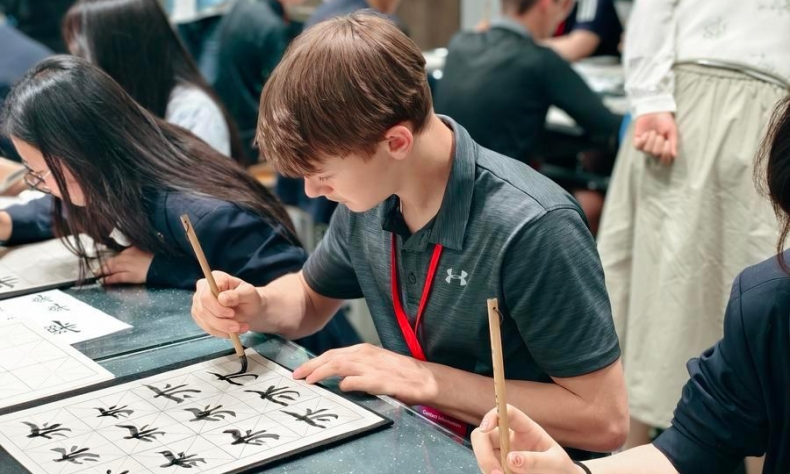
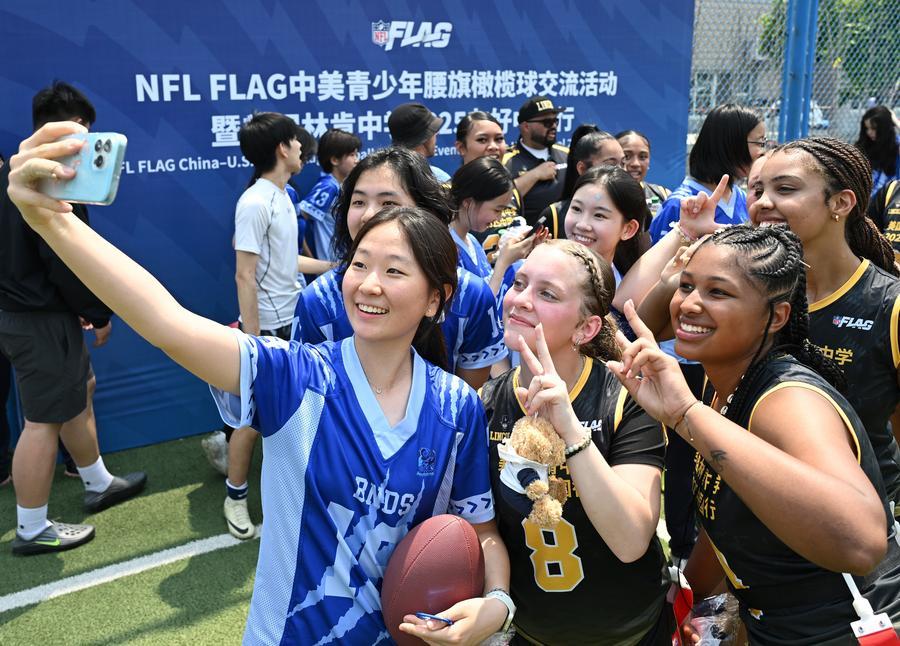
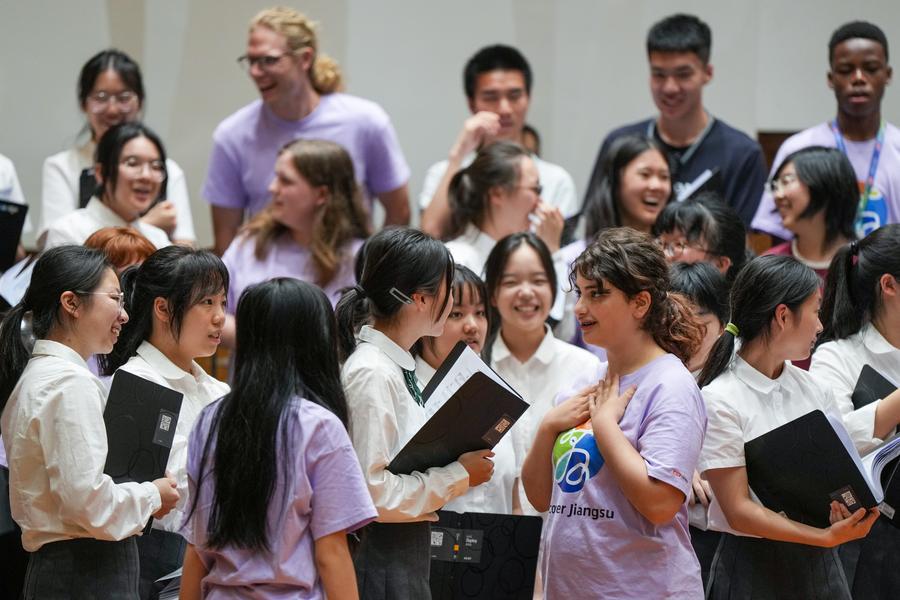
At DKU, this happens every day. Students study together in small, discussion-based classes. They conduct research together. They participate in student organizations and sports together. They encounter different approaches to questions of science, humanities, society, ethics and public policy.
Some DKU students spend part of their undergraduate education at Duke in Durham, and alongside Duke students from around the world. These experiences create personal relationships that are likely to last much longer than any particular political disagreement.
That is precisely why educational exchange matters.
People-to-people ties are strategic, not sentimental
There is sometimes a tendency to regard people-to-people exchange as something nice but secondary to “hard” issues such as trade or national security. I believe that is a mistake.
Economic relationships ultimately depend on people. International business depends on managers who understand different markets. Scientific collaboration depends on researchers who can communicate across institutional and cultural boundaries. Global companies need leaders who can build trust among colleagues from different backgrounds.
Education helps develop those capabilities long before people enter the workplace.
My own career illustrates this. I have taught and worked with students, executives and academics from many countries. Those interactions have repeatedly demonstrated that meaningful collaboration begins with curiosity. Before people can cooperate effectively, they need to understand how others think.
This does not require people to agree.
Indeed, the best universities should encourage disagreement. Academic exchange is valuable precisely because it allows people to test assumptions, challenge conventional wisdom and examine evidence from different perspectives. The objective is not to eliminate differences but to develop the intellectual maturity to manage them constructively.
That is especially important for the U.S. and China.
Investing in the next generation
The current U.S.-China relationship is more complicated than it was when I first visited China. Strategic competition is real. Economic policies are changing. Concerns about technology, national security and supply-chain resilience are legitimate and will not disappear simply because students and scholars are exchanging ideas.
But precisely because the relationship has become more complicated, we need more channels for constructive engagement, not fewer.
Educational exchange is one of the channels that can survive political cycles.
A student who studies with classmates from another country is not merely accumulating academic credits. That student is developing relationships and experiences that can shape how he or she understands the world for decades. Today’s students will become tomorrow’s scientists, entrepreneurs, educators, policymakers and business leaders.
If they have learned to see another country only through headlines, they will carry a narrow understanding into their professional lives. If they have studied, worked and lived alongside people from that country, they are more likely to approach future disagreements with context and perspective.
This is not an argument for ignoring legitimate national interests. Nor is it an argument that universities should be insulated from reasonable standards of transparency, accountability or security.
It is an argument for maintaining educational engagement while managing legitimate concerns responsibly.
Building for the long term
My four decades of experience in China have taught me that relationships are built gradually. They are sustained not only by government agreements but by thousands of individual interactions – in classrooms, laboratories, boardrooms and research collaborations.
The same is true of trust.
Trust cannot be legislated into existence. It is accumulated through repeated experiences of working together, learning from one another and keeping commitments.
That is why the future of U.S.-China relations should not be measured only by the outcome of trade talks or the terms of a trade agreement. We should also ask whether young people in both countries continue to have meaningful opportunities to encounter one another.
Duke Kunshan is one example of what is possible when educational institutions on both sides are prepared to invest for the long term. CEIBS provided another important example in my own career. For me, both experiences reinforced the value of combining local knowledge with global perspective.
The U.S. and China will undoubtedly continue to compete in some areas and cooperate in others. That is the reality of a complex relationship between two major countries.
But competition does not make understanding less important. It makes understanding more important.
If we want the next generation of Americans and Chinese to manage their differences responsibly, we should give them opportunities to know one another before they inherit the responsibility of managing the relationship.
Education cannot resolve every disagreement between countries. But it can prepare the people who will have to resolve them.
That is an investment worth protecting.