A Response to the ABC
 Facebook
 Twitter
 Linkedin
 Google +
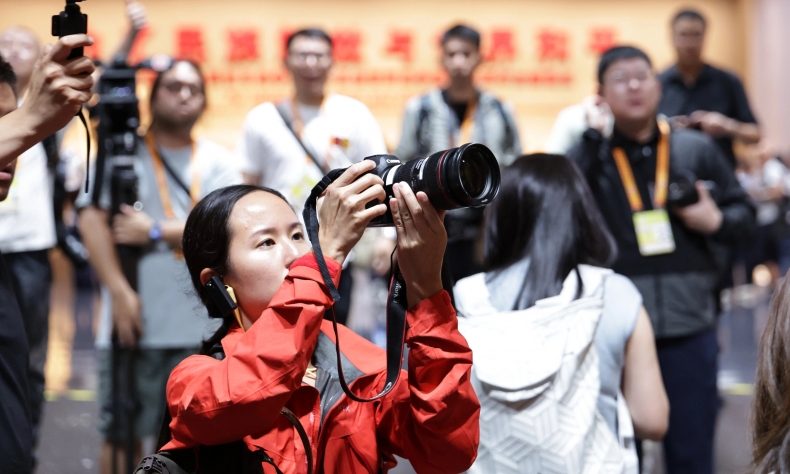
In China, the reporter’s role is not to confront the system but to help it function as intended—to keep the ‘mass line’ open, ensuring information flows between the people and the leadership.
Australia’s public broadcaster, the ABC, recently published an article titled “China doesn’t want its politicians talking with reporters. Here’s what happened when we tried.” It recounts the writer’s experience covering China’s national Two Sessions in early March as a new correspondent in Beijing. As a Chinese reporter who has covered the Two Sessions, China’s most important annual political event, several times, I want to start by giving this peer some genuine credit and then share my experiences.
Covering the Two Sessions—a high-stakes, large-scale national occasion—is never easy, especially for a newcomer. With thousands of Chinese reporters scrambling for stories, securing even one (substantive) interview with a delegate is an achievement. I’ve been a reporter for 15 years and still approach the sessions with caution: The schedule is packed, opportunities are unpredictable and preparation must be meticulous.
For a foreign journalist, the hurdles are higher. Language barriers, cultural differences and the sheer scale of the events—sometimes involving around 5,000 delegates and committee members under one roof—make it challenging to have an in-depth conversation on a particular question. It is even a hard task for a journalist to identify a delegate and field the right questions promptly. Even the most experienced Chinese reporters invest considerable effort ahead of time, building relationships and coordinating schedules. Delegates, after all, come to Beijing with serious legislative agendas and precious little time for media. Many published interviews are scheduled or snatched in halls, corridors, or in the moments between meetings.
Take an interview we did this year with delegates from both Xizang and Xinjiang Uygur autonomous regions’ delegations. We had basically secured the interview some days in advance; but on the day itself, the exact timing and filming location were still being coordinated right up to the last minute. On top of that, because we are an English-language outlet, one of the delegates wanted to do the interview in English but wasn’t entirely confident in her language skills—so we also helped her prepare. All of this required teamwork and a fair amount of time. We also did the spontaneous “catch-if-you-can” interviews—corridor chats, hallway encounters with delegates we might not have known beforehand. By listening to what other reporters are asking, you can quickly come up with a few questions on the spot and walk away with an exclusive.
The experiences of the first-time foreign journalists I spoke with at the Two Sessions varied. One said she gained more than she expected, filming and interviewing inside the Great Hall of the People, sometimes alone, sometimes with Chinese colleagues—once she understood the “rules.”
Brainwork plus legwork
The Two Sessions are the annual meetings of the National People’s Congress (NPC) and the National Committee of the Chinese People’s Political Consultative Conference (CPPCC), which set the national policy direction and economic targets for the year ahead.
NPC deputies and CPPCC members are lawmakers and political advisors from across the country, many with rich stories to tell but perhaps little media experience. The conference rooms during the Two Sessions are not the only chance to speak with them. The real test for any journalist lies in brainwork and legwork: How far you are willing to go, and how consistently you engage with your subjects beyond the annual spotlight.
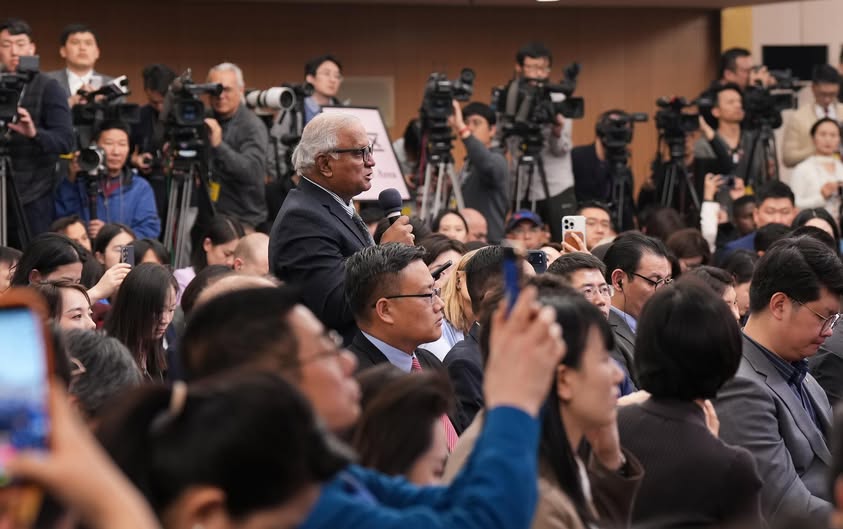
This explains why some journalists can secure seats at press conferences while others struggle even to obtain access.
A high-quality interview is a meeting of minds. It demands linguistic fluency, professional knowledge and deep preparation—requirements that apply equally to Chinese and foreign reporters. For foreign correspondents in China, as for Chinese reporters posted abroad, the key is long-term immersion: To live among the people, grasp the unspoken context and understand society from within. That is the true value of being on the ground in the information age.
For a correspondent new to China, due diligence is especially necessary and a short-term effort rarely suffices for such a complex assignment. Sensational or emotionally charged headlines may draw clicks, but they also deter potential interviewees, who fear being misquoted or taken out of context.
The off-stage dialogue
The ABC article reflects a common pattern seen in foreign coverage of China: conclusion first, evidence thin. Lack of evidence led to the premature conclusion.
Stories like the ABC‘s are not uncommon in Western media: A journalist fails to get the interview they wanted, and the Chinese Government is accused of stonewalling. For most overseas readers, it’s hard to discern whether the issue is China’s opacity or the journalist’s ill-preparedness.
“There is such low understanding among the population of the U.S. of what China is like, of what ASEAN and other countries are like,” former U.S. Secretary of Commerce Carlos Gutierrez said at the Boao Forum for Asia Annual Conference 2026 in Hainan Province on March 24. He suggested everyone should come to China at least once rather than just immerse themselves in social media bullet points.
As a Chinese reporter working in English, I see a shared desire: China wants to be heard, and the world wants to understand China. Why, then, does this gap continue to persist? What role should media play to narrow the gap?
A recent conversation with YouTuber Jerry Grey, a retired British police officer who has dedicated years to debunking China “myths” on social media, offered a clue. Grey had read the ABC piece and hoped to host a live dialogue with its author—which didn’t materialize. When he shared his questions with me, I noticed he had thoughtfully marked several as “sensitive,” saying I needn’t answer them all. Examples included whether China has investigative journalists, and whether the Chinese Government allows criticism.
To mark them as “sensitive” is, in itself, a topic worth exploring. I feel these questions become sensitive not because they are inherently forbidden, but because they are caught between two things: a lack of language—the right words to explain complex realities, and a lack of context—the deeper understanding that makes those words land as intended. Over time, these unresolved frictions accumulate, like small scars. Every now and then, when bumped, they still hurt.
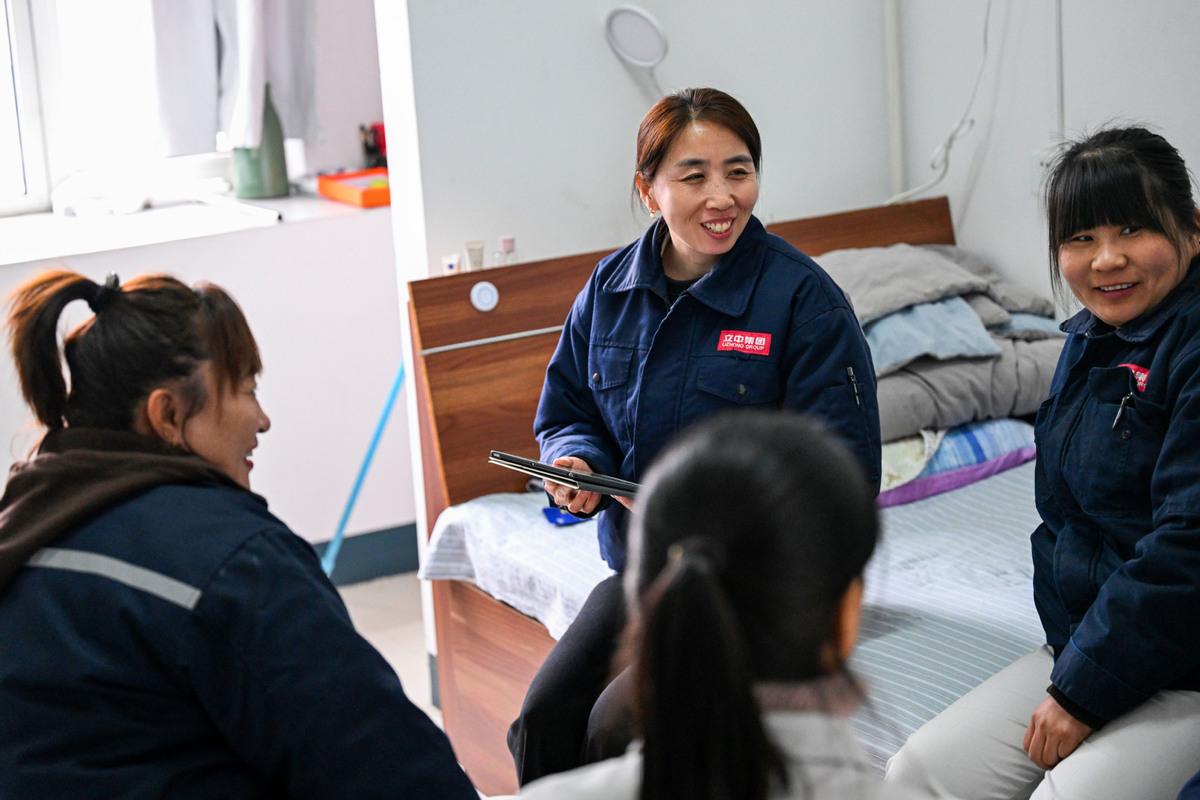
Those questions are best examined within China’s specific social and political context, not through a singular Western lens. The Western model often assumes an inherent conflict between government and people, casting the journalist as an adversarial “watchdog.” The Chinese model starts from a different premise: The interests of the state and the citizenry are fundamentally aligned. Here, the reporter’s role is not to confront the system but to help it function as intended—to keep the “mass line” open, ensuring information flows between the people and the leadership. This “mass line,” China’s governance model that emphasizes the study of the needs and ideas of the masses in the formulation and regular revision of policy, reaches its height each year with the activities of the Two Sessions.
This philosophical difference yields distinct professional practices, yet the craft itself shares much common ground. A comparison of the categories of the Pulitzer Prize with those of the China Journalism Award reveals that both honor public service, investigative reporting and commentary, which reflects a global consensus on journalism’s core values.
But differences remain
During my livestream with Grey, one viewer comment pointed to a structural issue in Western journalism under capitalism. “People find it boring to read about policies that address citizens’ concerns. Those stories don’t make money.” Stories of confrontation, controversy, conspiracy, protest or scandal do.
As for whether people in China can publicly criticize their government—it’s less a black-and-white question of “allowed or not,” and more about how it works in practice. Chinese social media is vibrant; many social issues first surface through online discussion. Over the years, local governments have set up formal feedback channels, such as the nationwide 12345 hotline. The aim is to provide a structured avenue for complaints and suggestions. Effectiveness varies, but the mechanism exists.
In China, disagreement is generally expressed through systemic or internal channels rather than public protests or open political opposition. It’s a more structured form of feedback. If we can tackle problems while they are still small, why let them grow into something big and difficult to fix?
The Two Sessions are not the only window into Chinese politics, and this short piece is far from sufficient to equip foreign colleagues with all the context they need to report on China. But it could be a start—an invitation to go beyond headlines and get into serious coverage that requires sustained effort, mutual understanding, and a willingness to engage with a society on its own terms.