A Visit to the Museum of the Communist Party of China: A Walk Through History and Heroism
 Facebook
 Twitter
 Linkedin
 Google +
Heroism resides in collective endeavor, and individual merit gains meaning through service to the greater good.
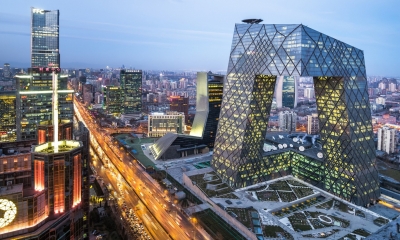
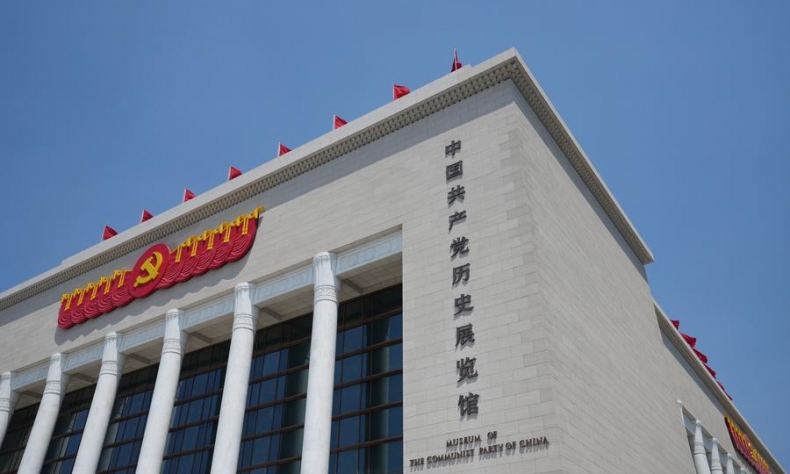
The Museum of the Communist Party of China (CPC), inaugurated in 2021 to mark the centenary of the Party’s founding, offers a deeply stimulating and immersive experience. Located near the iconic site of the 2008 Beijing Olympic Games, this striking modern complex is more than a museum: it is both a reflection on China’s modern history and a statement of its present dynamism and future aspirations.
As a major expression of hongse wenhua (红色文化), or red culture, the museum celebrates the history of the Communist Party and its decisive role in shaping China over the past century. Approaching the building, one is immediately struck by its monumental and dignified architecture. Its commanding presence evokes continuity, resolve, and authority, recalling the towering historical figure of Mao Zedong, whose influence looms large throughout the Party’s long journey.
The proximity to the Olympic site is symbolically powerful. It creates a bridge between revolutionary memory and contemporary achievement, suggesting an unbroken historical trajectory from struggle to national renewal. The architecture itself functions as a narrative device: solid, expansive, and forward-looking, it embodies the Party’s enduring commitment to national progress.
One of the museum’s most memorable features is the monumental representation of the Great Wall in the entrance hall. Suspended at the crest of a mountain chain, rising above clouds and seemingly defying gravity, this almost infinite structure immediately places the visitor in a symbolic space where history transcends ordinary limits of time and scale. As one of China’s most enduring symbols, the Great Wall evokes strength, unity, perseverance, and resistance to adversity. In this magnificent rendering, space and time converge, setting the tone for the visit and situating the CPC’s century-long history within a much broader civilizational narrative.
Like the Great Wall stretching across China’s vast landscape, the history of the CPC unfolds across a full century marked by trials, transformations, and achievements. The museum narrates this story through an impressive array of exhibits, original artifacts, archival documents, and sophisticated multimedia installations. From the Party’s founding in Shanghai in 1921 to its leadership in revolution, reconstruction, reform, and global engagement, the visitor is guided through a coherent historical arc.
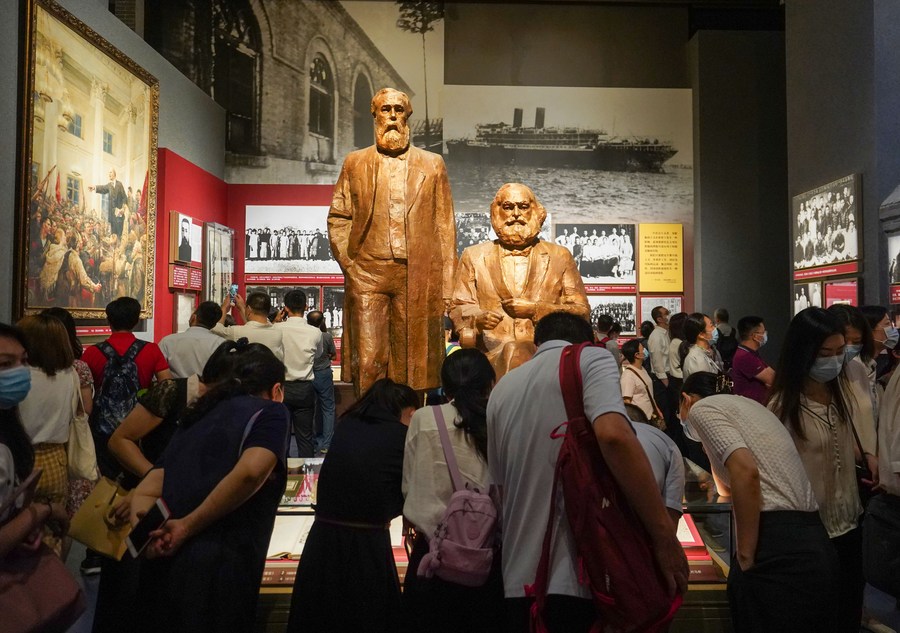
Central to this experience is the museum’s strong pedagogical ambition. A museum of this scale does not merely display objects; it educates, contextualizes, and transmits memory. Clear explanations, chronological logic, and thematic clarity ensure that visitors of different backgrounds can grasp complex historical processes and understand how individual events fit into a larger national story.
No account of the Party’s history would be complete without addressing the Long March, a defining episode of endurance and transformation. The museum devotes a powerful immersive section to this extraordinary odyssey, making use of contemporary technologies to convey both its physical hardships and its historical significance. The Long March emerges not merely as a military retreat, but as a decisive turning point that ultimately paved the way to victory—a foundational moment of moral resilience, strategic adaptation, and ideological consolidation. At the end of this segment, a quotation from President Xi Jinping resonates strongly: “Every generation has its own long march, and every generation must see that march through.” This statement effectively links past sacrifice to present responsibility and future challenges.
The museum’s scenography plays a crucial role in shaping the visitor’s experience. Scenography in a museum is not decorative; it structures perception, guides movement, and enhances understanding. Here, spatial design, scale, rhythm, and visual focus are carefully orchestrated to balance grand historical narratives with revealing details. The result is a clear and engaging presentation that avoids overload while maintaining emotional intensity.
Beyond its educational function, the museum also offers a strong aesthetic experience. The pervasive use of Zhongguo hong (中国红), China red, creates a vibrant and emotionally charged atmosphere that reflects the revolutionary spirit of the Party. This effect is amplified by an exceptionally refined lighting system, an essential component of successful museal scenography. Carefully calibrated light allows red to reveal its full range of qualities—depth, warmth, solemnity, and energy—while highlighting objects, texts, and sculptures without overwhelming the visitor. Flags and banners appear throughout the itinerary as rallying symbols, immersing visitors in a visual language of vitality, courage, and collective resolve.
Among the museum’s most striking elements are the sculptures by Wu Weishan (吴为山), one of China’s most powerful contemporary artists. His works capture the emotional depth and historical weight of the Party’s experience. Far from static commemorations, these sculptures convey movement, tension, and inner strength. They embody heroism, sacrifice, and vision, inviting viewers to engage emotionally as well as intellectually. Depending on one’s background and sensitivity, they may evoke pride, sorrow, determination, or hope.
Such a rich cultural institution allows each visitor to find personal points of resonance. For me, the visit reactivated a long-standing reflection on the culture of ying xiong (英雄), heroism, which has played a central role in Chinese history. While ying xiong is commonly translated as “hero,” heroism in the Chinese context has distinct characteristics. It is less about individual glory than about moral integrity, perseverance, and service to a collective cause.
In the context of the CPC, heroes are not limited to military commanders or political leaders. They also include ordinary people—workers, peasants, soldiers, and volunteers—whose dedication and sacrifices contributed to the nation’s transformation. The museum highlights not only figures such as Mao Zedong, Zhu De, and Zhou Enlai, but also countless unsung heroes whose efforts sustained the revolutionary project. By foregrounding these stories, the museum affirms a core value of the CPC: heroism resides in collective endeavor, and individual merit gains meaning through service to the greater good.
My visit coincided with the 80th anniversary of victory against Japanese aggression and fascism. Alongside its permanent collections, the museum presented a temporary exhibition marking this important anniversary. It was in this context that I learned, for the first time, about the participation of Chinese volunteers who fought alongside Spanish Republicans during the Spanish Civil War, prior to the Second World War. This unexpected historical connection broadened the narrative beyond national borders, highlighting the international dimensions of anti-fascist struggle and solidarity.
The Museum of the Communist Party of China is therefore not only of interest to Chinese visitors. It deserves the attention of anyone seeking to understand the Party, its historical foundations, and its role in shaping China’s renaissance—and, by extension, its growing impact on the world. A visit is also a firsthand encounter with the sophistication, ambition, and diversity of China’s contemporary museum ecosystem.