A Year of Deepening China-Africa Bonds
 Facebook
 Twitter
 Linkedin
 Google +
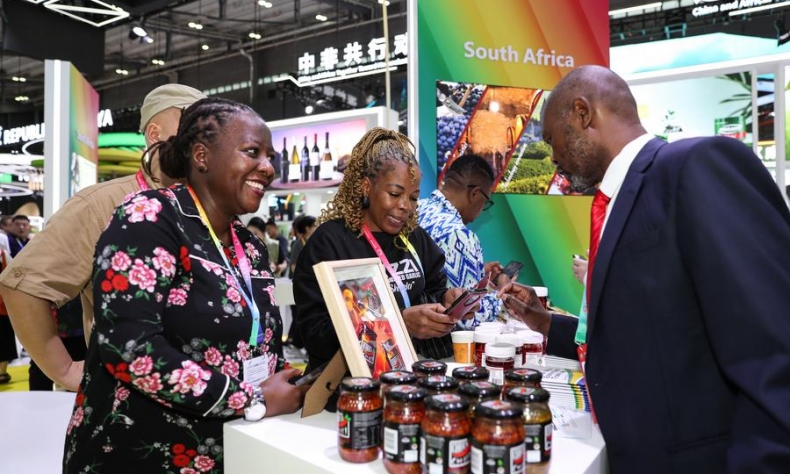
Political trust, economic collaboration and cultural exchanges further solidify China-Africa ties.
The year 2025 marks both the 25th anniversary of the Forum on China-Africa Cooperation (FOCAC) and the first year of implementation of the outcomes of the 2024 FOCAC Beijing Summit. Throughout the year, China has supported Africa in addressing historical injustices at diplomatic and political levels and firmly backed South Africa in hosting the G20 Leaders’ Summit, further deepening China-Africa strategic mutual trust.
In the economic field, China has granted zero-tariff treatment to all products exported from African countries with diplomatic relations with China, transforming its vast market into a major opportunity for Africa. The two sides are thus taking steady and confident steps on their shared path towards modernisation.
As in previous years, 2025 began with the Chinese foreign minister’s first annual foreign visit abroad to Africa. In January, Foreign Minister Wang Yi visited Namibia, the Republic of the Congo, Chad and Nigeria. This visit not only reaffirmed the enduring vitality of China-Africa friendship and China’s consistent commitment to cooperation with Africa but also set a strong foundation for implementing the outcomes of the 2024 FOCAC Beijing Summit.
During his meeting with Namibia’s President-elect Netumbo Nandi-Ndaitwah, Wang emphasised that China’s long-standing practice of choosing Africa as the destination of its first annual foreign visit reflects a clear message: regardless of changes in the international landscape, China will remain Africa’s most trustworthy friend, most reliable development partner and strongest supporter on the global stage.
Political alignment
African countries, in turn, firmly uphold China’s legitimate position in safeguarding national sovereignty and territorial integrity. On issues concerning China’s core interests and major concerns, they consistently stand with China. During the visit, African leaders reiterated their steadfast commitment to the one-China principle and support for China’s national reunification. As Chadian Prime Minister Allamaye Halina noted, Chad places relations with China at the highest level of its foreign policy priorities and remains China’s firmest and most dependable partner, while welcoming deeper mutually beneficial cooperation and increased Chinese investment.
At the 38th AU Summit in February 2025, the AU adopted the theme “Justice for Africans and People of African Descent Through Reparations,” issuing one of the strongest calls yet to redress historical injustices inflicted by Western colonialism. China expressed unequivocal support for this call, voicing firm backing for the AU’s position. At the 2024 FOCAC Beijing Summit, President Xi Jinping stressed that modernisation is the inalienable right of all countries, noting that the Western path to modernisation had caused immense suffering for developing nations. Since World War II, countries of the Global South – represented by China and African states – have pursued independence, development and the rectification of historical injustices embedded in the global modernisation process.
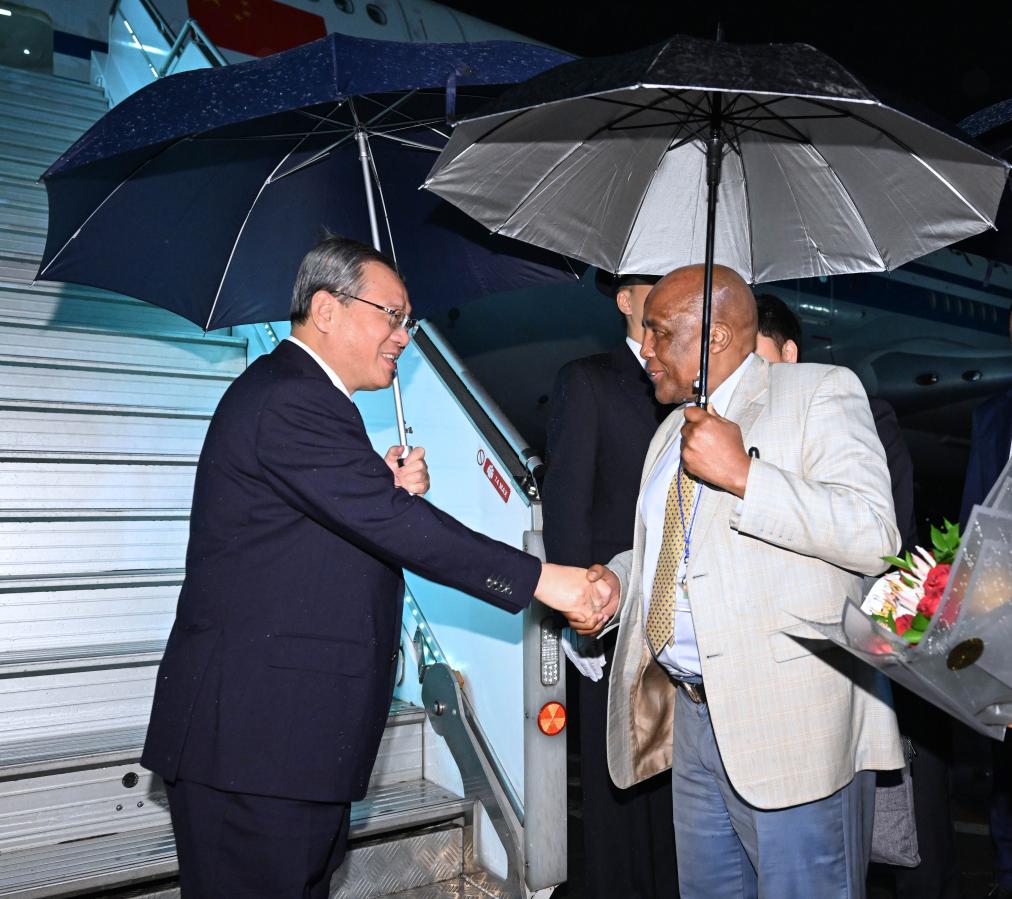
China also firmly supported South Africa in assuming the G20 Presidency. On 1 December 2024, South Africa formally took up the role, following the AU’s accession as a permanent G20 member in 2023 – an important milestone elevating Africa’s global standing. China, the earliest advocate for the AU’s G20 membership, has actively supported South Africa’s presidency to ensure that global governance reflects a stronger African voice. Premier Li Qiang led the Chinese delegation to attend the G20 Leaders’ Summit in November 2025.
Despite South Africa proposing the theme “Solidarity, Equality, Sustainability,” the Donald Trump administration responded with obstruction. Citing opposition to South Africa’s Expropriation Bill, the US boycotted the G20 Foreign and Finance Ministers’ Meetings and the Leaders’ Summit and even threatened to block the issuance of a joint communiqué. US Secretary of State Marco Rubio accused South Africa of promoting so-called “anti-American agendas,” including diversity, equality and inclusion. Yet, with the firm support of China and other G20 members, South Africa successfully released a joint statement at the summit’s opening, leaving the absent US isolated.
Economic cooperation
During his New Year visit, Wang said China and Africa must be practical contributors to the rise of the Global South. As the world’s largest developing country, China is committed to supporting development across Africa – home to the greatest concentration of Global South nations – and to strengthening China-Africa cooperation as a driving force for unity, revitalisation and enhanced international influence among developing countries.
Since the 2024 FOCAC Beijing Summit, which centred on joint modernisation and advancing Global South modernisation, cooperation has progressed swiftly under the framework of the Ten Partnership Actions. Chinese enterprises have expanded investment across Africa, with projects in green mining, home appliances, automobiles and new energy completed and put into operation. Cooperation has also deepened in logistics and transportation, the digital economy and finance.
Digital economy cooperation, in particular, has become a new highlight. Platforms such as Alibaba.com and Temu have extended their presence across Africa, making cross-border e-commerce a new driver of growth. In trade, China has introduced a series of promotion and facilitation measures. As of December 2024, China had granted zero-tariff treatment to all taxable goods from the least developed countries with diplomatic ties with China – 33 of which are in Africa. In June 2025, this policy was expanded to all African countries with diplomatic relations with China, further opening China’s market to African exports.
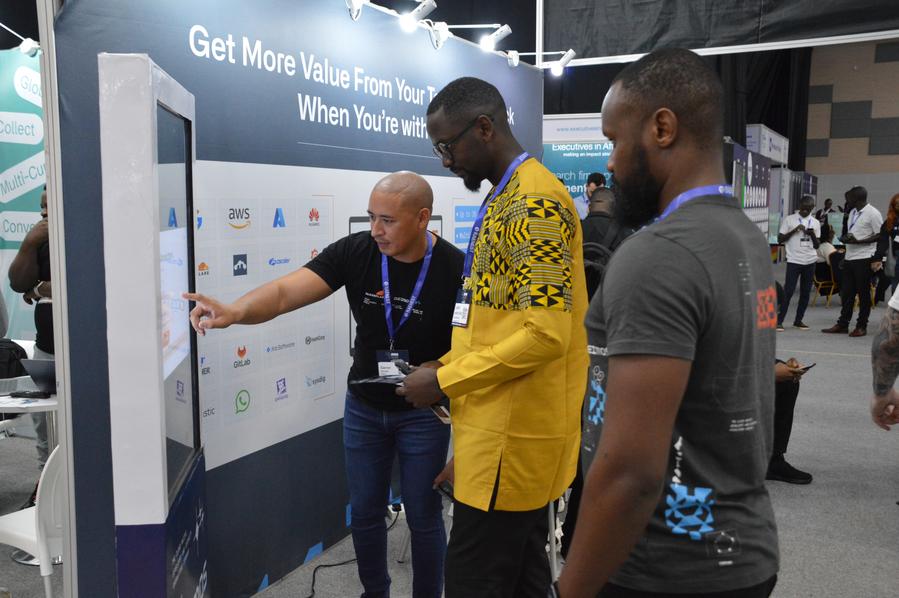
In stark contrast, the Trump administration has imposed sweeping tariffs that disproportionately affect economically vulnerable African states, with additional duties of 30-50 percent imposed on countries including Lesotho, Madagascar, Mauritius, Botswana, Angola, Algeria and South Africa. The contrast is clear: China practices openness and free trade, while the US pursues protectionism.
From 12 to 15 June 2025, the fourth China-Africa Economic and Trade Expo was held in Changsha, Hunan Province, under the theme “China and Africa: Together Towards Modernisation.” Focusing on key areas such as infrastructure, agriculture, clean energy, textiles and garments, the digital economy and green mining, the expo featured events including the China-Africa CEO Dialogue, the China-Africa Dialogue on Youth Innovation and Entrepreneurship and matchmaking activities in the Pilot Zone for In-depth China-Africa Economic and Trade Cooperation.
These engagements further expanded both the depth and breadth of China-Africa cooperation.
In November 2025, Premier Li paid an official visit to Zambia and, together with Zambian President Hakainde Hichilema and Tanzanian Vice President Nchimbe, attended the ground-breaking ceremony for the revitalisation of the Tanzania-Zambia Railway (TAZARA).
The MoU for TAZARA’s revitalisation, signed during the 2024 FOCAC Summit, has since seen steady progress through close coordination among relevant departments and enterprises of all three countries. The project has now entered its implementation stage.
Following revitalisation, TAZARA’s freight capacity is expected to increase from about 200,000 tonnes annually to 2.4 million tonnes, while transit time will be reduced by two-thirds. The project is also projected to create over 20,000 jobs.
Looking ahead to 2026, the TAZARA revitalisation project will enter the important phase of substantive construction. Chinese enterprises are expected to further expand investment in Africa, while more African products will continue gaining access to China’s market.
Designated as the China-Africa Year of People-to-People Exchanges, 2026 will also witness intensified exchanges – particularly among women and youth – ushering in a new peak in China-Africa social and cultural interaction.
The author is research fellow of Institute of West-Asian and African Studies, Chinese Academy of Social Sciences.