As Western Economies Erect Barriers, China Deepens Its Openness
 Facebook
 Twitter
 Linkedin
 Google +
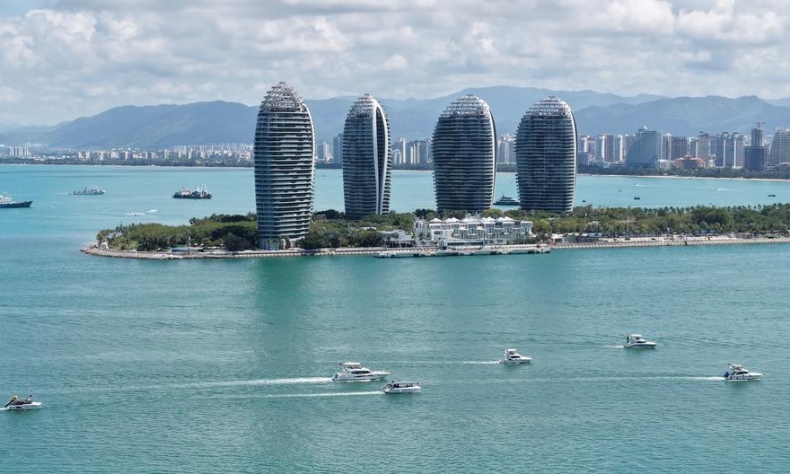
While tariffs are raised to guard against perceived unfairness, China is lowering barriers through codified, rules-based systems designed to endure.
At a time when much of the Western world is retreating behind tariff walls and industrial policy rhetoric framed around “unfair competition,” China is moving steadfastly in the opposite direction. The formal launch of island-wide special customs operations in the Hainan Free Trade Port (FTP) marks not merely a new trade facilitation zone, but a statement about the kind of global economic system China intends to champion in the coming decade.
This moment matters not only for what Hainan is, but for what it symbolizes in China’s 15th Five-Year Plan (2026-2030): a reaffirmation of openness as a core development strategy, institutionalized through law, infrastructure, and policy continuity. This stands in stark contrast to development approaches negotiated ad hoc or weaponized through tariffs.
A tale of two responses to global uncertainty
In the United States and European Union, trade policy over the past decade has increasingly relied on tariffs, subsidies, and “strategic autonomy” frameworks. Headlines are dominated by coverage of imposed or threatened tariffs, typically justified as protection against unfair competition.
Whatever their political appeal, these measures share a common feature: they are discretionary, reversible, and deeply sensitive to electoral cycles. Companies operating across borders face not only higher costs, but also profound uncertainty about the durability of market access.
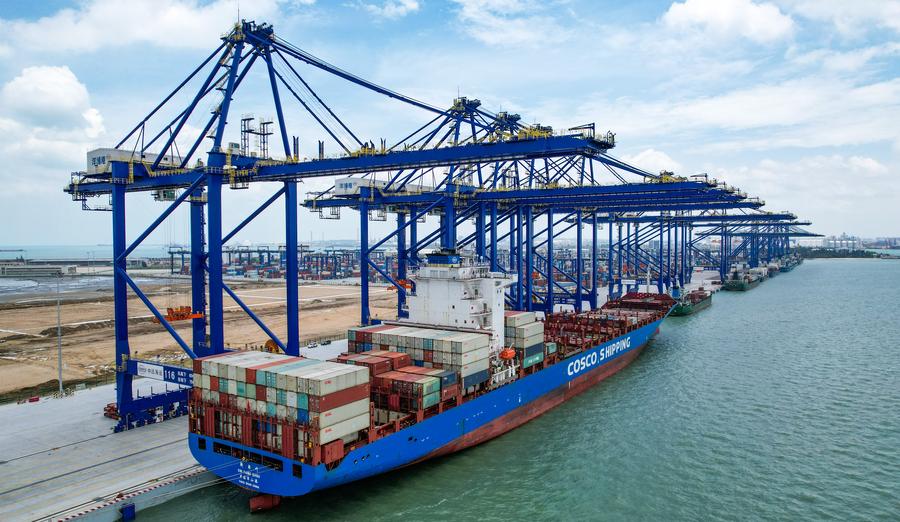
By contrast, the Hainan FTP is built around predictability. On December 18, 2025, China formally launched island-wide special customs operations, treating the entire province as a single customs territory with a clearly defined “two-line” system: freer access at the international border, regulated access to the Chinese mainland, and free circulation within the island.
Hainan is not merely another free trade zone. It is China’s first Free Trade Port, a fundamentally different institutional design. Unlike pilot Free Trade Zones (FTZs), which are often limited in scale and scope, Hainan operates as a province-wide customs territory with autonomy comparable to major global trade hubs.
Key features include: Zero-tariff treatment on approximately 74 percent of tariff lines, covering most production equipment and raw materials; a reduced corporate income tax rate of 15 percent for encouraged industries, paired with a corresponding cap on individual income tax for high-end talent; visa-free access for citizens of 86 countries, facilitating business mobility; streamlined customs clearance via digitalized, rules-based procedures rather than discretionary approvals.
All these measures dramatically reduce transaction costs for companies seeking to integrate production, processing, and distribution across borders. Observers note the design is explicitly intended to attract international businesses not only into China, but also into regional value chains anchored in Asia-Pacific markets.
Institutional openness in the 15th Five-Year Plan
The significance of Hainan FTP becomes clearer when read alongside China’s 15th Five-Year Plan, which frames openness not as a concession to globalization, but as a core pillar of modernization.
The Plan explicitly identifies rising unilateralism and protectionism as systemic risks to global stability and responds not with reciprocal closure, but with deeper institutional opening-up, rule alignment, and multilateral engagement. The signal is clear for anyone willing to listen: openness is integral to Chinese modernization itself; it is not a fickle tactical choice, but a strategic constant.
Crucially, the Plan emphasizes policy credibility over policy signaling. Rather than relying on temporary tariff suspensions or negotiated exemptions, it prioritizes stable market access regimes, alignment with high-standard international trade rules, and predictable treatment of foreign capital.
The Hainan FTP stands as one of the most recent concrete manifestations of Chinese development logic. Openness gradually expands through experimentation and institutionalization when proven successful.
The economic rationale behind this approach is well supported by empirical research. In my own work on trade flows and foreign direct investment (FDI) across Regional Comprehensive Economic Partnership (RCEP) member countries, our team found that business environment quality, particularly border efficiency and regulatory transparency, has a statistically significant positive impact on trade and investment outcomes. Fast customs clearance, transparent rules, and efficient infrastructure are far from minor conveniences. They are decisive factors shaping corporate location choices and supply-chain architecture. Research suggests that the digitalized clearance, reduced administrative discretion, and clearly defined value-added thresholds introduced by the Hainan customs model can directly improve clearance efficiency. In economic terms, it lowers fixed costs of market entry while compressing variable trade costs. These are precisely the conditions that appeal to global firms considering long-term investment.

Stability vs. volatility in global trade governance
One of the most underappreciated contrasts between China’s current opening-up strategy and Western protectionist responses lies in their time horizons.
Tariffs introduced to “protect domestic industry” can be raised, lowered, or repurposed within a single political cycle. Companies understand this. As a result, tariffs often discourage long-term investment even when they appear to offer short-term shelter.
The Hainan FTP, by contrast, is designed on a multi-decade timeline, with milestones extending to 2035 and 2050. Its customs regime, tax incentives, and legal structures are explicitly framed as permanent features of China’s opening-up architecture, not temporary experiments.
For international investors, this difference carries weight far beyond rhetoric.
While it might be dismissed in isolation as merely a regional initiative, Hainan is in fact part of a broader long-term strategy. This pattern includes the Belt and Road Initiative (BRI), the expansion of regional trade agreements, and now, high-level institutional opening-up.
The common thread running through all these efforts is openness backed by infrastructure and institutions, a recognition that sustainable trade flows depend not only on ports and logistics, but also on transparent rules and mutual trust. As global supply chains fragment under geopolitical pressure, the model China is advancing seeks building resilience through diversification and integration rather than isolation or retreat.
The launch of island-wide special customs operations in the Hainan FTP sends a message that contrasts sharply with prevailing Western trade politics. While tariffs are raised to guard against perceived unfairness, China is lowering barriers through codified, rules-based systems designed to endure.
Whether one agrees with China’s political system or not, the economic signal is unambiguous: openness here is being institutionalized, not improvised. For companies, investors, and policymakers navigating an increasingly uncertain global economy, this distinction deserves serious attention.
Thomas Karlsson is a researcher at the Belt and Road Institute in Sweden.