Berlin’s Economic Future Runs Through China
 Facebook
 Twitter
 Linkedin
 Google +
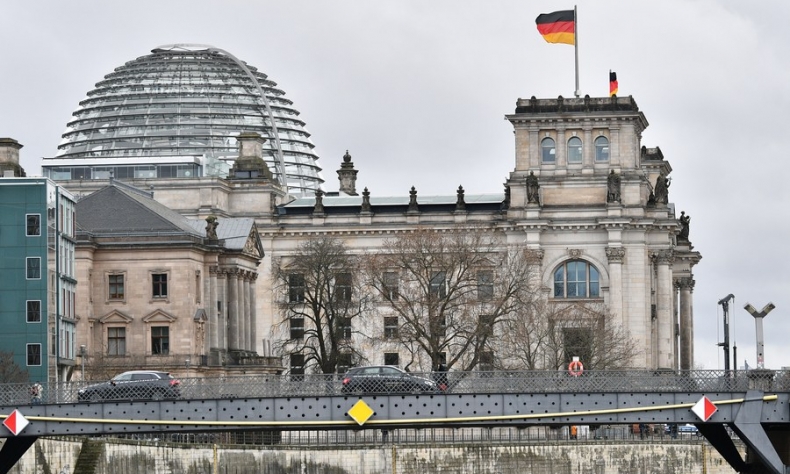
German Chancellor Friedrich Merz’s Beijing visit this week, where five intergovernmental agreements were signed, signals Berlin’s pragmatic bet that economic survival depends on China.
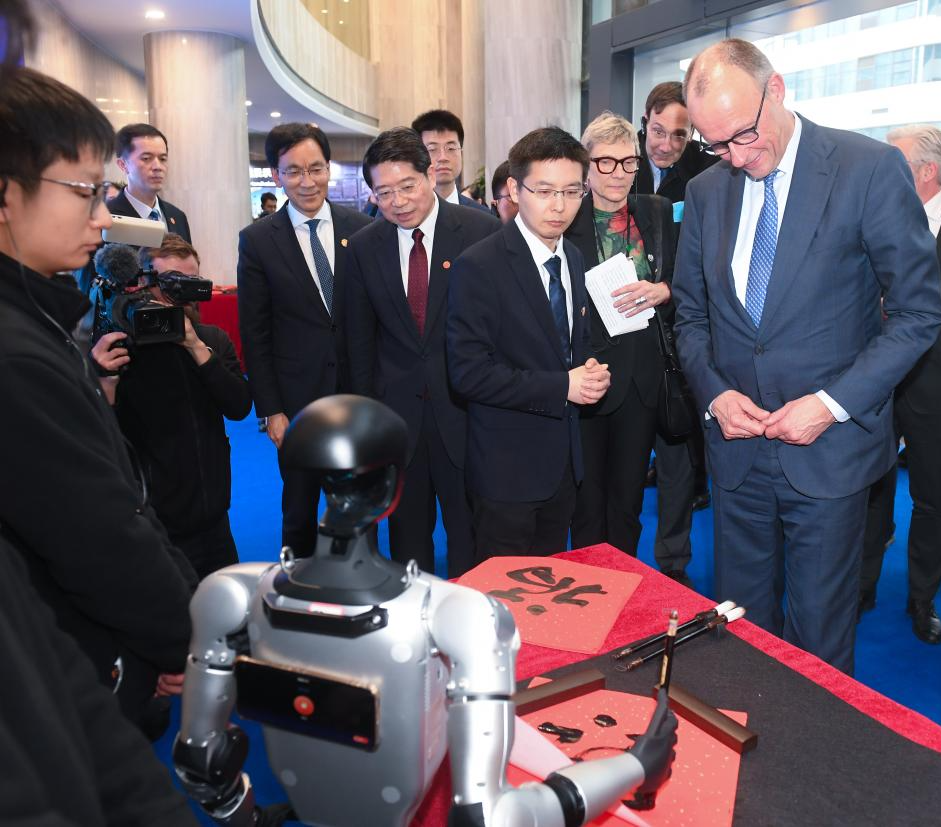
When Friedrich Merz sat down in Beijing with Chinese President Xi Jinping and Premier Li Qiang this week, the choreography was deliberate. Five intergovernmental agreements were signed. The symbolism was unmistakable: at a time of sharpening geopolitical rhetoric, Berlin and Beijing chose structured engagement.
For some observers in Europe’s commentariat, such engagement is seen as naivete or weakness. Yet this reading misjudges both the gravity of Germany’s economic predicament and the structural realities of the global economy. The visit was less a diplomatic flourish than a recognition of hard constraints. Germany’s economic model is under strain. Its room for maneuver is narrowing. And like it or not, China remains central to any viable pathway forward.
For decades, Germany’s economic relationship with China was defined by complementarity. German capital goods, machine tools, chemical inputs, and premium automobiles found a vast and growing market in China’s industrial expansion and growing middle-income group. The trade balance favored Germany. Industrial champions — from automotive to advanced engineering — posted enviable margins.
German carmakers built factories across China, not merely to serve the domestic market but to export to third markets as well. These ventures were not peripheral — they were central to corporate survival strategies. Without them, the competitive pressure from Japanese and Korean manufacturers would have been far more acute. China provided scale, profitability and, critically, a learning environment for process optimization in an increasingly demanding global marketplace.
Today, that complementarity is evolving into a mix of cooperation and competition. Chinese machinery and equipment manufacturing has climbed the value chain. Electric vehicles, battery technologies, industrial robotics, renewable energy systems — China is no longer simply a market; it is also a formidable producer. The trade surplus that Germany once enjoyed has narrowed and, in some sectors, reversed.
For certain German industries, this is unsettling. For others, integration runs so deep that disentanglement would be economically self-harming. The auto sector remains heavily invested in Chinese production and sales. German manufacturers depend on Chinese components, subassemblies and materials. “Decoupling” in such an environment is not a strategy; it is self-sabotage.
The energy shock
Overlaying this structural shift is Germany’s energy crisis. The abrupt rupture of low-cost Russian gas supplies — previously a cornerstone of German industrial competitiveness — has left the country exposed. High-cost liquefied natural gas imports, particularly from the United States, have raised input costs across the board. Energy-intensive industries, including chemicals, metallurgy, and advanced manufacturing, are under sustained pressure.
This issue goes to the heart of Germany’s economic model. Its prosperity has rested on advanced industrial production underpinned by reliable and affordable energy. Without restoring that foundation, talk of competitiveness is hollow.
Here, China’s role is unavoidable. China is the global leader in photovoltaic production, battery manufacturing, grid-scale storage, and increasingly in wind and hydrogen technologies. If Germany is serious about accelerating its energy transition while restoring cost competitiveness, deeper engagement with Chinese clean energy suppliers is not optional — it is essential.
Energy sovereignty in the 21st century will not be achieved through nostalgia for fossil fuel dependencies. Nor will it be secured through military expenditure. It will come from building resilient, diversified, technologically advanced energy systems. In this domain, China is not a marginal actor; it is the pivotal one.
The mirage of remilitarization
Some in Berlin and Brussels suggest that Europe’s answer to structural economic challenges lies in remilitarization. Defense spending is framed as both a security imperative and an economic stimulus. Yet military expenditure cannot substitute a coherent industrial strategy. It does not solve the problem of energy costs. It does not restore export competitiveness. And it does not address Europe’s technological dependencies in critical green industries.
Germany, as Europe’s largest industrial economy, is expected to provide policy leadership. Leadership cannot mean drifting into a subordinate role within an increasingly volatile transatlantic relationship. Nor can it mean conflating economic renewal with strategic confrontation.
Recent signals from Washington have been sobering. At the Munich Security Conference, comments by Marco Rubio suggested a view of Europe less as a partner and more as a civilizational outpost expected to carry disproportionate burdens. Meanwhile, U.S. trade and industrial policy has oscillated, often prioritizing domestic subsidy regimes that disadvantage European producers.
Germany cannot build its future on policy unpredictability elsewhere. Strategic autonomy requires economic realism.
Constructive engagement
Merz’s meeting with President Xi was not about embracing dependency but about managing interdependence. The signing of five agreements signals a willingness to structure cooperation rather than leave it to drift amid geopolitical noise.
China has demonstrated consistency in economic planning and industrial policy over decades. European businesses may disagree with aspects of that model, but they cannot ignore its results. China’s ascent in clean energy, digital infrastructure and advanced manufacturing has been systematic. For Germany, engagement offers both opportunity and discipline: exposure to intense competition while retaining access to a vast market and technological ecosystem.
The alternative — “derisking” to the point of disengagement — would impose immediate costs with uncertain strategic gain. Pursuing such a path would do more harm than good.
Eurasia and the future of German industry
Germany’s geographic and economic destiny is Eurasian. Its industrial supply chains stretch eastward. Its export markets span the continent. The notion that it can thrive as the subordinate trailing edge of a transatlantic power bloc is increasingly implausible.
A meaningful future lies in anchoring Western Europe within a wider Eurasian economic landscape. This does not entail abandoning Atlantic ties. It just requires recalibrating them. Germany must be capable of navigating multiple poles of power without collapsing into binary thinking.
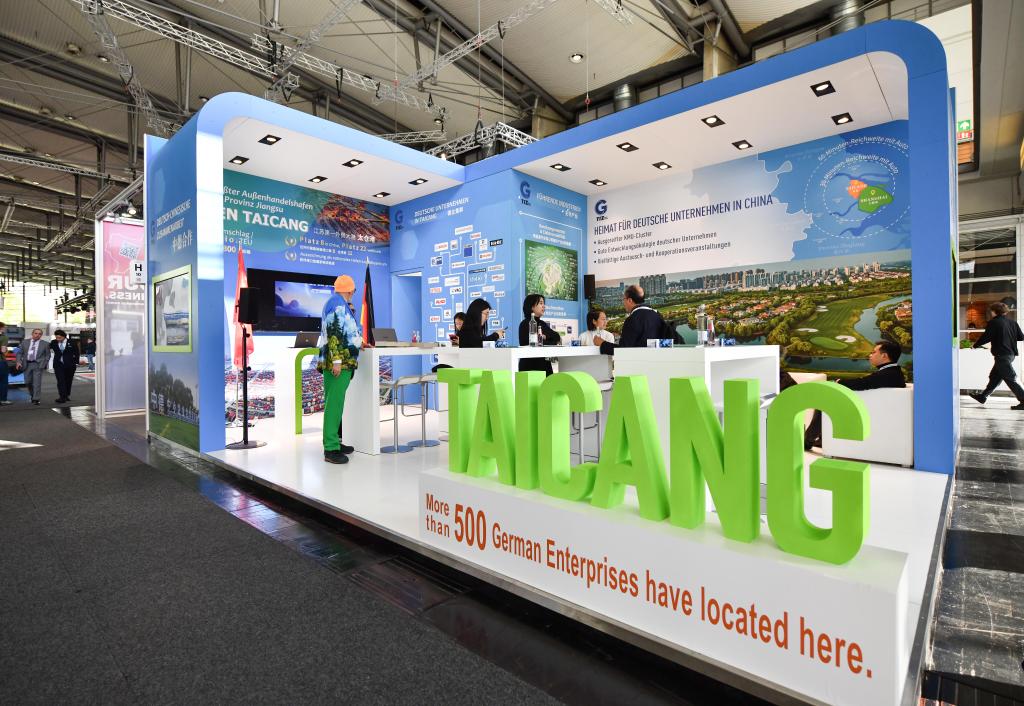
China is central to that recalibration. It is the largest trading partner for many European economies. It is indispensable to global decarbonization. It is a source of capital, technology, and demand. Treating it solely as a systemic rival obscures these realities.
At its core, Germany’s dilemma is industrial. Can it sustain high-wage, high-skill manufacturing in an era of energy transition, digitalization and geopolitical fragmentation? If energy costs remain structurally elevated and access to key markets is politicized, deindustrialization becomes a real risk.
Partnerships in clean energy deployment, joint ventures in advanced manufacturing, cooperation on standards and technology — all are tools to mitigate that risk. Germany must also invest domestically: upgrading its energy grid, supporting innovation and training its workforce. But external alignment is equally vital.
China’s industrial rise need not spell German decline. History offers numerous examples of competitive coexistence. The critical question is whether Germany chooses managed competition within an integrated framework or pursues ideological separation at the expense of its own productive base.
Leadership beyond rhetoric
As Europe’s largest economy, Germany’s choices will shape the continent. If Berlin adopts a posture of reflexive hostility, others may follow, deepening fragmentation. If it models pragmatic engagement while safeguarding core interests, it can set a different tone.
Merz’s visit suggests recognition that slogans cannot substitute for strategy. Constructive dialogue with Beijing signals seriousness about economic realities.
The world economy is reorganizing along complex lines. Supply chains are being reconfigured. Energy systems are being rebuilt. Financial flows are shifting. In this environment, clinging to outdated hierarchies is perilous.
Germany’s task is to secure its industrial future while contributing to a stable European order. That requires acknowledging that China is not a passing phenomenon but a structural feature of the 21st-century landscape. It requires resisting simplistic calls for decoupling that underestimate the costs.
Berlin stands at a crossroads. It can define itself as an anxious appendage of a fluctuating transatlantic axis, or it can position itself as a confident industrial power embedded within a broader Eurasian framework.
History will not wait. The structural pressures are immediate. Engagement, realism, and strategic autonomy are not luxuries — they are imperatives. In Beijing this week, Germany signaled that, perhaps, it understands as much.
Warwick Powell is an adjunct professor at Queensland University of Technology.