Beyond Winning and Losing
 Facebook
 Twitter
 Linkedin
 Google +
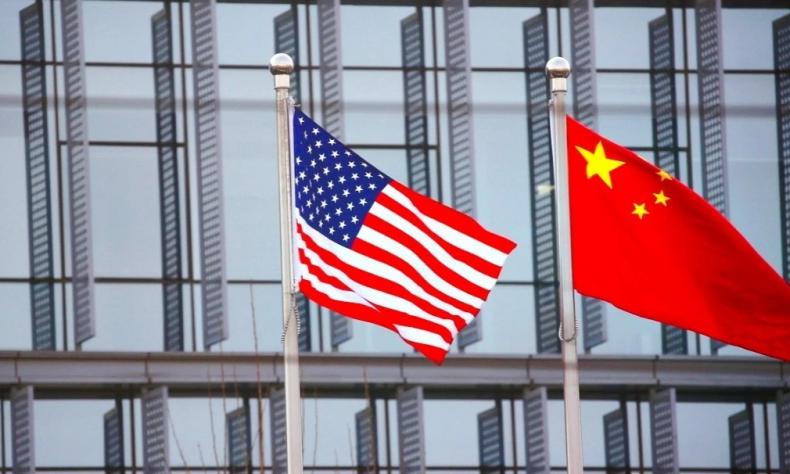
Perhaps the most constructive result of this contest is a hard-won realization, particularly in Washington, that treating one’s largest trading partner and supply-chain anchor as an adversary to be easily vanquished is a grave strategic miscalculation.
As 2025 enters its final week, media professionals on both sides of the Pacific appear to be taking stock of the year’s major events in China-U.S. relations. A prevailing view is that the U.S. is ceding ground in this latest round of competition with China.
In this view, the outcome is clear: The tariff war launched by the U.S. has failed to cripple China’s economy and instead has strained U.S. supply chains while heightening inflation risks, forcing Washington back to the negotiating table. In technology, the U.S. has begun easing its previous blockade against China, particularly in advanced semiconductors. On December 8, President Donald Trump announced that he would allow U.S. chip maker Nvidia to supply H200 AI chips to China, with similar arrangements for AMD, Intel, and other U.S. tech firms. On the diplomatic front, the Trump administration’s newly released National Security Strategy frames U.S.-China competition primarily as an economic contest rather than a struggle over security or political systems, and when Japan, one of America’s key allies in the Asia-Pacific, provoked China on the Taiwan question in early November, which Beijing considers as its core interest, Washington chose not to intervene.
This assessment finds a receptive audience in both countries. In China, the narrative of “the East rising and the West declining” bolsters the confidence of those long accustomed to decades of rapid economic expansion and rising living standards.
In the U.S., this narrative finds equally broad appeal. For critics, evidence of America losing ground to China serves as ammunition to attack the Trump administration’s reform agenda. For President Trump and his supporters, any temporary setback reflects the previous administration’s failures—amplifying the pessimism only reinforces the urgency of “Making America Great Again.”
Yet framing the China-U.S. contest in simple win-lose terms may itself reflect strategic myopia. This logic echoes in the Western notion the China-U.S. relationship is an example of the “Thucydides Trap”—the historical determinism that a rising power will inevitably challenge the existing hegemon, the established power will inevitably respond, and war will inevitably follow, while the Chinese believe the coexistence of the two does not need to pose a challenge.
Never before have the world’s two leading countries been so geographically distant yet so economically integrated. Confrontation between them would ultimately harm both sides.

One set of figures is particularly telling. After Trump launched the trade war with China in his first term in 2018, the U.S. share of China’s exports shrank from 19.2 percent to 14.7 percent in 2024. Yet overall U.S. imports swelled by $253.3 billion in 2024, a 6.6-percent rise, according to the U.S. Department of Commerce. The pattern appears to be this: Washington imposed tariffs to narrow the trade deficit with China, but without genuinely restoring manufacturing, America has simply increased imports from third countries to fill the gap. Yet no country can fully replace China’s position in global supply chains, at least for the time being. In the end, those paying the higher price are American businesses and consumers.
Similar patterns emerge elsewhere. American technology restrictions forced China to invest heavily in indigenous innovation. China eventually broke through the bottlenecks, and U.S. companies lost market share. Similarly, although China controls over 90 percent of the global rare earth processing capacity, when Beijing imposed rare earth export controls as a countermeasure, Washington had no choice but to build its own processing capabilities. All of this could have been achieved through global cooperation and division of labor, ensuring optimal resource allocation.
The real outcome of China-U.S. competition in 2025 may be a stalemate with no winners. Both sides have clearly signaled the costs they can absorb and the pain they can inflict. Perhaps the most constructive result of this contest is a hard-won realization, particularly in Washington, that treating one’s largest trading partner and supply-chain anchor as an adversary to be easily vanquished is a grave strategic miscalculation.
From another perspective, this mutual step back from the brink is vital for the global economic recovery. In this sense, 2025 may indeed see both nations emerge as winners. After all, when two titans hold the power to destroy the world, simply averting conflict and mutual ruin is the ultimate victory.