Building a Modernized Industrial System: Why China’s 15th FYP Matters Far Beyond Its Boarders
 Facebook
 Twitter
 Linkedin
 Google +
For the global economy, China’s 15th FYP Recommendations signal a transition from growth driven by sheer volume to growth driven by systemic capability.
As the National People’s Congress (NPC), China’s top legislature, holds its annual session from March 5 to 12 in Beijing, lawmakers will deliberate on the central government’s annual work report. This year, they will also examine a draft outline of China’s 15th Five-Year Plan (2026-2030) for National Economic and Social Development, which will anchor policy priorities for the period up to 2030.
To many in Europe, China’s Five-Year Plans (FYPs) may seem distant, technical, or irrelevant – easily overlooked. Yet that dismissal comes at a cost: it leaves us ill-informed about one of the most consequential economic transformations unfolding in today’s world.
To understand why the plan matters not just for China but for Europe, the global economy, and humanity’s future, we must move beyond stereotypes and scrutinize its concrete proposals.
What is a “modernized industrial system?”
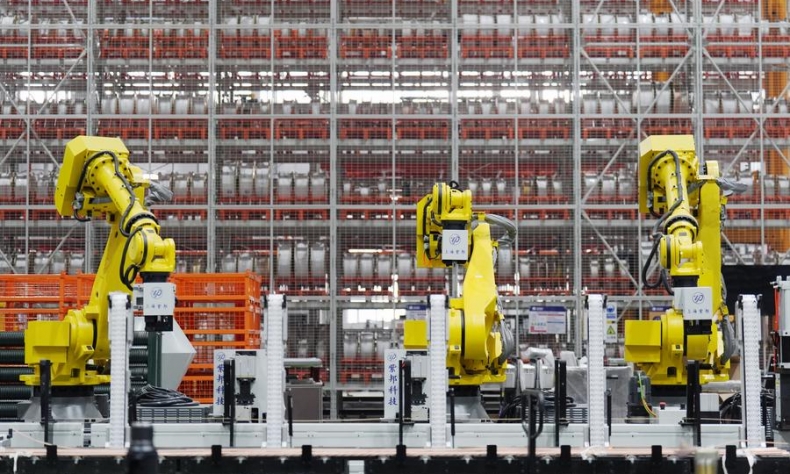
At first glance, this term may sound abstract. Simply put, a modernized industrial system refers to an economy, in which manufacturing remains a robust, central pillar, not eroded or outsourced, but actively strengthened; production is technologically advanced, energy-efficient, and resilient; innovation is deeply embedded across entire value chains, from R&D and design to production, logistics, and after-sales services, not confined to isolated startups or research labs; and services, infrastructure, and industry co-evolve synergistically rather than separately.
In European discourse, industrial modernization is often framed nostalgically, as a lost capability to be restored. China’s approach is fundamentally different. Rather than pursuing re-industrialization after decades of deindustrialization, China is upgrading its already vast industrial base while keeping it intact.
China explicitly emphasizes the objective of maintaining manufacturing at an appropriate share of the economy and positioning advanced manufacturing as the backbone of growth, while simultaneously integrating digitalization, green transition, and intelligent systems. This is not accidental phrasing. It signals a deliberate, strategic rejection of the notion that advanced economies can sustain long-term prosperity by relying on finance, consumption, and services alone.
The real economy: an old concept with new urgency
The repeated emphasis China has placed on the real economy is particularly revealing. From an economic perspective, the term refers to sectors that produce tangible goods and deliver essential services, distinct from speculative or purely financial activities.
As highlighted in the World Bank’s World Development Report 2022: Finance for an Equitable Recovery, heavily financialized economies proved fragile during systemic shocks, often failing to maintain stable supply chains, employment, and productive investment.
From this, China’s policymakers seem to have drawn a clear lesson: economic resilience should be rooted in production capacity. A country that cannot manufacture critical components, energy systems, or essential infrastructure risks not just economic instability but geopolitical vulnerability.
This should resonate really uncomfortably with Europe. The pandemic laid bare shortages in pharmaceuticals, medical equipment, semiconductors, and even basic logistics. China’s strategy, by contrast, looks like a systematic effort to ensure that such external dependencies do not dictate its future.
From “world’s factory” to “system architect”
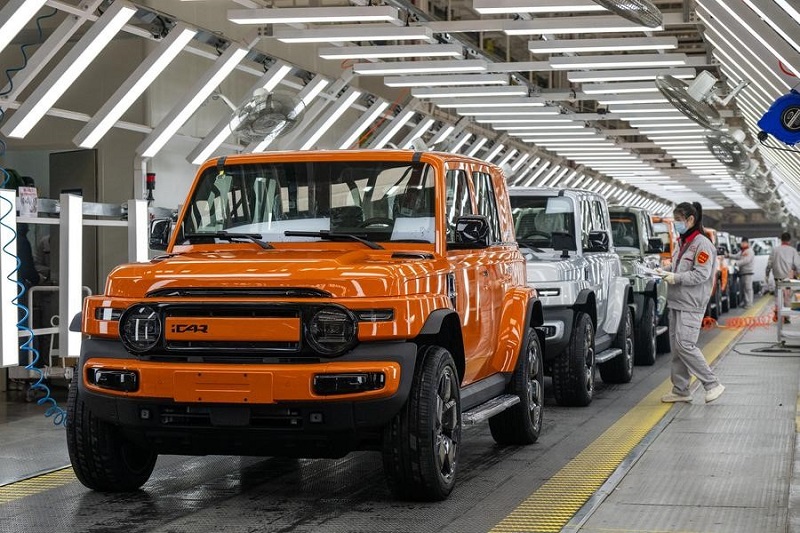
According to the 15th FYP Recommendations, China will prioritize systematic upgrading of traditional industries including mining, metallurgy, chemicals, machinery, and construction through automation, digitalization, and energy efficiency. While Western media often frame this shift as China “moving up the value chain” in ways that may disrupt global markets, such development represents a natural progression in economic terms.
This transition follows established principles of development economics. Nations cannot maintain competitiveness by preserving static industrial structure, they must either evolve organically or face inevitable stagnation.
China’s approach, however, reveals a distinctive advantage: the unparalleled scale and strategic coordination of its industrial policies. Here, industrial upgrading is not left to the discretion of individual firms or venture-backed startups alone. It leverages national quality infrastructure, standard-setting, logistics networks, and coordinated regional industrial clusters.
While China’s European counterparts pursue similar objectives, their efforts often suffer from fragmentation of political jurisdictions, inconsistent funding mechanisms, and disparate regulatory environments.
The ultimate outcome is that China is not merely producing more higher-quality goods, it is pioneering integrated production systems that seamlessly merge advanced manufacturing with modern services, data analytics, and smart energy solutions, creating comprehensive value chains that redefine global production paradigms.
China also commits to pioneering future-oriented sectors, such as quantum computing, biomaterials, hydrogen energy, nuclear fusion, embodied AI, brain-computer interfaces, and next-generation communications. But what does this mean?
In debates among Europeans, such ambitions are often dismissed as unrealistic, politically driven, or little more than propaganda. Yet from an economic standpoint, China’s focus represents a pragmatic response to two fundamental economic realities: First, the planetary boundaries of fossil-fuel-based growth are becoming increasingly constrictive. Second, traditional pathways for productivity gains are yielding diminishing returns. As the American economist Duncan K. Foley demonstrated in his book Growth and Distribution (2019), the carbon-intensive growth model carries unsustainable long-term costs from climate damage to capital depreciation and systemic financial risks.
Infrastructure as an industrial multiplier
The infrastructure vision outlined in China’s 15th FYP Recommendations represents a paradigm shift in its economic development strategy. Moving beyond traditional conceptions of roads and railways, the plan defines modern infrastructure as an integrated ecosystem encompassing nationwide computing networks, smart energy grids, digitalized transport systems, and climate-resilent water and urban infrastructure.
This framework demonstrates a sophisticated understanding of infrastructure as a general-purpose input. Whereas all inputs have profound effects on productivity in their related sectors, infrastructure raises productivity across all sectors.
The contrast with European infrastructure development is instructive. European projects often go through fragmented evaluation, assessed individually rather than systemically, and constrained by annual budgets cycles. China’s approach treats infrastructure as the foundational platform upon which future industrial innovation and economic transformation depend.
Why western narratives miss the point
Western media coverage of China remains trapped in a false dichotomy: alternating between visions of an unstoppable authoritarian superpower and a fragile economy on the brink of collapse. Both extremes fundamentally misinterpret China’s economic governance model.
The 15th FYP Recommendations reveal a more nuanced reality: neither a centrally-planned micromanagement of all enterprises nor an unfettered free market system. Instead, China has developed a distinctive hybrid approach that combines market competition with coordinated strategic direction, achieving what European policymakers might recognize as a “strategic market economy.”
Ironically, this is not foreign to Europe’s own history. Post-war reconstruction, industrial policies, and welfare-state development across Europe all relied on similar combinations of state planning and private enterprises.
In my view, the significance of China’s modernized industrial system is not primarily about competition for us Europeans, rather, it should serve as a reflection and a set of choices: Can advanced economies sustain their development without a strong manufacturing base? Can ambitious climate goals be achieved without a coordinated effort toward industrial transformation? Is innovation best left to markets alone, or should it be guided by strategic vision?
For the global economy, China’s 15th FYP Recommendations signal a transition from growth driven by sheer volume to growth driven by systemic capability. For the whole world, it represents one of the most ambitious national efforts yet to combine economic development, technological progress, and ecological sustainability within a single, integrated framework.
To read China’s 15th FYP Recommendations with honesty is to acknowledge that much of what is unfolding in China is more complex, pragmatic, and consequential than the prevailing Western narratives often suggest.
Importantly, Chinese policymakers are not merely reacting passively to global economic and climate challenges but are actively confronting them. Whether China succeeds or fails will shape not only its own future, but also the trajectory of the global economy for decades to come.
Ignoring this reality may provide a sense of temporary reassurance, but understanding it is far more meaningful and valuable.
Thomas Karlsson is a researcher with the Belt & Road Institute in Sweden.