Canada’s Carney Travels to China to Boost Its Non-U.S. Trade
 Facebook
 Twitter
 Linkedin
 Google +
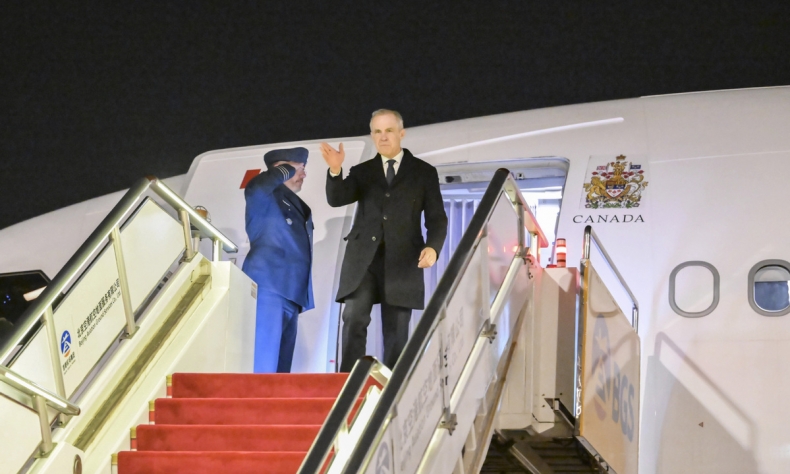
With the Trump tariffs eating into Canadian prosperity, and discussions at a standstill for the time being, Canada has to find a way to repair its relations with China.
Canadian Prime Minister Mark Carney is in China for a three-day visit in an attempt to shore up Canada’s tattered relationship with the People’s Republic of China. This is the first visit of a Canadian Prime Minister to China since 2017. In 2018, Canada arrested the daughter of Huawei’s CEO, Meng Wanzhou, and kept her in detention until 2021, largely under pressure from the U.S. government, which was claiming that Huawei equipment was a “backdoor” to Chinese espionage and had issued an indictment against Meng for fraud. The U.S. asked that Canada extradite Meng to the U.S. That did not happen due to legal actions taken by her lawyer, and she eventually came to an agreement with the U.S. on the matter. Nevertheless, Canada had kept her under house arrest for three years.
Since then the diplomatic relationship has been in something of a “deep freeze.” China nevertheless remained Canada’s second biggest trade partner.
With the Trump tariffs eating into Canadian prosperity, and discussions at a standstill for the time being, Canada has to find a way to repair its relations with China. In addition, the increasing uncertainty about the U.S. after the outrageous invasion of Venezuela and Trump’s threats to “annex” Greenland, have no doubt caused great concern in Canada, given Trump’s occasional comments about the possible role of Canada as the 51st state of the United States. Under the virtual dictate of the American president, Carney’s policy is to establish greater trade with the other nations of the world in order to help him balance the leverage that the U.S. has over Canada. His explicit goal is to double non-U.S. Canadian exports in ten years. And China, is an important element in that policy.
There has also been a good deal of concern among Canada’s farmers regarding the cut-off of the Chinese market for Canada’s agricultural goods, particularly their vast production of canola seeds, given the large market China represented for canola. China restricted the purchase of Canada’s canola after Canada launched tariffs on Chinese EVs. According to China customs data, Canadian exports to China fell by 10.4 percent in 2025, to $41.7 billion only, the lowest since 2022.
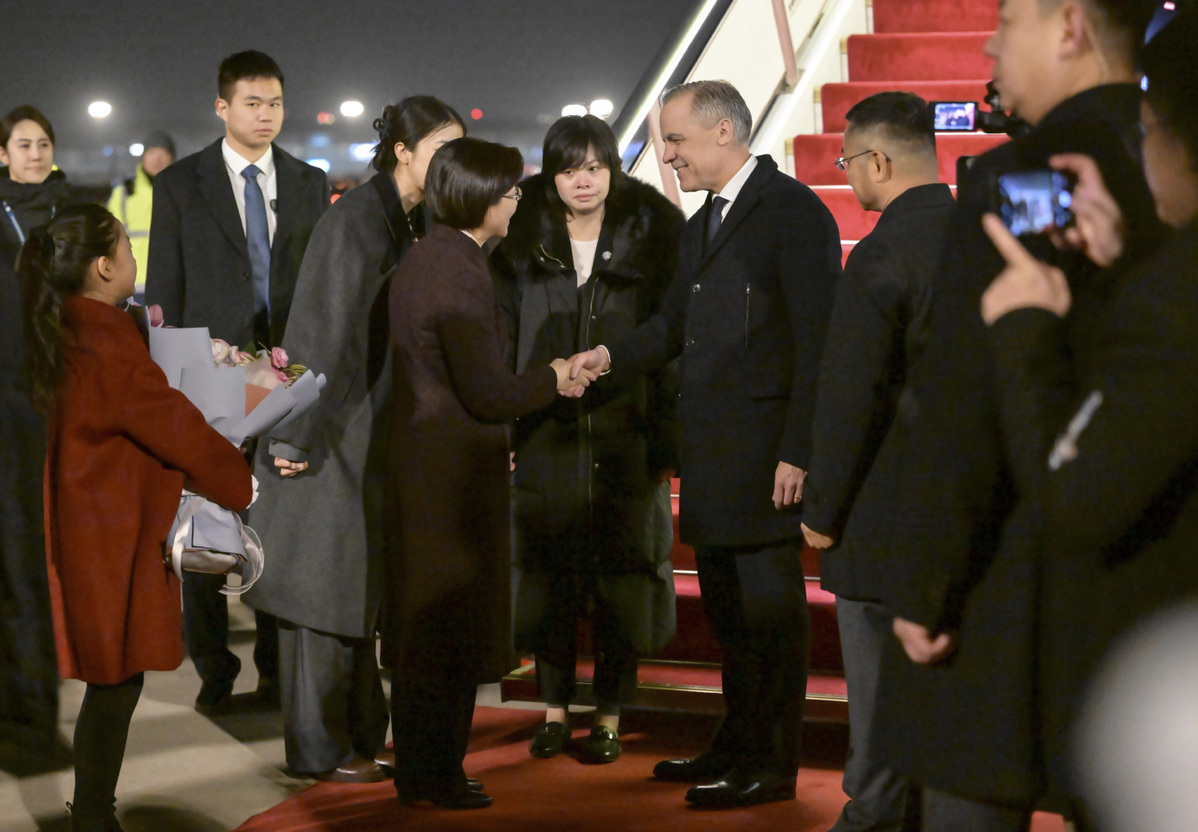
Carney indicated his wishes to improve the relationship in his meeting with President Xi Jinping on the sidelines of the APEC meeting in South Korea last year. Commenting on the visit, a Chinese foreign ministry spokesperson said that China looks forward to it as an opportunity to enhance dialogue and communication, increase political mutual trust, expand practical cooperation, properly manage differences, address each other’s concerns and consolidate the momentum of improvement in China-Canada relations to bring greater benefit for the two peoples.
Carney will meet with President Xi Jinping on Friday and will participate in a banquet. Carney, of course, is walking a thin line, given the mercurial nature of the American President. Trump’s new revisionist “Donroe” Doctrine calls for U.S. hegemony in the Western Hemisphere, subject only to the arbitrary will of the U.S. President. While Canada has not been on Trump’s radar lately, his Greenland “annexation” gambit also brings into view the “Arctic scenario” which has fueled the President’s obsession with Greenland, and the Arctic also involves Canada.
Carney, nevertheless, has to conduct a careful balancing act with regard to the relationship between these two countries. The U.S. trade for Canada is a matter of life-and-death and maintaining a working rapport with Donald Trump is often a very tricky business. Canada is eager to renew the trade agreement between Canada, the U.S., and Mexico — the USMCA, which is up for review this year. During his visit to Michigan on January 13, President Trump indicated that the Treaty was important for Canada, but that the U.S. could live without it. Whether his comments were targeted toward Carney as a shot across the bow on the eve of Carney’s visit to China is difficult to say, but the message was clear: If you don’t go along with my demands, you’re on your own.
Carney is keeping his visit largely to a “business-only” format, perhaps to make it a lesser target for repercussions from the United States. While he is taking several ministers with him, he will only be there two days for his important meetings. He will then travel for over a week to the Middle East and to Europe in his attempt to drum up trade.
The article reflects the author’s opinions, and not necessarily the views of China Focus.