Care: What Governments Should Do
 Facebook
 Twitter
 Linkedin
 Google +
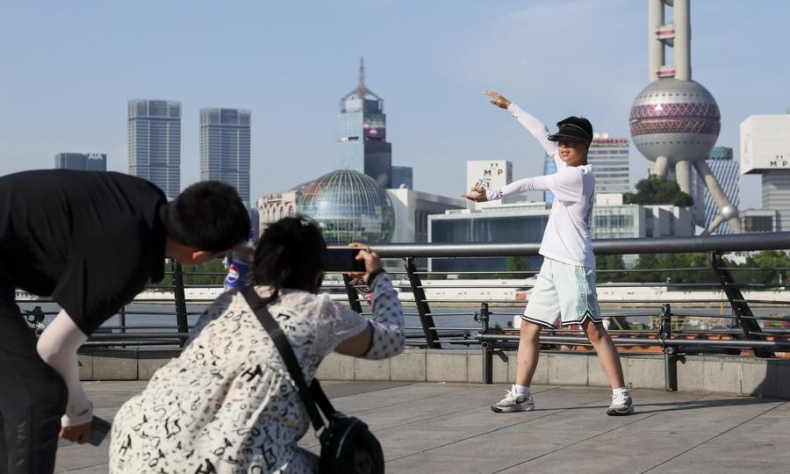
As the world grapples with turbulence and fracture, the vision of a community with a shared future for humanity, articulated in China’s 15th Five-Year Plan Recommendations and the 2026 Government Work Report, appears not only appealing but increasingly necessary.
With the political world order crumbling, it is important to shape what replaces it.
Originating in the 1940s after the tragedy of global war, the world order was founded on the United Nations Charter and the Universal Declaration of Human Rights.
The former established the principle of national sovereignty envisaging that all nations would be treated equally, free from interference by others; the latter applied the concept of equality to individuals, acting “towards one another in a spirit of brotherhood.”
These cosmopolitan principles of equality and sovereignty were rapidly undermined by the separate creation of institutions such as the World Bank, the International Monetary Fund and, later, the World Trade Organization that serve to protect the interests of Western capital. They promote economic hegemony and, as recently emphasized by U.S. Secretary of State, Marco Rubio, “Western civilization… forged by centuries of shared history, Christian faith, culture, heritage, language…”
While global living standards have risen markedly in the last 80 years, a product of globalization and multilateralism, the benefits have mostly been enjoyed by the 15 percent of people living in the West, broadly defined. Whereas average real incomes in high income countries increased by US $20,042 in the 40 years to 2023, those in low-income countries rose by just US $1,785.
Such inequalities have long been appreciated by governments in the global South, lacking adequate direct foreign capital investment and denied access to international markets through discriminatory trading practices and sanctions. Repeated attempts at reform have been voted down by governments benefiting from Western hegemony: the 1980 Brandt Report – arguing for a “New Economic World Order” based on mutual interest and continuing pleas for a Convention on the Right to Development are examples.
The same governments are now shifting their positions, a consequence of having become targets or losers in the hegemonic warfare launched by the U.S. following the first Trump administration. The French President, Emmanuel Macron, describes “a shift towards a world without rules;” Mark Carney, Canadian Prime Minister, calls the world order “ruptured” – “the source of your subordination;” while the German Chancellor, Friedrich Merz, has concluded that the order “no longer exists.”
Even with agreement that the world order has failed, there is no certainty that any replacement will be an improvement. President Macron has called for Europe to act as a “geopolitical power in its own right” and argued that “everyone should take their cue from us.” Mark Carney proposes “something bigger, better, stronger, more just” but limited, apparently, to “middle powers, the countries that have the most to lose from a world of fortresses and most to gain from genuine cooperation.”
A fully inclusive vision of a new world order is proposed by China which foresees “a community with a shared future for humanity.” The Global Governance Initiative, a new vehicle for achieving this, is based on principles derived from the UN Charter including sovereign national equality, multilateralism and the international rule of law. Governance is to be people-focused; that is “we the people” rather than “we, business,” “we, governments” or “we, special interests.”
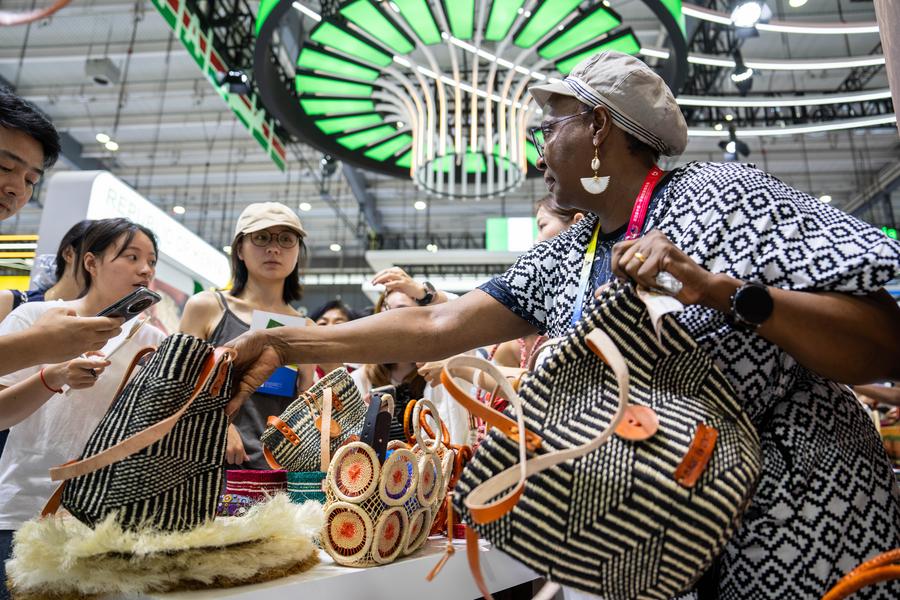
The commitment is to achieve “real results,” resolving “real problems” by “addressing both root causes and symptoms to find sustainable solutions.” This contrasts with hijacking international institutions to promote and protect powerful interests.
Given that the world order has been fractured by self-interest and ideological differences, there is understandably skepticism about building a global community with common interests. However, instructive communities exist globally, often in the most unlikely places, as a recent spell in hospital illustrates.
Revision surgery on my prosthetic hip took place in Oxford, the U.K. For 24 hours following the operation, two nurses cared for me. Knowledgeable and compassionate, I was in safe hands. One nurse was from Zimbabwe, and the other from Sri Lanka.
The surgery was complex involving different professions and specialisms: orthopedics; trauma; oncology; and anesthetics. My immune system responded to the breakdown of polyethylene in a prosthesis fitted 12 years ago by “eating” my bone (osteolysis), the plastic residue proving indigestible. This internal pollution had to be cleaned up and the bone strengthened, with new technology replacing old.
Multiple teams comprising dozens of people supported each other in ensuring my recovery. The clinical team included surgical, medical, infection control, and nursing expertise. The therapeutic grouping involved pharmacists, discharge specialists, physio- and occupational therapists, while the maintenance group provided catering and cleansing. Trained in 15 or more countries, perhaps no more than three of the individuals involved were, as I am, white British.
Incredible though it might seem, this microcosm of a global community owes its existence to a former coalminer, Aneurin Bevan. Sponsored by South Wales Miners’ Federation to study Marxism and economics, he went on to become the government minister who, in 1948, launched Britain’s national health system. To do so, he had to defeat both political hostility and prolonged opposition from a medical profession unwilling to lose its monopoly; the latter – he was later to admit – he accomplished by “stuffing doctors’ mouths with gold.” The politics came good when, after war, the British electorate aspiring to build a better future was briefly prepared to countenance higher taxation.
While my surgery might easily have cost me £23,000, $60,000 in the U.S., I paid nothing. This was a result of Bevan’s belief that “no society can legitimately call itself civilized if a sick person is denied medical aid because of lack of means.” Bevan was inspired by the Medical Aid Society in his home village of Tredegar that had offered free health services to residents who paid a regular subscription. A mixture of general taxation and national insurance met my costs.
Within the walls of the Oxford hospital, therefore, a global community is active. Working effectively across nominal barriers of nationality, creed and identity, it delivers shared outcomes: care and improved health for patients; incomes for those providing care.
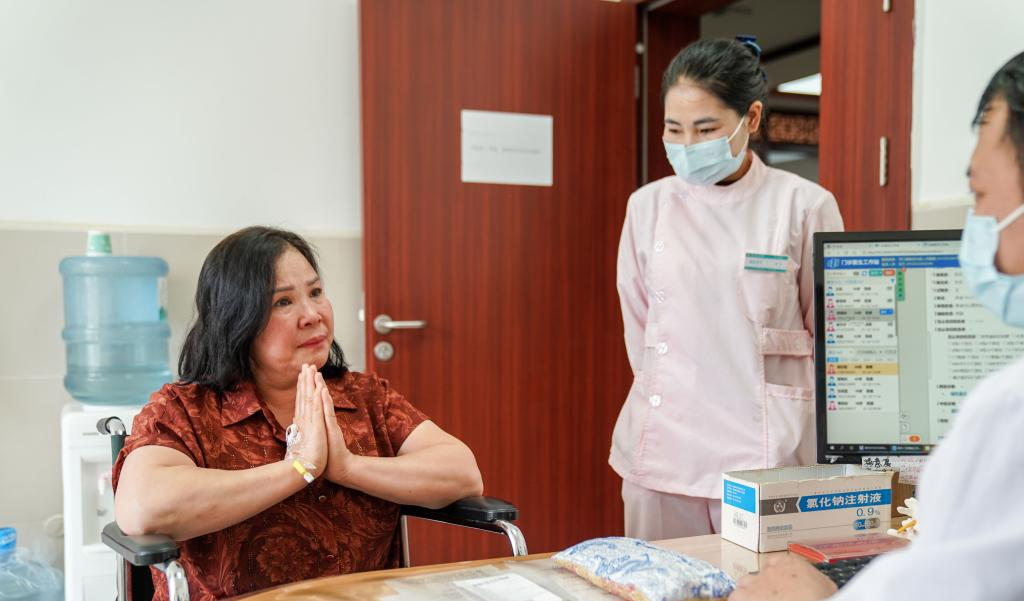
It might be thought that the conceptual distance between a hospital in Oxford and international governance is too great to inform the development of a global community with a shared future. Not so.
The U.K. public health service, free at the point of use and largely funded through direct taxation, is a socialist ideal embedded within a liberal market economy. British values resemble U.S. individualism rather than continental Europe’s concern with solidarity and social cohesion; yet the health service has become a cultural icon. If contrasting ideologies can coexist within a single polity, they can do so in the global space as envisaged by the UN Charter.
Liberal, command, socialist market and mixed economies are only incompatible when international institutions are commandeered to favor one type above all others. Competing fairly, one economic model might be demonstrably more successful and thus be copied.
The hospital microcosm also exposes the deficiencies of the existing global economy. Constrained by a domestic policy of austerity, the British health system is increasingly dependent on cheap foreign labor. Between 2018 and 2024, the number of black and minority ethnicity (BME) employees increased by 84 percent, white staff by just eight percent. BME personnel are concentrated in the basic nursing grades while white staff predominate among higher ones. Although most mainstream doctors are either black or minority (70 percent of those whose ethnicity is known); 56 percent of senior consultants are white.
The Oxford hospital benefits directly from the concentration of wealth and opportunities in the West, creaming staff trained by, and at the expense of, poorer countries, paying them less than the global market rate. Although remittances, earnings sent by migrants to the developing world, exceed the value of direct foreign investment and overseas development assistance, they neither compensate for lost talent nor break the connection between wealth, race and ethnicity. Much of the world’s population is denied the quality of surgery provided in Oxford.
Therefore, constructing a shared future for the global community requires a more equitable sharing of power and resources to create a new order that prioritizes the world’s people over the world’s peoples, and individuals’ needs above individuals’ wants. Conceived as a limitless collection of caring communities without borders, it can be built by everyone. Oxford surgeons are not alone in sharing their expertise as volunteers in Sub-Saharan Africa and the Pacific region.
In the 1940s, the futility and horrors of global war focused attention on realizing the potential for peace and prosperity. The policy that “might makes right” now being advanced by the Trump administration is equally futile and dangerous. Governments should care not kill.