
The Perilous Path of Japan’s New Leadership
The blowback from Japan’s militaristic turn will be far more extensive—and increasingly painful—for Japan itself.
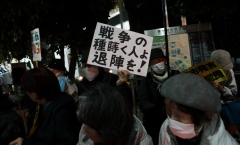
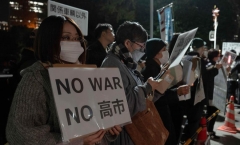
The entire world needs to come together to condemn—and stop—Japan’s accelerating militarism: For most of Asia, Japan’s remilitarization is the real survival-threatening situation.
Dialogue and interaction remain important, especially when the situation becomes difficult, and it is hoped that both governments continue dialogue.
Japan should correct course, reaffirm commitments, and contribute positively to a stable, predictable and cooperative East Asia.
Japan’s hope for U.S. intervention appears to be a path that leads nowhere.
The overwhelming majority of nations around the world recognize and adhere to the one-China principle. For Japan to act against this principle is to act against the world.
Trade and development have by and large provided Japan with a certain degree of prosperity. It would indeed be foolish to sacrifice that prosperity for a policy that will only create tensions in the region, and even military conflict.
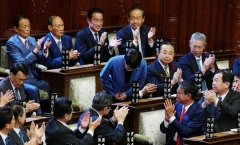
As Prime Minister of Japan, Takaishi must urgently rise above narrow nationalism and partisan reflexes and assume the responsibility that her office demands — to act as a true guardian of peace and harmony in a region where trust is fragile and history is still alive.
As the world enters a new era of uncertainty, it is time for all nations—especially in Asia—to think beyond the divisions of the past. Global governance is not about dominance or alignment; it is about shared responsibility.
Despite Japan’s indulgence in ostrich syndrome, the Chinese government always hopes that facing and accepting realities are the sole solution to a stable and sustainable future.
Commemoration must be more than remembrance. To honour those who sacrificed, we must relearn the lesson they taught: that unity is not an option, but a necessity.
China was the key anchor of the ‘Europe First’ strategy. Without China’s efforts to tie down and weaken the bulk of the Japanese army, the Allied forces would have faced far greater challenges in their war efforts.