 Facebook
 Twitter
 Linkedin
 Google +
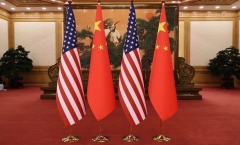
Xi-Trump Summit: New-Positioning of China-U.S. Relations
The proposed framework represents another attempt to redefine relations between major powers through dialogue and cooperation.

The proposed framework represents another attempt to redefine relations between major powers through dialogue and cooperation.
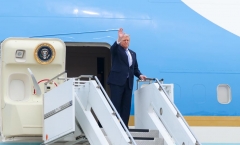
Still, given Trump’s track record, the world is watching closely to see whether the U.S. president will be more predictable and more consistent.
Now, constructiveness prevails as the vision of the constructive China-U.S. relationship of strategic stability has been agreed upon by the two leaders.
Yet even at this early stage, the notion deserves attention. It reflects an important intellectual shift in how China may now conceptualize its relationship with the United States.
Strategic stability is not weakness. It is wisdom. Constructive engagement is not concession. It is responsibility.
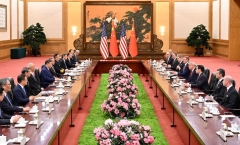
Improved China-U.S. trade relations would benefit Europe significantly by reducing uncertainty across global supply chains and restoring investors’ confidence.
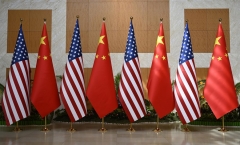
Engagement provides intelligence, reveals intentions and prevents the kind of mutual ignorance that transforms manageable competition into existential conflict.
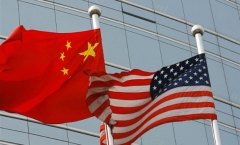
Joint efforts in fields such as medicine, biotechnology, and new energy technologies — including thermonuclear fusion — could bring substantial benefits to both societies. These are areas that carry profound implications for the future of humanity, and cooperation could accelerate progress in ways that competition alone cannot achieve.
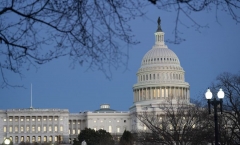
Hard power and soft power are abundant in both countries. There is no reason they cannot more publicly and successfully work together. But old habits die hard, to borrow a cliche, and Washington is too often stuck in that mindset.
A successful meeting would not eliminate distrust between Beijing and Washington. It would simply prove that responsible statecraft still exists in an increasingly fractured international system. That alone would qualify as meaningful geopolitical progress.

When Americans talk about cutting fat, watch what they keep. They increased funding for anti-China activities. And that tells you more than any U.S. State Department white paper ever could.

Face-to-face exchange remains essential. It breaks down barriers. It promotes understanding between people. Sports can play a role in that.