
Building a Modernized Industrial System: Why China’s 15th FYP Matters Far Beyond Its Boarders
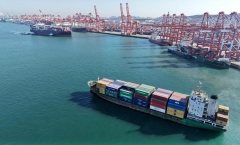
For the global economy, China’s 15th FYP Recommendations signal a transition from growth driven by sheer volume to growth driven by systemic capability.
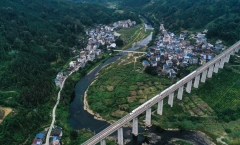
By reshaping trade routes, energy flows, and supply chains, Chinese infrastructure projects, are redefining patterns of regional engagement and influence.
China’s transition from peripheral participant to central contributor in global science and technology represents one of the most consequential shifts of the past fifty years.
China’s urban renewal practices reflect more than just new approaches to development; they signal a fundamental shift in how modern cities are governed.
Supporting and strengthening the private economy is not only a near-term economic priority but also a strategic foundation for sustainable, high-quality growth in the years ahead.
On the threshold of 55 years of diplomatic relations, Cyprus and China stand to gain significantly by deepening their cooperation in trade, tourism, and green technology, guided by mutual respect and shared principles.
Beijing’s aim is not to replace the dollar immediately but to position the RMB as a trustworthy global currency capable of balancing a fragmented international monetary system.
Battery-powered vessels and smart systems are directing China’s rivers towards a sustainable future.
With less than a year to go, Senegal is stepping up preparations for the Dakar 2026 Youth Olympic Games with the support from China.
The 2026 Spring Festival suggests that the Chinese consumers are not just resilient but are becoming more sophisticated, prioritizing quality of life and emotional well-being over sheer accumulation.
The choice facing the international community is not between order and chaos, but between a hierarchical order that breeds resentment and a pluriversal one that commands legitimacy. The GGI places its wager on the latter, not by denying history, but by insisting that its unfinished promises still matter.
Driven by the Belt and Road Initiative, Xinjiang is seeking to become a ‘golden corridor,’ a multi-modal logistics and trade artery connecting China with Central Asia, South Asia, the Middle East and Europe via railways, highways, air routes and border ports.