 Facebook
 Twitter
 Linkedin
 Google +
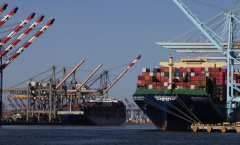
Washington’s Misguided War on Chinese Shipbuilding
Until Washington stops confusing nationalism with strategy, it will keep losing ground not to China, but to itself.

Until Washington stops confusing nationalism with strategy, it will keep losing ground not to China, but to itself.
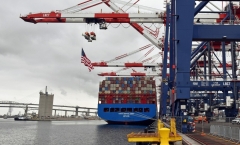
At this critical moment, what we need is not more port fees and countermeasures, but more rationality—and restraint.

The essence of China-U.S. economic and trade relations is mutual benefit and win-win cooperation, underpinned by broad opportunities and shared interests.

True global governance is not governance by the U.S. or the West, but by all countries, especially the Global South, which accounts for 80 percent of the world’s population, acting collectively to address global challenges.

It is widely understood in China that without peace, none of China’s achievements in poverty alleviation, high-technology, infrastructure development, ecological restoration, global cooperation and modernization would have been possible.

More likely, we’re heading toward a fragmented world: one centered on the U.S. that excludes Chinese participation in ‘trusted networks,’ and another more inclusive system embracing developing countries.

To remember that fascism was defeated by cooperation, not rivalry. And to see that the lesson of the past is not to prepare for endless confrontation, but to rediscover the possibility of partnership—before history repeats itself in even darker ways.

The move toward multipolarity, driven by China’s rise, creates a more balanced and potentially harmonious world order, challenging the zero-sum logic that has defined Western hegemony.
The vitality of global commerce lies in mutual benefit, not zero-sum competition; the foundation of the international order rests on adherence to rules, not raw power.

Beijing is gradually but steadily succeeding in the vital soft power competition.
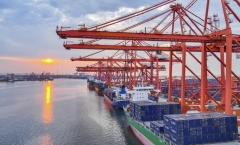
China’s robust and persistent growth and opening up will undoubtedly serve as a firm, powerful ballast stone against all the turbulence and headwinds in the world economy.

China is not just part of that future—it is central to that future. And smart global businesses are already there.