China Is Redefining Climate Leadership
 Facebook
 Twitter
 Linkedin
 Google +
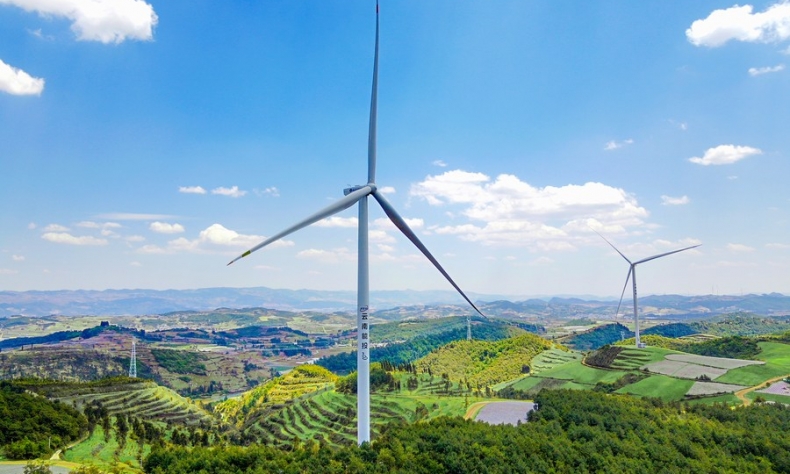
The wind turbines rising across China’s plains are not symbols of folly; they are the engines of a calculated bid for primacy powered by green electrons.
The scale of China’s renewable energy build-out is staggering. In recent years, the country has installed more new wind and solar capacity annually than the rest of the world combined, turning what was once a policy ambition into an industrial reality. This is not incremental progress at the margins of the energy system, but a rapid, system-wide transformation driven by scale, speed, manufacturing power and state coordination.
This goes far beyond greenwashing or symbolic compliance. It is a calculated, industrial-scale restructuring of China’s energy system. Renewable deployment has been transformed into a national infrastructure project, executed with the same coordination and ambition once reserved for heavy industry and transport networks.
Forecasts from China’s power sector and independent energy analysts suggest that by the end of 2026, solar capacity alone will exceed coal-fired capacity – a milestone that signals a profound shift in the structure of the world’s largest electricity system. Wind and solar combined already account for a significant share of installed capacity and are expected to reach roughly half of China’s total power capacity by 2026, as coal’s share declines to around one-third. Notably, analysts such as Rystad Energy report that wind and solar together had already overtaken coal by mid-2024, with solar on track to become the single largest source of installed capacity within the next two years.
China’s green transition is not confined within its borders. By scaling up manufacturing at an unprecedented pace, Chinese firms have driven down the global cost of solar panels and wind turbines, making renewables cheaper and more accessible across both developed and developing economies. This sharp fall in prices has accelerated deployment far beyond what climate diplomacy or subsidies alone could have achieved, reshaping global energy markets and pushing other countries to adapt to a transition increasingly defined by Chinese industrial scale and manufacturing power.
China’s green transition is increasingly spilling over outward through the Belt and Road Initiative. In Pakistan, Chinese firms have financed and built large-scale solar and wind projects, including the Quaid-e-Azam Solar Park, helping diversify a power system long dependent on imported fossil fuels. In Morocco and Egypt, Chinese companies have supplied technology and investment for major solar and wind installations, integrating Chinese manufacturing scale into North Africa’s clean energy push. Across Southeast Asia, Chinese-backed hydro-power, solar, and grid projects in countries such as Laos, Vietnam, and Indonesia have expanded renewable capacity while strengthening regional power connectivity.
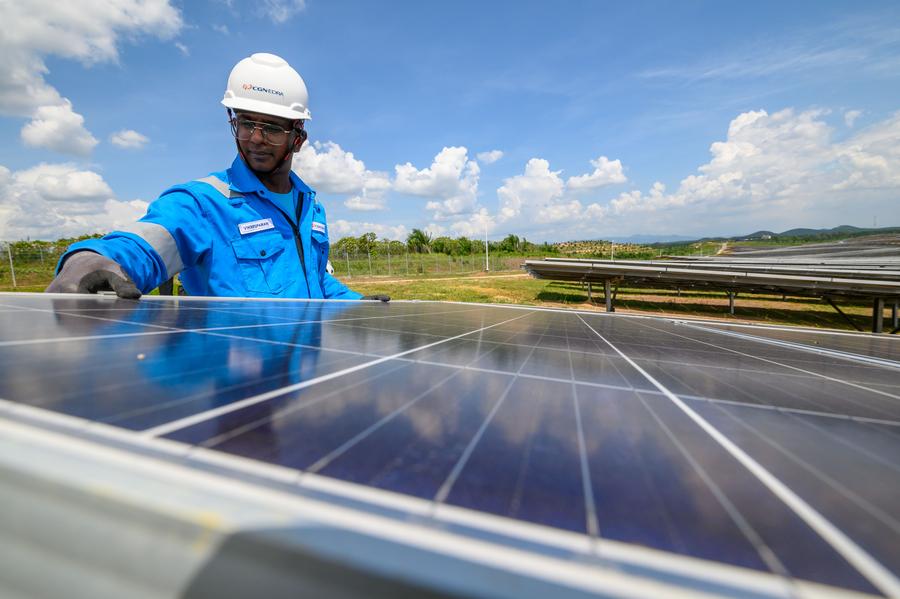
In Latin America, China has emerged as a key player in renewable energy development, investing in wind and solar projects in Brazil, Chile, and Argentina, where Chinese equipment now underpins some of the region’s largest clean energy installations. Meanwhile, in Central Asia, BRI-linked renewable projects and grid upgrades are beginning to complement traditional energy infrastructure, positioning the region as both an energy corridor and an emerging clean power market.
Together, these projects illustrate how the Belt and Road Initiative is evolving from a framework once associated primarily with coal, steel, and concrete into an external platform for supplying renewable technology, industrial capacity, and financing. In doing so, China is shaping not just its own energy transition, but the pace and direction of decarbonization across large parts of the developing world.
Western governments routinely present themselves as climate leaders, yet their combined renewable deployment increasingly lags behind that of a single country they continue to frame primarily as a climate problem. Instead of matching China’s pace with faster build-outs and larger investments, much of the West has turned inward – responding to China’s renewable dominance with tariffs, trade barriers, and “de-risking” strategies targeting solar panels, wind components, and batteries.
If climate change is truly an existential threat, leadership should be measured in gigawatts deployed, grids expanded, and emissions avoided not in speeches, targets, or press releases, nor in policy announcement that slow deployment in the name of strategic caution.
The uncomfortable reality is that today’s energy transition is being shaped less by liberal climate norms than by industrial capacity, state power, and scale. China understands this and has organized its response accordingly. Much of the West has not.
Remaining relevant in the global energy transition will require Western countries to move beyond symbolism and rediscover their capacity to build quickly and at scale. Without that shift, China will continue to outpace the rest of the world in wind and solar deployment, reshaping both the energy transition and the very definition of climate leadership.
The West faces a choice. It can cling to a politicized debate that frames climate action as economic sacrifice, or it can recognize clean energy infrastructure as the next frontier of industrial policy. The wind turbines rising across China’s plains and are not symbols of folly; they are the engines of a calculated bid for primacy powered by green electrons. The world would be wise to look past the noise and see the gathering storm of innovation and competition they truly represent.