China’s Central Economic Work Conference Charts Path for Sustained Growth
 Facebook
 Twitter
 Linkedin
 Google +
In a world grappling with uncertainty, China’s steady progress serves as a stabilizing force.
China’s economy has demonstrated remarkable resilience in 2025, and is set to achieve official targets despite persistent headwinds. As the year draws to a close, preliminary data and international assessments point to GDP expansion around 5 percent, aligning with the government’s goal of “around 5 percent.” This outcome comes against a backdrop of property sector adjustments, subdued domestic demand, and external pressures, yet it underscores the effectiveness of targeted policy measures and the underlying strength of China’s economic structure.
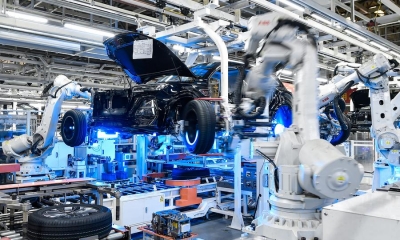
The International Monetary Fund recently upgraded its forecast for 2025 China growth to 5.0 percent, citing macroeconomic stimulus and unexpectedly mild impacts from trade tariffs. Other institutions, including the OECD and Goldman Sachs, have similarly revised their projections upward to 5 percent. These adjustments reflect robust export performance, which has helped offset weaker areas. Consumption contributed significantly, with final expenditure accounting for over half of growth in the first three quarters. High-tech sectors, particularly in innovation and green technologies, have provided additional momentum, with China climbing to the top ten of the Global Innovation Index for the first time.
The Central Economic Work Conference, held in Beijing from December 10 to 11, offered a candid review of the year’s performance. Leaders described 2025 as an “extraordinary year” in which main economic and social development targets were successfully met, marking a strong conclusion to the 14th Five-Year Plan period spanning 2021 to 2025. Over these five years, China tackled multiple shocks, including global uncertainties and domestic transitions, while recording steady progress in high-quality development. Achievements included advancements in technology self-reliance, expansion of new energy capacities, and improvements in people’s livelihoods.
Yet the conference did not shy away from challenges. Property market adjustments continue to weigh on downside pressure, while weak domestic demand and deflationary pressures remain prominent. External changes have intensified adverse effects, contributing to imbalances. Exports kept robust, driving a record trade surplus exceeding $1 trillion in the first eleven months, but this reliance highlights vulnerabilities in a fragmenting global trade environment. November data showed slowing industrial output and retail sales, signaling the need for sustained support to maintain momentum.
Looking ahead to 2026, the first year of the 15th Five-Year Plan, the conference laid out a clear roadmap focused on stability and high-quality growth. Policymakers pledged a proactive fiscal stance and moderately loose monetary policy to expand domestic demand. Boosting consumption emerges as the top priority, with plans to enhance household incomes, optimize policies for services spending, and remove barriers to market access. Investment will receive support through increased central budget allocations, efficient use of local bonds, and urban renewal projects.
Innovation and structural reform feature prominently. The agenda calls for fostering new quality productive forces, advancing breakthroughs in core technologies, and deepening reforms to improve efficiency. Green transformation will accelerate, building on China’s leading position in renewable energy. Opening-up remains a cornerstone, with commitments to expand institutional access in services, optimize free trade zones, and progress the Hainan Free Trade Port, including its full customs zone launched on December 18.
Risk prevention is woven throughout the priorities. Stabilizing property and stock markets, managing local government debt, and addressing deflation will guide policy implementation. The conference emphasized coordinating domestic efforts with international engagement, recognizing heightened trade frictions but affirming China’s role in mutually beneficial cooperation.

This balanced approach reflects a mature understanding of China’s position in a complex global landscape. Growth in 2025 has provided a solid foundation, proving the economy’s capacity to withstand pressures through adaptive policies. For 2026, projections from the IMF suggest a moderation to around 4.5 percent, as structural shifts take hold and external headwinds persist. Yet the policy toolkit appears ample, with room for fiscal expansion given China’s relatively low government debt ratio compared to other major economies.
China’s experience in 2025 offers lessons for the world. In an era of sluggish global recovery, its ability to deliver steady growth contributes to international stability. Exports have supported partners in supply chains, while investments in clean energy align with shared climate goals. As geopolitical tensions simmer, particularly with potential shifts in U.S. trade policy, Beijing’s emphasis on domestic demand and innovation signals a pivot toward sustainable, self-reliant development.
The outlook for 2026 is one of cautious optimism. Challenges are real: demographic pressures, the need to re-balance from investment-led to consumption-driven growth, and navigating a more protectionist world. Success will depend on effective implementation of the conference’s directives, ensuring policies reach households and businesses alike. If implemented well, these measures could not only sustain growth but also enhance economic resilience.
China’s economic journey in recent years illustrates a broader truth: large economies must continually adapt to internal and external changes. The 2025 performance, resilient amid difficulties, and the forward-looking agenda for 2026 demonstrate a commitment to this process. As the 15th Five-Year Plan begins, the focus on quality over quantity, on people-centered development, positions China to emerge stronger from current transitions.
In a world grappling with uncertainty, China’s steady progress serves as a stabilizing force. The policies outlined at the Central Economic Work Conference provide a pragmatic path forward, balancing immediate needs with long-term goals. For observers of global affairs, the coming year will test the effectiveness of this strategy, but the foundations laid in 2025 suggest reason for confidence.
The article reflects the author’s opinions, and not necessarily the views of China Focus.