Civilizations in Dialogue: Forging a Shared Future for Humanity
 Facebook
 Twitter
 Linkedin
 Google +
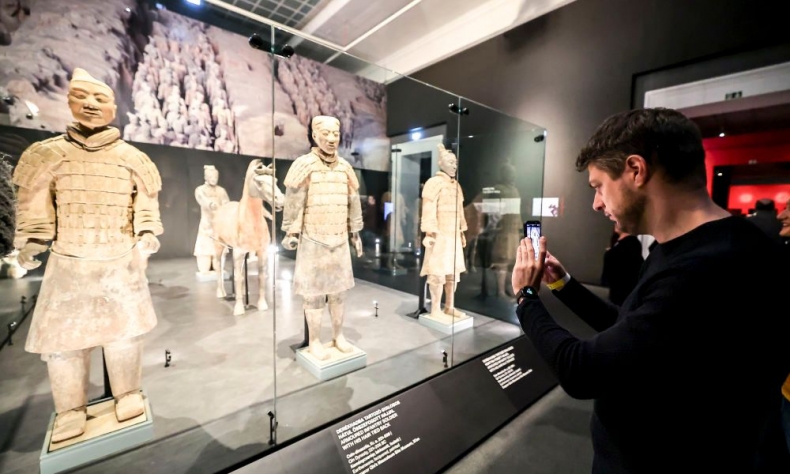
History attests that the zeniths of cultural, scientific, and economic flourishing have always emerged when societies open their gates to exchange knowledge, share experiences, and enrich one another.
March 15 marks the third anniversary of a pivotal moment in global discourse: the presentation of the Global Civilization Initiative (GCI) to the world by Chinese President Xi Jinping. More than a diplomatic proposal, the GCI stands as one of the most significant intellectual contributions of our era – a visionary framework for understanding the evolution of the international system and advancing toward a model of global coexistence rooted in mutual respect, dialogues, and cooperation among civilizations.
Integral to the contemporary development of political thought championed by the Communist Party of China, the GCI transcends statecraft. Drawing upon the quintessential wisdom of Chinese culture, it is a strategic vision that guides the country’s present-day development, governance and international engagement.
At its core, lies a principle both simple and profoundly transformative: Civilizations are not destined to clash, but for dialogue. In contrast to theories that have long prophesied an inevitable clash of cultures, China offers an alternative paradigm – one built on inclusion, respect for diversity, and mutual learning among peoples.
In today’s deeply interconnected world, no civilization can thrive in isolation. History attests that the zeniths of cultural, scientific, and economic flourishing have always emerged when societies open their gates to exchange knowledge, share experiences, and enrich one another.
From this vantage point, cultural diversity is not a source of division but one of humanity’s greatest endowments. Each civilization contributes a unique historical experience, a particular way of understanding the relationship between society, the state, and nature, and a set of values that enrich the collective heritage of humankind.
GCI is also part of a broader vision of international governance based on respect for the diversity of political and cultural models. This approach recognizes that there is no single path to development and that each country has both the right and the responsibility to build its own model of modernization in light of its history, culture, and social conditions.
This principle resonates with particular urgency today, as the international order undergoes profound transformations. For too long, global governance has been marked by a structural imbalance in which a minority – representing roughly 20 percent of the world’s population – has wielded a disproportionate share of decision-making power.
Today we witness a historic rebalancing. The voices of the Global South are rising, legitimately demanding a meaningful role in shaping the international system. This is not aimed at confrontation, but rather at opening wider avenues for cooperation and ensuring equitable representation.
In this context, initiatives championed by China such as the Belt and Road Initiative (BRI) have emerged as consequential platforms for international cooperation. By fostering infrastructure development, economic connectivity, and cultural exchange, the BRI energizes economies, enhances regional connectivity, and creates new opportunities for development in many regions of the world.
Beyond the economic dimension, these initiatives also reflect a conception deeply rooted in China’s historical thinking: international relations should not be based on a zero-sum game.
For centuries, international politics has often been viewed as a perpetual arena of competition in which one nation’s gain presupposes another’s loss. This logic has fueled rivalries, geopolitical tensions, and conflicts, leaving an indelible mark on modern history.

China’s own historical journey points toward a different conclusion. Having navigated complex chapters in its modern history and, since the late 20th century, embarked on an extraordinary modernization drive, the country has arrived at a fundamental conviction: global prosperity is attainable only when development is shared.
This fosters a cooperative philosophy anchored in a clear, constructive premise: your country’s success can contribute to mine. National progress should not be viewed as a threat to others, but as an opportunity to expand the frontiers of cooperation and shared growth.
This principle is the bedrock of the vision for a community with a shared future for humanity, a vision that seeks to move beyond the confrontational logics and advance an international system based on mutual respect, shared benefit, and cooperation among civilizations.
In Spain, the Cátedra China Foundation stands as a distinctive institution dedicated to fostering a deeper understanding of China and strengthening dialogue between our peoples.
Founded by Marcelo Muñoz, now honorary president of the institution and a recognized ambassador of friendship with the Chinese people, Cátedra China was born with a clear mission: to help Spain comprehend the real China of the 21st century.
Few Spaniards have understood China’s transformation as profoundly as Marcelo Muñoz. Since 1978, coinciding with the beginning of China’s reform and opening-up, he has closely followed the evolution of a country that in just a few decades has achieved one of the most extraordinary economic and social transformations in modern history.
That founding spirit continues to guide the work of our institution today. The Cátedra China Foundation is committed to the study of the Chinese modernization – a process that has significantly improved the living conditions of hundreds of millions of people and blazed a development path increasingly oriented toward innovation, social well-being, and sustainability.
Our analysis of China goes beyond simplistic comparisons with Western political systems. China’s governance model is distinguished by long-term strategic planning, meticulous training of political cadres, and an unwavering focus on public welfare.
The legitimacy of the political system led by the Communist Party of China – in cooperation with eight other parties that participate in the political system – is grounded in principles such as zero tolerance for corruption, administrative efficiency, and political responsibility oriented toward national development.
While some describe China’s rise as a “miracle,” China itself sees it as the result of decades of sustained effort, strategic planning, substantial investment in education, and a clear vision for the future.
As a natural outcome of this model, the GCI represents an invitation to all nations to strengthen intercultural dialogue, expand spaces for cooperation, and collectively steer global governance toward greater inclusivity.
At the Cátedra China Foundation, we firmly believe that mutual understanding among civilizations is one of the fundamental pillars of stability and progress for humanity.
When societies truly listen to one another, when they learn from each other, and when they build bridges of cooperation, the world grows not only more prosperous but also more just and humane.
In this spirit of dialogue and mutual understanding, Spain and China now share a historic opportunity to deepen a relationship built on respect, knowledge, and shared benefit. Ultimately, the future of our two nations is inextricably linked to the common future of all humanity.
Marta Montoro is executive chair of Cátedra China Foundation.