Deciphering China’s Growth Target
 Facebook
 Twitter
 Linkedin
 Google +

Structural strength, innovation momentum and policy capacity underpin the stability of the world’s second-largest economy.
China has set its economic growth target for 2026 in the range of 4.5-5 percent. After three consecutive years of aiming for growth of around 5 percent, the slightly adjusted range reflects a prudent assessment of a complex global environment while still signalling a commitment to stable development.
In recent years, global economic recovery has weakened, geopolitical tensions have increased and protectionism has intensified. Meanwhile, global industrial and supply chains are undergoing rapid restructuring. Despite this challenging backdrop, China’s economy has continued to expand steadily.
In 2025, China’s GDP exceeded 140 trillion yuan ($20.36 trillion), representing 5 percent year-on-year growth. The growth alone amounted to more than 5 trillion yuan ($727 billion), the highest among the world’s major economies. Throughout the 14th Five-Year Plan period (2021–2025), China contributed roughly 30 percent of global economic growth.
This raises a question: in a complex and rapidly evolving international environment, how has China’s economy managed to maintain stability and continue generating growth, supporting a 4.5-5 percent target? The answer lies in decades of structural strength, the rapid pace of technological innovation and increasingly sophisticated governance and policy capabilities.
A massive market
China’s economic strength rests on a simple fact: it has one of the largest markets in the world. With a population exceeding 1.4 billion and a middle-income group of over 400 million, the country enjoys massive consumption potential, substantial industrial demand and a steadily growing domestic market.
The combination of a huge domestic market and a complete industrial system provides the foundation for China’s stable economic development. Strong domestic demand has become a long-term driver of growth. In recent years, China has pursued a strategy to boost domestic demand, strengthening consumption’s role as a key driver of economic growth.
In 2025, total retail sales of consumer goods surpassed 50 trillion yuan ($7.27 trillion). New consumption models, such as online shopping and instant retail services, have expanded rapidly. At the same time, digital and service consumptions continue to open new avenues for growth.
China also possesses the world’s most comprehensive industrial system, with manufacturing value added ranking first globally for many consecutive years. A complete industrial and supply chain structure not only improves production efficiency, but also strengthens the economy’s resilience to external shocks.
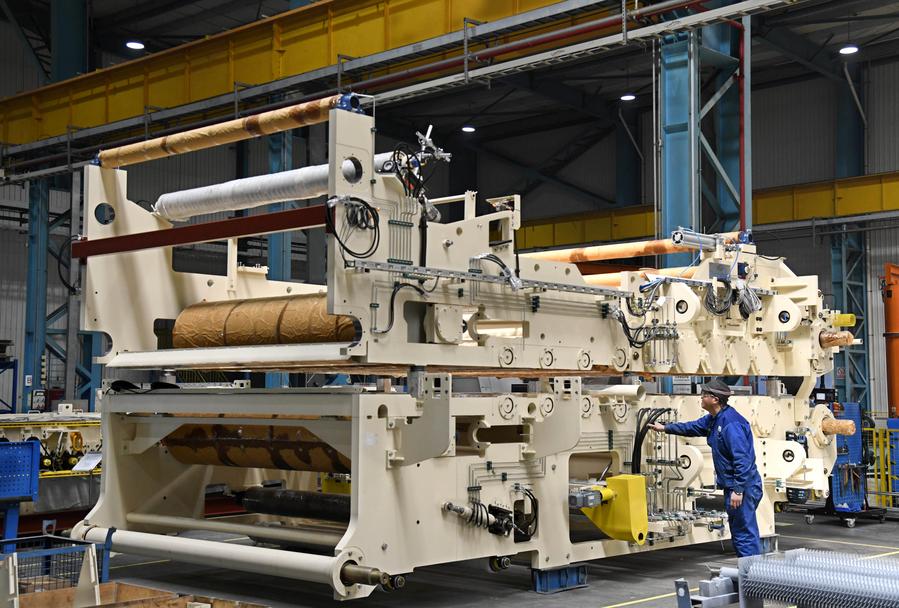
China has built globally competitive industrial clusters across multiple sectors ranging from traditional manufacturing to high-end equipment production, and from new energy vehicles to photovoltaic technology. This comprehensive industrial base allows the country to play a central role in global supply chains while providing stability to the wider international industrial system.
While China’s large market underpins its economic stability, technological innovation and new quality productive forces are drivers of growth.
In recent years, the country has steadily expanded investment in science and technology. Research and development spending as a proportion of GDP has grown, and China’s capacities in fundamental research and original innovation have advanced significantly.
Breakthroughs are emerging in cutting-edge sectors such as artificial intelligence, biotechnology, quantum technology and new energy, fundamentally reshaping the drivers of economic growth.
Innovation is not only creating new industries, but also modernising traditional ones. The integration of digital technology with manufacturing, along with developments in intelligent manufacturing, the industrial Internet and digital supply chains, is guiding the next phase of industrial upgrading.
Green transformation is also becoming a major driver of growth. Sectors including new energy vehicles, renewable energy and green manufacturing are growing swiftly, and China has established itself as a key global supplier of new energy technologies and products.
These changes reflect a fundamental shift in China’s development model. In the past, growth depended largely on factor inputs such as labour and capital. Today, innovation plays an increasingly decisive role. The focus has also shifted from simply expanding scale to improving quality. This transition is gradually moving China’s economy from a factor-driven model to an innovation-driven one.
Strong governance capacity
Over the past few years, the country has experienced a series of shocks, ranging from the COVID-19 pandemic to international trade tensions and financial market fluctuations. Through counter-cyclical and cross-cyclical macroeconomic regulation, China has maintained overall economic stability. In 2025, it accomplished its principal economic and social development goals.
At the same time, China has continued to deepen reforms and enhance the business environment. Opening up is also progressing through institutional reforms. As free trade zones and the Hainan Free Trade Port continue to develop, high-level opening up is breathing new life into China’s economic landscape.

In a rapidly evolving global economic landscape, China remains committed to international cooperation. It is not only a major participant in global trade, but also an active contributor to global economic governance. Through the Belt and Road Initiative, regional cooperation and expanding market access, China is contributing stability to the global economy.
The 2026 Government Work Report emphasises enhanced macroeconomic measures to support growth. China intends to implement a proactive fiscal policy alongside an appropriately accommodative monetary policy, featuring expanded fiscal spending, reinforced backing for key sectors, lower policy interest rates and cuts to the reserve requirement ratio. The goal is to stabilise growth, employment and expectations.
People-centred approach
Ultimately, economic development is about improving people’s lives. In China’s development model, people’s well-being remains the ultimate goal and an important driver of long-term growth.
Alongside its economic growth, China is increasingly committed to ensuring that the benefits of development reach all citizens. Key priorities include stable employment, rising incomes, improved education and health care, and expanded elderly care services. This people-centred development approach reflects the core values of Chinese modernisation while shaping the direction of economic policy.
In recent years, the country has steadily enhanced its social security system. Coverage of basic pension and medical insurance continues to expand, employment remains broadly stable, household incomes are rising, the middle-income population is expanding, and consumption potential is increasingly being realised.
Improvements in public services, covering education, health care, eldercare and childcare, have improved living standards and helped to create a stable social foundation for sustainable economic growth.
From a broader perspective, improving livelihoods is not only a social objective, but also a driver of economic growth. Rising incomes and stronger social security systems boost consumer confidence and purchasing power, supporting a development model increasingly propelled by domestic demand. A society with stable employment, rising incomes and dependable social protection provides a strong foundation for sustained economic vitality.
Despite continued uncertainties in the global economy, the fundamentals of China’s economy remain solid. Over the long term, the country still possesses enormous development potential. With advances in technological innovation, the upgrading of industrial structures, and the deepening of reforms, China’s economy is poised to maintain stable growth even in a complex international environment. In doing so, it will continue to provide momentum to global economic recovery and development.
The author is Special Commentator of China Focus.