Emotions Are the New Marketing Magnet
 Facebook
 Twitter
 Linkedin
 Google +
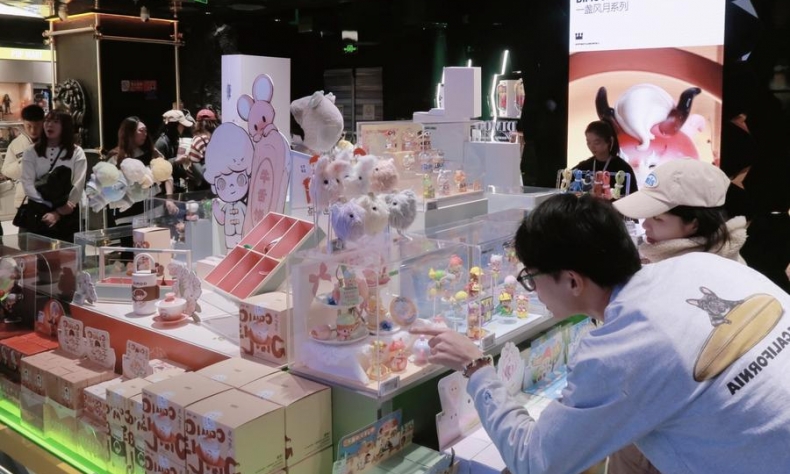
Mood-driven purchases of both goods and services are on the rise, emerging as the new engine driving consumption.
Miniature decorative green banana trees called “No Anxiety” (a word play on the Chinese words “don’t be a green banana”), blind boxes, mountain hiking companions, and AI chat pals – many products and services that were dismissed as useless or worthless years ago are now gaining popularity among young consumers. Behind this trend is the increase in consumer spending, driven more by emotions than practical needs.
Pay to feel good
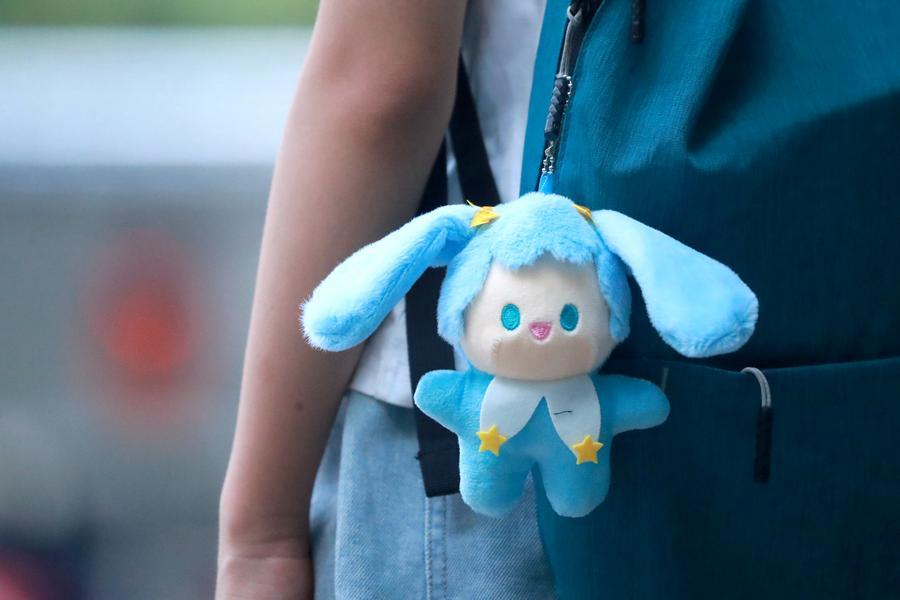
A Gen Z girl surnamed Gao regularly splurges on comforting items such as Pop Mart toys and IP-licensed stationery. “These little friends help me to temporarily escape from a bad mood,” she said. Over the past year, Gao has also attended three concerts, visited Yonghegong Lama Temple (a Buddhist temple in central Beijing) several times to offer prayers and buy prayer beads (believed to bring good luck for the wearer), and signed up for dance and fitness classes. Paying money for experiences to balance their physical and mental well-being is now a trend among young Chinese like Gao, who open their purses not just for food, clothing, and other daily necessities but more frequently for items of emotional value.
Searching for green pine tree (qing song, a homophonic of relax or at ease) on Taobao, one can find potted plants named fang qing song (relax) and pine-shaped stuffed toys with the label qing song fa cai (make money easily), both priced much higher than other items in their categories. And the growing desire for ACGN (Animation, Comics, Games, and Novels) derivative products has created a new consumer phenomenon, the goods economy, whose market size was expected to exceed RMB 240 billion in 2025. Many businesspeople are mining this lucrative trend.
A street food vendor operating his stall in Jingdezhen City, Jiangxi Province, has gained a massive following with his slogan, “RMB 6 chicken cutlet, with RMB 60 emotional value and RMB 600-worth of service.” Many customers queued for hours just to chat with him. This backs the finding of the 2025 Young People’s Lifestyle Report, jointly released by Seashell Finance and the Consumer Market Big Data Laboratory under China’s Ministry of Commerce: 56 percent of respondents are willing to pay for products that provide emotional support.
Ding Ying, a marketing professor at the Business School of Renmin University of China, said that emotional spending comes in two types, one for self-indulgence, such as blind boxes, therapeutic products, and meditation courses; and the other for social bonds, such as companionship and cultural travel. She noted that traditional consumption focuses merely on the functionality of products. Today, consumption decisions are increasingly driven by packaging, branding, and IP collaboration. Some business models have forsaken practicality completely, prioritizing emotional value instead. The proliferation of new technologies like AI has also ignited consumer interest in virtual products. Under the mounting pressure of urban life, emotional spending becomes the means to relieve stress and anxiety.
This form of consumption is however nothing new. Its earlier edition includes products and services like toys, lucky bags, and counselling radio shows. “Emotional consumption has existed since ancient times, stemming from innate human needs,” Ding explained. At the new stage of China’s economic development, the priority of Chinese consumers has shifted from satisfying basic needs to pursuing emotional fulfillment – a new benchmark for measuring the quality of life. This change in consumer psychology reflects society’s transition to material abundance.
“Today’s middle-aged and younger consumers, especially Gen Z, place greater emphasis on self-expression and inner experiences,” Ding observed.
Experiential selling
In the autumn of 2025, Tong Pengfei, a sugarcane farmer in Qingshen County, Sichuan Province, gained instant fame by launching a “sugarcane stealing” program, which was actually a self-pick activity. The event attracted thousands of visitors daily, with some even traveling from as far as 3,000 kilometers away. Within just 10 days of its launch, the activity boosted sugarcane sales by nearly RMB 50,000.
Instead of the juicy crop, this promotion attracted customers for the adrenergic experience it offers, similar to counter strike, childhood role-play, and other stress-relieving games. Jumping on the “sugarcane stealing” bandwagon, Qingshen offered paying “thieves” free admission to scenic spots in the county such as the International Bamboo Art City and the Giant Panda Zoo. Many visitors have hence extended a one-day excursion into a days-long immersive trip.
In recent years, many examples of successful marketing of emotional value have led to a surge in local tourism. In today’s cultural tourism industry, competitiveness stems less from tourism resources and more from the ability to create experiences that resonate deeply with consumers.
According to Xu Hong, dean of the College of Tourism and Service Management at Nankai University, under pressure of a fast-paced life, people in today’s society long for emotional buying as a means of self-exploration and identity enhancement. The ubiquitous Internet meets people’s needs for convenient and diverse consumption, but social media also amplifies emotional satisfaction. “Going to trendy destinations and posting travel photos online serve both as a catharsis and a manifesto of one’s social stratum. These activities are actually a new form of social currency,” she said. “In an increasingly digitalized life, people are inundated by virtual interactions and superficial engagement. Offline immersive experiences therefore offer emotional healing by fostering tangible, closer human connections.”
Once gaining popularity, social media hotspots face the challenge of sustaining popularity for an extended period. In 2023, Zibo, a formerly nondescript industrial city in Shandong Province, became a national sensation for its mouthwatering barbecue, attracting tourists from all over the country. The local government acted swiftly to improve the consumer experience by optimizing transportation services, enhancing market regulation, and increasing public security patrols. Meanwhile, businesses in the city enriched their offerings by weaving in cultural elements, sustaining the barbecue buzz to the present day.
Xu noted that while emotional appeal can ignite consumer interest, sustainable growth depends on quality. Only by evoking a deep resonance can trending destinations convert fleeting traffic into lasting loyalty and secure a firm market position.
This is exactly what scenic spots all over China are trying to do. In the “Longest Day in Chang’an” theme block in Xi’an, capital of Shaanxi Province, scenes from the Tang Empire more than 1,000 years ago are brought back to life: long sleeves of dancers flutter in the night breeze, the faint aroma of wine fills the air, and bards intone their finest verses, while street vendors peddle flatbreads from the far west. With every sense fully awakened, visitors travel back in time to a long-lost dynasty. At the Wansui Mountain Martial Art Resort in Kaifeng, a city in the neighbouring Henan Province, visitors can take on roles in plays based on Outlaws of the Marsh (one of the Four Great Classical Novels of Chinese literature, written during the 14th century by Shi Nai’an). Like residents of the Northern Song Dynasty (960-1127), they shop with old bank notes and feast on local specialties like barrel chicken and almond tea.
Xu said that behind these successful cases lies the emotional engagement of tourists by constructing storyline-based contexts. She suggested that businesses should prioritize consumer needs, attend to fine details in scene designs and service execution, and conduct targeted, effective marketing and promotion, for example leveraging new media to amplify their reach and develop positive interactions.
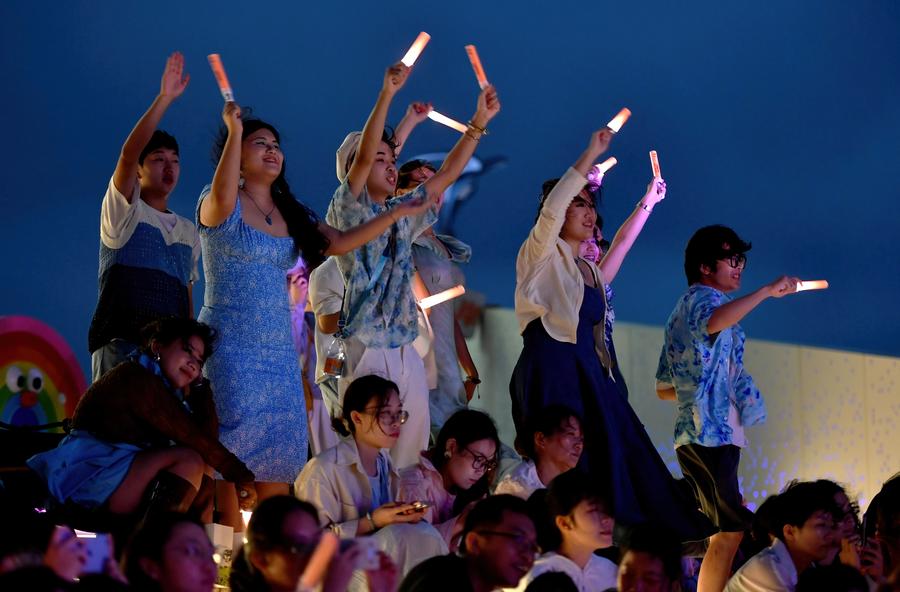
Emotional consumption has spawned a variety of new business models. In addition to novel programs at traditional scenic spots, more entertaining activities are emerging, such as script murder (a role-playing murder mystery game), escape room, concerts, and crosstalk shows. Businesses are competing fiercely to unlock the secrets of how consumers release their emotions.
“From the service economy to the experience economy, and now to the emotional economy, the form of the economy has been evolving. In the future, consumers’ value judgment will be more driven by personal feelings,” Xu predicted. “In the competition among homogeneous products, those that can accurately identify and provide differentiated emotional value will win over customers. Only the products with highly recognizable emotional appeal can build consumer loyalty and win repeat buyers.”
Rational spending
Both the CPC Central Committee’s recommendations for the 15th Five-Year Plan drafting and the 2025 Central Economic Work Conference listed “boosting consumption” as a priority in the coming years. As the consumer market is undergoing faster transformation, fueled by surging emotional spending, it is imperative to safeguard consumer rights and ensure the stable, healthy development of the sector.
Ding pointed out that emotional consumption often doesn’t involve tangible objects, and is therefore difficult to price. Coupled with consumers’ reduced price sensitivity, this increases the likeliness of impulsive spending. Relevant authorities need to carry out research on the quality standards, pricing mechanisms, and entry thresholds for emotional consumption, and on this basis provide proper regulations, particularly for virtual products and services. This will help curb anxiety-mongering and promote the healthy development of consumption.
She also emphasized the importance of consumer guidance for rational spending. “Only by building stable interpersonal networks in real life and replacing fleeting dopamine stimuli with enduring endorphin defence can people achieve long-term positive emotional regulation. This is particularly true for children and adolescents. While they should be encouraged to embrace the new era of AI, it must be made clear that humans belong in the real world. The appetizers in life should not become the main course,” she said.
Xu agreed with this view, adding that relevant government departments should intensify efforts to maintain market order, conduct rigorous reviews, ensure public safety, and prevent potential risks. She further pointed out a problem facing the cultural tourism industry – visitor flow is not converted into revenue flow, which exposes the pitfalls of solely pursuing popularity. “Buzz marketing is good, but emotion is not everything. Instead, local authorities must ensure the orderly and positive development of society,” said Xu.