Enhancing Regional Cooperation for the Prosperity of Asia
 Facebook
 Twitter
 Linkedin
 Google +
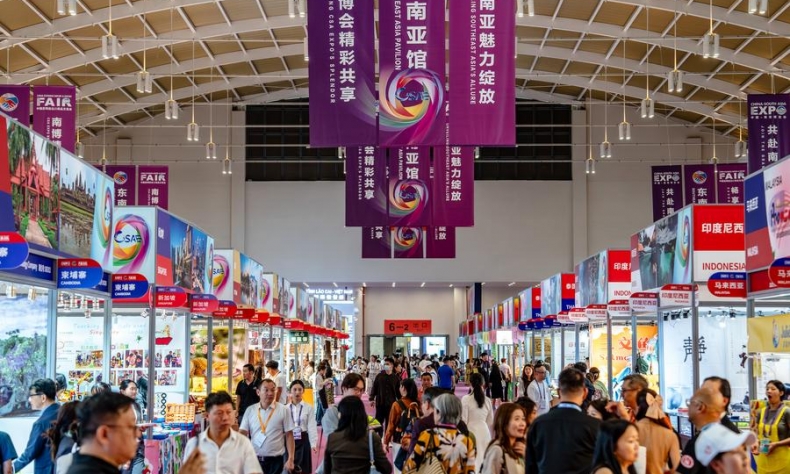
Asian countries can contribute more actively by bringing their regional cooperation experience to global platforms.
Editor’s Note: In the global community, development issues have been increasingly in the spotlight, urging Asian nations to play a more active role in global governance. How will ASEAN+3 and CAREC promote cross-regional cooperation, and what contributions has China made to the regional economic framework? Yasuto Watanabe, Director/CEO of the ASEAN+3 Macroeconomic Research Office (AMRO), shares his invaluable insights with China Focus during the Tianshan Forum held in December 2025 in Urumqi, Xinjiang. The excerpts of the interview are as follows:
China Focus: China has maintained its position as ASEAN’s largest trading partner for 16 consecutive years. What does this mean for the regional economic landscape?
Watanabe: Across the broader ASEAN+3 region, China, Japan, South Korea, and ASEAN are increasingly linked through manufacturing and services value chains, as well as in emerging areas such as the green and digital sectors.
This integration has supported growth and resilience on both sides. China provides a large market and a key manufacturing hub; ASEAN has advantages in supplying a younger workforce, growing middle classes, and diversified production bases. Trade has been reinforced by rising investment from China, Japan, and South Korea into ASEAN, especially in infrastructure, manufacturing, and services.
This close relationship underlines the importance of ASEAN to deepen its own integration and maintain an open, predictable market. Stronger intra-ASEAN trade and investment will make the region a more stable source of demand for its partners, including China, and help ASEAN+3 to play a more constructive role amid rising uncertainty in the global economy.
China Focus: In the process of Asia‘s regional integration, what do you see as the main driving forces? In your opinion, what specific cooperation projects should ASEAN prioritize with China, Japan, and South Korea?
Watanabe: Economic complementarity has been the main driving force behind ASEAN+3’s regional integration. China is the largest trade partner for most ASEAN members; Japan and South Korea provide technology, capital, and management expertise; and ASEAN contributes dynamic production bases and fast-growing markets. This has been underpinned by openness, through ASEAN-centered trade arrangements and the ASEAN+3 finance cooperation framework.
A second driver that will be increasingly important for regional cooperation and integration is the deepening of financial and digital connectivity. Cross-border payment linkages, greater use of local currencies in trade, and stronger capital-market connections are making it easier for firms – especially SMEs – to participate in regional value chains.
Looking ahead, ASEAN’s cooperation with China, Japan, and South Korea could focus on three important areas: upgrading supply-chain in sectors such as electronics, electric vehicles, and digital services; investing in green and resilient infrastructure, including energy transition; and deeper financial and digital connectivity, from interoperable fast-payment systems to sustainable-finance frameworks. Together, these initiatives can help make the ASEAN+3 region more closely connected while keeping open to the rest of the world.
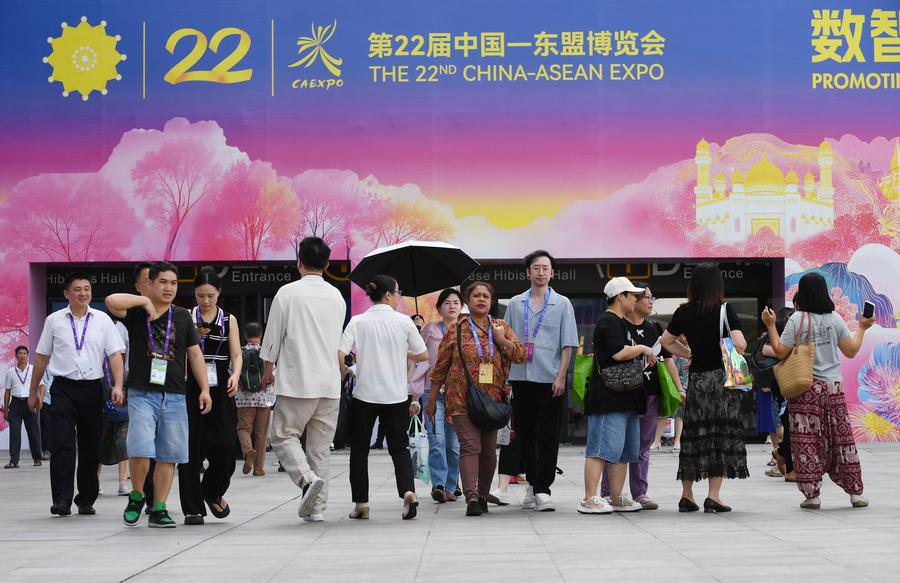
China Focus: As global development issues gain greater attention, how should Asian countries participate more actively in global governance? With the rise of emerging economies, how do you view the current changes in the international economic landscape?
Watanabe: As emerging economies – especially in Asia – increase in economic influence, the global economy is moving from a single center of gravity to a diversified ecosystem where economies are closely linked with each other. Asia is now a major source of production, demand, innovation, and savings, and this changes expectations of the region’s role globally.
Asian countries can contribute more actively by bringing their regional cooperation experience to global platforms. The ASEAN+3 Finance Process – including the Chiang Mai Initiative Multilateralisation, regional bond-market initiatives, and AMRO’s surveillance – shows how regional safety nets and policy dialogue can complement global institutions. ASEAN+3 is also innovating in areas like cross-border payments and green finance, which can feed into global standard-setting.
At the same time, ASEAN+3 economies remain committed to an open, rules-based international economic system. By using their growing influence to uphold openness, strengthen linkages between regional and global cooperation, and advance the sustainable-development and climate agenda, they can help make global governance more resilient.
If ASEAN+3 uses its growing economic and financial presence to support openness and cooperation, the shift to a more diversified ecosystem with close interlinkages will not mean more fragmentation, but instead, a more resilient global landscape.
China Focus: Both ASEAN+3 and Central Asia Regional Economic Cooperation (CAREC) are committed to promoting trade liberalization, infrastructure construction, and financial cooperation in the process of advancing regional economic integration and sustainable development. What do you think are the common experiences and challenges of ASEAN+3 and CAREC in these areas, and what are the potential cooperation opportunities?
Watanabe: ASEAN+3 and CAREC share a common goal: to leverage regional cooperation in trade, infrastructure, and finance to unlock growth and strengthen resilience in a more uncertain global environment. Both regions recognize that geography can shift from a constraint to an advantage when openness and connectivity are well planned.
They also face similar challenges. Infrastructure gaps remain large, connectivity is uneven, and many economies need to balance ambitious investment plans with debt sustainability and climate goals. A key lesson from ASEAN+3 is that successful integration requires not only projects, but also strong institutions, clear development priorities, and mechanisms for policy dialogue and surveillance that help build trust.
These shared experiences offer a solid basis for closer ASEAN+3–CAREC cooperation. Opportunities include knowledge-sharing on designing and financing regional projects, and advancing green connectivity – such as renewable-energy investment, and common approaches to sustainable finance.
Stronger collaboration between institutions like AMRO and the CAREC Institute can help both regions deliver a stronger “regional voice” and contribute more effectively to the cross-regional sustainable development.