Festival of Fusion
 Facebook
 Twitter
 Linkedin
 Google +
In Xinjiang, I felt that in a broader sense, not just family reunion, but a city reuniting with itself: different communities stepping into the same celebration, in the same spaces, at the same moment.
Chinese New Year in Xinjiang surprised me. I’ve been living in Urumqi long enough now to experience some of the festivals associated with the local communities that call Xinjiang home, including Eid el-Fitr, the Islamic celebration that includes dancing, music and family meals; and Nowruz, the Persian New Year, and its traditions celebrating springtime. These celebrations are observed by different ethnic groups in Xinjiang; and although not all groups celebrate them, everyone is given a public holiday out of respect for those who do.
When Chinese New Year came around, I assumed the national holiday would be celebrated in the standard way as seen in Beijing or Shanghai: red lanterns, familiar greetings, dumplings, temple fairs, fireworks… But that’s not really the case. Spring Festival in Urumqi didn’t feel like a copy-paste version of China’s biggest holiday. It felt like Xinjiang doing what Xinjiang does best: taking something shared by everyone and making it local, layered, mixed, and uniquely its own.
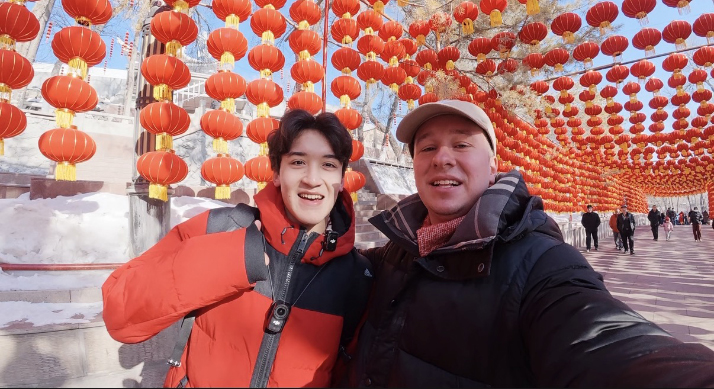
I spent the day filming celebrations along a route through different “faces” of the city: Hongshan, CCMall, the Grand Bazaar, and then the drone show and fireworks at night. Threaded through this day was one theme: In Xinjiang, the biggest festival in China belongs to everyone.
Performances at Hongshan
I started the day at Hongshan, which means Red Mountain in English, but it’s not really a mountain as it takes only 10 minutes to reach the summit. It’s more of a big park with lots to do, including Ferris wheels, toboggan slides, roller coasters, temples and historical statues. If you want to understand Urumqi, Hongshan is the place to visit first as you can see the city’s modern side with skyscrapers and fancy buildings, and the other side with beautiful snowcapped mountain ranges.
But the real moment that set the tone for the day wasn’t the view. It was the performance.
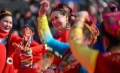
For Chinese New Year, Hongshan hosted a special performance of songs and dances. Having lived in Shanghai for five years, I’d never seen these traditional acts before! A really cool thing was how a performer began playing a traditional Uygur song on a traditional Han instrument. That detail might seem minor on paper, but it made me think: This is what makes Spring Festival in Xinjiang different.
Here, the holiday still has the red-and-gold atmosphere, and of course lion dances; but the soundtrack is different. The culture of the region doesn’t step aside to make room for the festival; it shows up inside it.
The modern side of festival culture
Next, I went to the city’s most popular shopping mall, CCMall. I had visited the mall a few weeks previously to celebrate Christmas, as it had gifts and decorations to celebrate my own festival, even though hardly any foreigners live here. So, it really made me feel warm and gave me a feeling of being in a community. Now, the mall had been completely transformed with traditional Chinese New Year decorations.
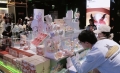
At the gate, you could pick a random “red packet,” which might have a gift inside. Mine, luckily, had 10 yuan ($1.4) and a voucher for a shop in the mall. There were also lots of little stands selling festive costumes and decorations for your home. One vendor invited me to her stall and said I could experience traditional printing for free! She told me it usually costs 20 yuan ($2.8), but because I’m a foreigner, she wanted me to have the chance to experience the holiday and learn about it.
The Grand Bazaar
Then I headed to the Grand Bazaar. If CCMall is the modern “public square,” the bazaar is the cultural showcase. The architecture alone stands out: ornate towers, patterns, and shapes that feel Central Asian as much as Chinese. It gives you a feeling of stepping into a different layer of the city.
During Chinese New Year, the Grand Bazaar is a place where people come to walk, to eat, to take photos, to watch performances and to soak up the festive atmosphere.
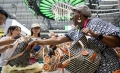
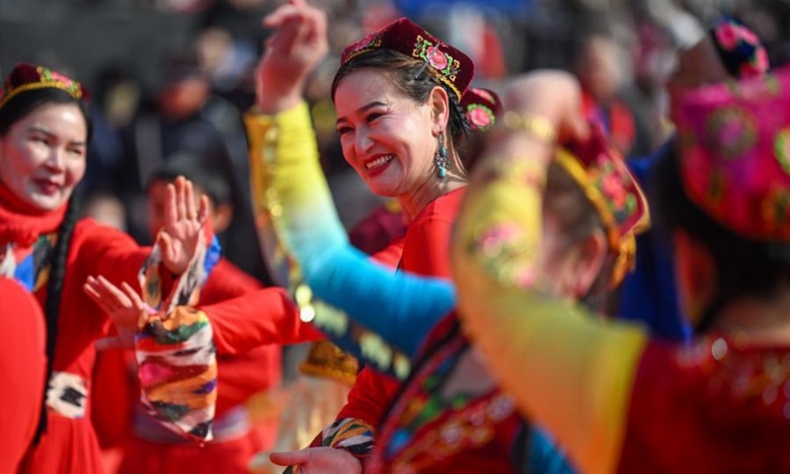
The performance I saw there had two parts, one performed by local minority ethnic groups who gather and dance in the main square every weekend, and the other was a performance by professional dancers and musicians who marched through the gigantic area playing drums in their traditional attire.
Watching performances at the bazaar during the Spring Festival felt like seeing Xinjiang’s cultural identity take its place inside the national holiday. You’re not asked to choose between “Xinjiang culture” and “Chinese New Year.” You’re watching them exist together in the same frame, one adding color, music and movement to the other.
This is where the contrast with other cities becomes clear. In many parts of China, Spring Festival looks similar: the decoration, the food, the rhythm… In Urumqi, the festival still has that recognizable high energy, but the setting has changed. The architecture, the music, the performers and the crowd all remind you that China is a giant country with many local identities.
Night time
By evening, the celebration became cinematic and I experienced my first-ever firework and drone show in China.
The drones, maybe hundreds, possibly a thousand of them, synchronized to form various shapes and messages, including images of horses, symbols of Xinjiang, and even advertisements for local restaurants, which made everyone chuckle.
And then came the fireworks, again something banned in major cities due to pollution. Boy, they were everywhere and went on continuously for two solid weeks! It really felt as if the whole city was participating.
Standing there, watching the sky lit up, I couldn’t help thinking back to Eid and Nowruz. Those festivals introduced me to Xinjiang through specific cultural lenses, beautiful, meaningful, and deeply rooted. Chinese New Year did something different. It showed me Xinjiang as a shared civic space: a place where multiple cultures share the same streets, the same parks, the same malls, and the same night sky.
What I took away
Chinese New Year is often described as the festival of reunion. In Xinjiang, I felt that in a broader sense, not just family reunion, but a city reuniting with itself: different communities stepping into the same celebration, in the same spaces, at the same moment.
And honestly, that’s the most hopeful version of a holiday I can think of.
The author is a British YouTube content creator currently living in Urumqi.