From Chat to Claw
 Facebook
 Twitter
 Linkedin
 Google +
The emerging new forms of the smart economy point to the deep integration of AI with the real economy, digital infrastructure and industrial ecosystems, reflecting a new step in how intelligent technologies are reshaping the foundations of China’s economic development.
In China, a common and lighthearted way to greet someone—often said half in jest—has long been a simple question: “Have you eaten yet?” Lately, however, a new line is making the rounds: “Have you ‘raised a lobster?'”
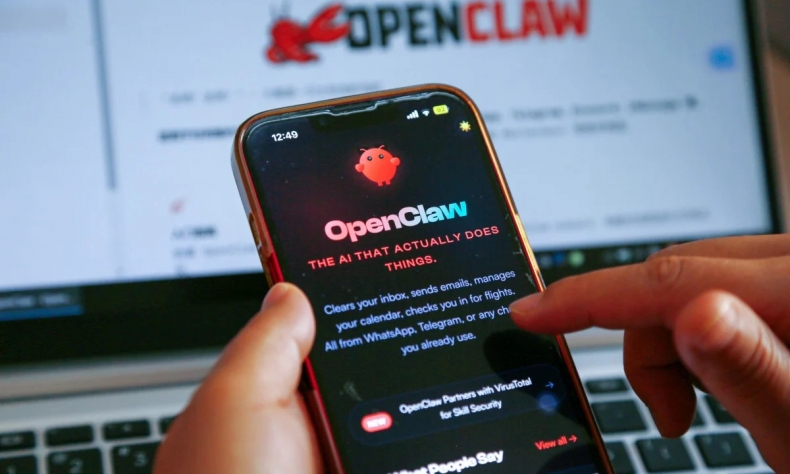
The “lobster” refers to OpenClaw, an open-source AI agent created by an Austrian developer that has taken the Internet by storm. Unlike chatbots that merely converse, OpenClaw is designed to actually do things—hence the “claw,” a limb built for action.
As public enthusiasm for OpenClaw and similar tools increasingly intensifies, government departments and cybersecurity experts are citing grave security concerns—from data leaks to unauthorized system access—posed by reckless deployment.
The buzz echoes a moment from around the same time last year, when China’s large language model (LLM) DeepSeek surged into the spotlight. About two years earlier, U.S. tech company OpenAI’s ChatGPT had established the breakthrough that pushed LLM from concept to reality. The names themselves hint at a trajectory—Chat, Deep, Claw: AI has moved from conversation to deeper reasoning, and now toward action.
This wave of excitement over “raising lobsters” coincided with China’s annual Two Sessions, the meetings of the National People’s Congress (NPC), China’s top legislature, and the Chinese People’s Political Consultative Conference (CPPCC) National Committee, the top political advisory body, held in Beijing from March 4 to 12. The overlap has further amplified AI discussion.
This year, AI was mentioned seven times in the government work report, mapping out key priorities for national development over the 12 months ahead, delivered on March 5. For the first time, the report introduced the concept of “creating new forms of the smart economy.”
Chen Jun, an NPC deputy and Executive Vice President of Nankai University, said the emerging new forms of the smart economy go beyond the application of a single technology. Instead, they point to the deep integration of AI with the real economy, digital infrastructure and industrial ecosystems, reflecting a new step in how intelligent technologies are reshaping the foundations of China’s economic development.
The power of AI
A case at the Affiliated People’s Hospital of Ningbo University tells how AI in China helped save the life of a pancreatic cancer patient. Often called the “king of cancers,” pancreatic cancer typically shows few symptoms in its early stages, and most patients are diagnosed only when the disease has already reached the advanced stages.
According to the hospital’s news release in early 2025, a patient visited the hospital for a routine checkup and underwent a standard CT scan. An AI-powered early screening model for pancreatic cancer, developed by China’s tech giant Alibaba and deployed at the hospital, detected subtle lesions in the scan that were nearly impossible for the human eye to spot. The technology improves early cancer detection while reducing the cost of screening for patients.
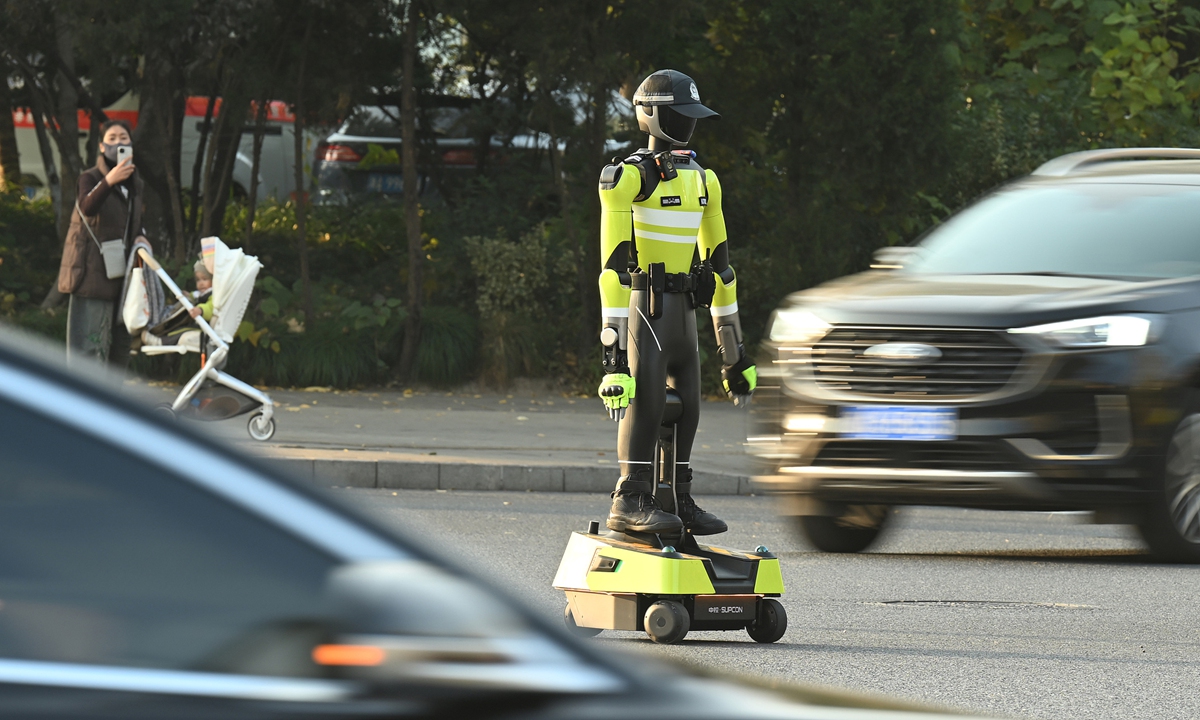
This is just one example of how AI is being applied across China’s industries. From assisting doctors in hospitals, to grading student assignments and offering personalized learning plans, and to powering quality inspection systems in smart manufacturing facilities, AI is leaving its mark across sectors. Even in realms once thought distant, such as the exploration of deep space, AI is starting to play a role.
Wang Chi, an NPC deputy, member of the Chinese Academy of Sciences (CAS) and Director of the National Space Science Center, CAS, told Beijing Review that AI is becoming a “super research assistant,” able to sift through enormous volumes of satellite images and data in minutes—tasks that once took researchers hours, or even days, including identifying the early signs of a solar storm. AI can even estimate when a solar storm will hit Earth and how powerful it will be. Severe solar storms can disrupt telecommunications, satellites and power grids, creating far-reaching consequences for global society.
“It allows us to focus on the bigger question of ‘why,'” Wang said, “Instead of spending time searching for signals.”
But this is only a small glimpse of how AI may transform space science. Over the next three to five years, Wang said he believes it could play a bigger role. Traditionally, scientists focused on protecting individual satellites from damage caused by space weather. AI makes it possible to manage entire satellite constellations, coordinating optimal collective actions that both save fuel and ensure the stability of communications networks.
AI can also predict the aging of key components such as solar panels and recommend temporary shutdowns or operational adjustments, extending satellites’ service lives, Wang added.
At a more advanced level, rather than simply “avoiding” dangerous conditions, satellites could use AI to adjust their observation modes in response to real-time space weather data, actively “capturing” events such as solar eruptions and transforming potential hazards into valuable scientific discoveries, he added.
Speaking on the sidelines of the NPC session on March 5, Minister of Industry and Information Technology Li Lecheng said China’s core AI industry was valued at 1.2 trillion yuan ($174.4 billion) last year. As of late 2025, more than 30 percent of major manufacturing enterprises, or those with an annual main business turnover of at least 20 million yuan ($2.9 million), had adopted AI technologies.
In August 2025, the State Council, China’s highest state administrative organ, issued guidelines on implementing the AI Plus initiative, setting clear targets for the penetration rate of next-generation intelligent terminals and AI agents to exceed 70 percent by 2027 and 90 percent by 2030.
The evolution of the government work report’s emphasis—from AI in 2024 to AI Plus in 2025 and the smart economy in 2026—reflects both the trajectory and the direction of China’s AI development.
The data dilemma
Despite rapid growth, challenges remain. “During a visit to an electronics manufacturing company, I learned they had considered deploying an AI-powered quality inspection system,” Zhang Tianren, an NPC deputy and Chairman of new-energy battery supplier Tianneng Holding Group, told Beijing Review. “But they eventually abandoned the plan.”
“Expensive customized development, incompatible data interfaces, plus a dedicated team required for maintaining the system meant the costs simply didn’t add up,” he said.
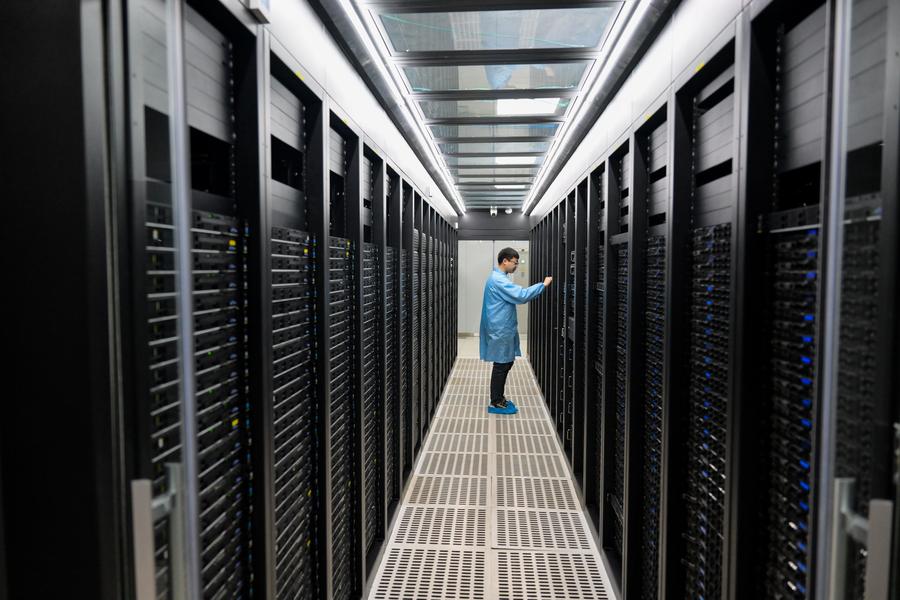
High costs and technical complexity make it difficult for individual companies to adopt AI at scale. Therefore, Zhang suggests building industrial-cluster-level AI platforms and providing shared computing power, algorithms and model libraries, so that companies can use AI as easily as electricity, lowering barriers and spreading costs.
Data sharing is crucial in this process. But many companies face “data silos”—equipment data can’t be collected and formats are inconsistent. Research and development, production and after-sales systems are disconnected. “It’s not that companies resist digitalization, they just worry that sharing data is like giving away their ‘core assets,'” Zhang said.
Data are increasingly recognized as a key production factor for industrial upgrading. In the government work report, Premier Li Qiang emphasized the need to extensively develop and utilize data resources, refine the foundational systems for data as a production factor, and build high-quality datasets.
Data security is another major concern. “As data markets and international cooperation expand, security serves as the foundation of development, and development, in turn, reinforces security. We must drive both technology and regulation forward in tandem,” Deng Zhonghan, a CPPCC National Committee member and member of the Chinese Academy of Engineering, told newspaper Securities Daily.
Recent years have seen a rise in AI misuse, from deepfake scams and synthetic voice fraud to fake digital influencer fraud and large-scale data scraping. With OpenClaw going viral, it has also become a target for scams. For example, fraudsters have fabricated sob stories to plead for money—and the AI tool, believing them to be genuine, transferred funds directly from authorized digital wallets. In response, the National Internet Emergency Center issued an urgent security warning on March 10. The Ministry of Industry and Information Technology’s cybersecurity platform has also flagged OpenClaw’s risks.
Zhou Hongyi, a CPPCC National Committee member and founder of cybersecurity services provider 360 Group, said AI agents like OpenClaw hold great innovative potential but remain early-stage. “They are like new interns, requiring training and strict rules,” Zhou said.
This year, both “AI agents” and “AI governance” were written into the government work report for the first time, signaling a national commitment to balancing development with security.
Zheng Shanjie, head of the National Development and Reform Commission, said at a press conference on the sidelines of the NPC session on March 6 that China’s existing legal framework faces serious challenges in complex AI scenarios.
The revised Cybersecurity Law, effective January 1, formally brings AI into regulatory scope, but principled provisions alone remain insufficient to address the complexities in real-world contexts.
Huang Shizhong, an NPC deputy and Vice President of the Chinese Accounting Society, called for the swift enactment of a dedicated AI Promotion Law, saying it is essential to promote healthy, sustainable development of related technologies and to ensure AI contributes positively to innovation, industrial growth and application empowerment.
Public interest first
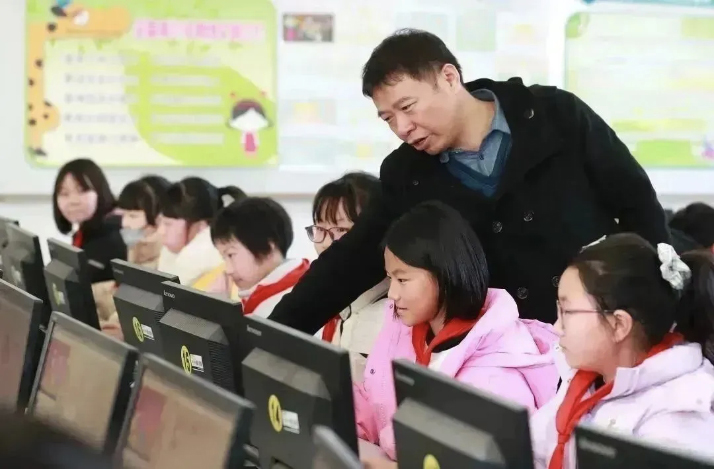
“Students love these AI classes,” Chen Hongbin, an NPC deputy and Director of the Academic Affairs Supervision Office at Yancheng No.1 Primary School in Yancheng, Jiangsu Province, told Beijing Review. He said China’s national curriculum standards changed the course name from Information Technology to Information Science in 2022, signaling broader content updates.
Chen stressed that at the elementary education level, it is essential to raise students’ awareness of AI and related ethical, legal and security issues, including those concerning privacy protection, so they can recognize the risks associated with using the technology.
“The rapid evolution of AI is reshaping the way talent is cultivated,” Chen said. At last year’s NPC session, he submitted a suggestion on improving AI courses in elementary education. And this year, his focus was on optimizing recommendation algorithms, urging online platforms to prioritize diverse and balanced content over the pursuit of mere traffic, particularly for children.
AI is also impacting higher education. Recently, the Beijing-based Communication University of China made headlines for eliminating 16 undergraduate majors including translation and photography.
Such stories fuel broader debates about AI replacing humans. In response, many NPC deputies and CPPCC National Committee members stress that the relationship between AI and humans must be viewed in a balanced way.
“AI development must adhere to the principles of serving humans, being controlled by humans and used for human benefit,” Minister Li said.
Wang Jian, a CPPCC National Committee member and Director of Hangzhou-based technological innovation platform Zhejiang Lab, told media that AI will not cause unemployment. “Early-stage skepticism is normal, but historically, every technological advance has changed how we work and live. The key question should be who should AI serve? The answer is human development.”
He Mailasu, an NPC deputy and a performer of morin khuur, a traditional Mongolian instrument, told Beijing Review that while AI can assist with music composition and production, at least for now, it cannot replace human creativity, or the soul of ethnic music. “The tone, emotion, lyric and unique instruments cannot yet be replicated by AI,” he said. “AI is a tool, not a substitute.”
Wang Chi said the wellspring of scientific discovery—dialectical thinking and breakthrough thinking—remains a domain uniquely belonging to human intelligence.
“Deciding how to weigh conflicting observations or choose between competing hypotheses demands deep knowledge, historical perspective and philosophical judgment. AI can calculate probabilities, but it cannot make such value-laden choices, nor can it generate the flashes of insight that turn unrelated clues into paradigm-changing ideas,” he concluded.