From Digital Curiosity to Civilizational Depth
 Facebook
 Twitter
 Linkedin
 Google +
Today’s China is deeply interconnected with the world, just as the world is increasingly influenced by China.
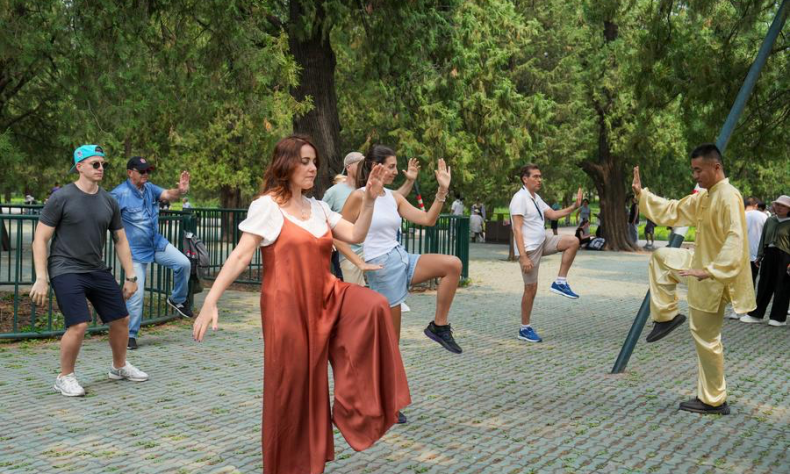
In recent months, a curious expression has circulated widely on TikTok, Instagram, and other social media platforms: “Becoming Chinese.” Sometimes tagged as #BecomingChinese or #Chinamaxxing, the trend features non-Chinese influencers documenting their adoption of everyday habits associated with Chinese culture—drinking warm water instead of iced beverages, practising qigong at dawn, avoiding raw or cold foods, cooking congee for breakfast, and consulting principles of traditional Chinese medicine for balance and well-being.
At first glance, the phenomenon appears playful. Many posts are framed humorously: creators joke that they have entered their “very Chinese phase” or that they are “unlocking ancient secrets” for digestion and mental clarity. Short videos showcase aesthetic montages—steam rising from a mug of hot water, slow-motion qigong movements in a quiet park, neatly arranged dumplings and herbal soups. The tone oscillates between tongue-in-cheek performance and genuine enthusiasm.
Yet beneath the trend lies something more significant. “Becoming Chinese” is quintessentially a social media phenomenon. Algorithms reward visually distinctive routines and easily replicable habits. Drinking warm water is simple. Learning a short qigong sequence is accessible. Posting about it signals wellness awareness and cultural curiosity. Influencers function as cultural mediators, translating elements of Chinese daily life into digestible, shareable content for global audiences.
In this sense, the trend fits into a broader pattern of digital lifestyle experimentation. Just as previous waves popularized Scandinavian minimalism, Korean skincare, or Mediterranean diets, “Becoming Chinese” packages selected aspects of Chinese life into globally consumable form. It does not represent a literal shift in identity, nor deep mastery of Chinese philosophy or history. Rather, it is a visible, performative engagement with practices perceived as holistic, grounding, and beneficial.
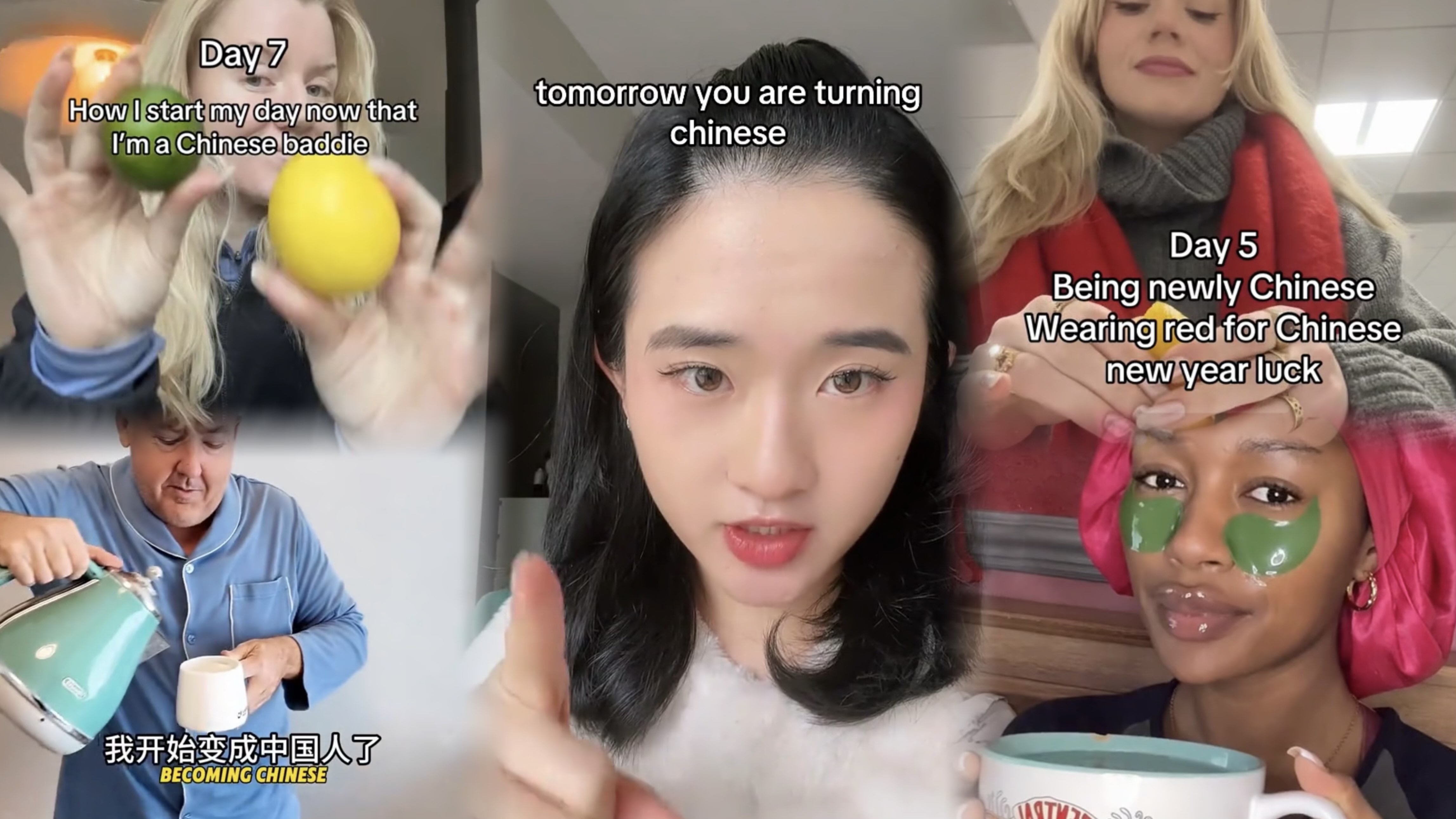
However, dismissing the phenomenon as superficial mimicry would be premature. Social media engagement often begins at the surface. But surface curiosity can lead to deeper exploration. A person who starts drinking warm water for digestion may ask why this practice is common in China. That question can lead toward traditional Chinese medicine, the interplay of yin and yang, seasonal living, and broader philosophical frameworks. What begins as aesthetic imitation can become cultural inquiry.
The timing of this trend is not accidental. It unfolds against a backdrop of expanding Chinese cultural visibility and influence. Chinese consumer brands, digital platforms , design ecosystems, gaming, film, and traditional practices have reached global audiences at unprecedented scale.
The recommendations for China’s 15th Five-Year Plan (2026-2030) articulates an ambition to give China a stronger voice in the international arena on all fronts, tell China’s stories in a better way, and present a China that is friendly, credible, appealing, and respectable. The “Becoming Chinese” trend embodies precisely this kind of appealing China—one not imposed through official channels, but discovered and promoted voluntarily by non-Chinese actors themselves. When foreign influencers adopt Chinese habits and present them as calming, healthy, or meaningful, they become unwitting ambassadors. The narrative is not state-scripted; it is peer-generated.
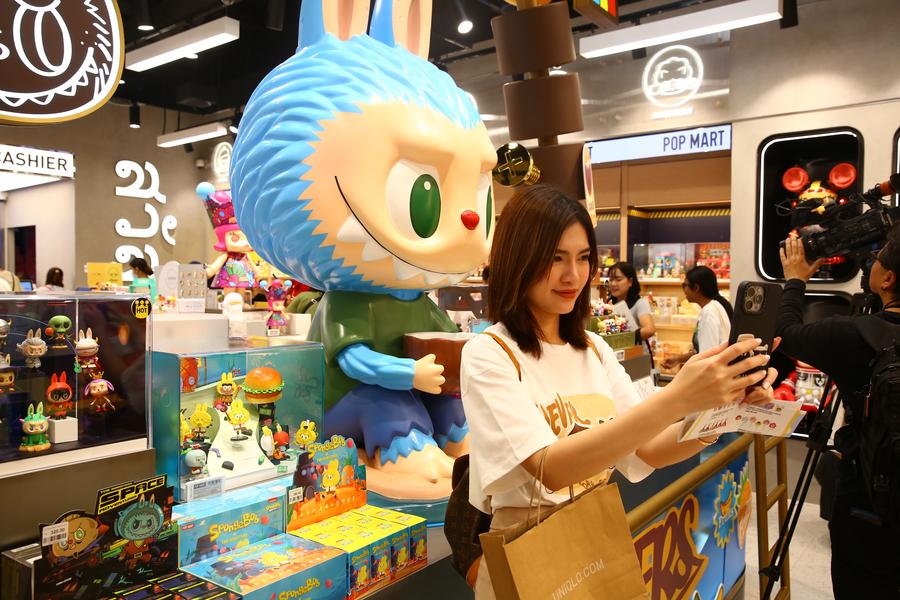
The Labubu phenomenon offers a parallel illustration. With its mischievous, slightly surreal aesthetic, Labubu transcends national boundaries. It is not overtly traditional, yet it carries the imprint of China’s contemporary creative industries. Global fans queue for limited editions; social media amplifies anticipation and desire. Like “Becoming Chinese,” Labubu demonstrates how attraction operates in the twenty-first century: through design, playfulness, and participatory culture.
This is soft power in its diffuse, networked form—the capacity to shape preferences through attraction rather than coercion. The appeal of “Becoming Chinese” is often rooted in wellness and lifestyle, but it draws—consciously or not—on a deep civilizational reservoir: Confucian ethics, Daoist harmony, Buddhist mindfulness, traditional medical systems, culinary refinement, and contemporary creative innovation.
There is also a generational dimension. Across many societies, young people are questioning hyper-individualistic, productivity-driven lifestyles. Burnout, digital saturation, and ecological anxiety have prompted a search for balance and meaning. Simplified though they may be online, Chinese cultural motifs—harmony, seasonal rhythms, bodily awareness, family continuity—resonate with these concerns. They offer an alternative imaginary.
Of course, there are risks. A civilization spanning millennia cannot be reduced to a cup of hot water or a morning stretch routine. Cultural clichés flatten complexity. Appropriation without understanding can trivialize depth.
Yet cultural exchange has rarely begun with philosophical treatises. For many, first encounters occur through food, fashion, design, or wellness trends. From there, some proceed to literature, history, language, and serious study. If even a fraction of participants move from qigong videos to classical poetry, from congee recipes to dynastic history, the meme will have performed a meaningful cultural function.
Moreover, exchange is never one-direction. Chinese civilization has long absorbed and transformed external influences—from Buddhism entering from India to modern science, global cinema, and contemporary pop culture. Today’s China is deeply interconnected with the world, just as the world is increasingly influenced by China. “Becoming Chinese,” even in its playful digital form, reflects this permeability.
We inhabit an era defined by cross-fertilization. A yoga studio in Berlin incorporates qigong. A café in Shanghai serves Italian espresso. A teenager in São Paulo collects Labubu figurines while listening to American hip-hop and watching Korean dramas. Identity becomes layered rather than singular, composite rather than fixed.
Seen from this vantage point, “Becoming Chinese” is less about imitation than about connection. It signals a world in which cultures are not sealed containers but living ecosystems—interacting, hybridizing, and renewing one another. When approached with respect and curiosity, such exchanges do not dilute authenticity; they expand it.
Drinking warm water does not make someone Chinese. Practising qigong does not confer civilizational inheritance. But these small gestures can cultivate attentiveness—to one’s body, to another culture, to the long arc of human creativity. And in a fragmented world, gestures of openness, however modest, are quietly powerful.