Greenland on the Line: What Trump’s Ambition Means for International Order
 Facebook
 Twitter
 Linkedin
 Google +
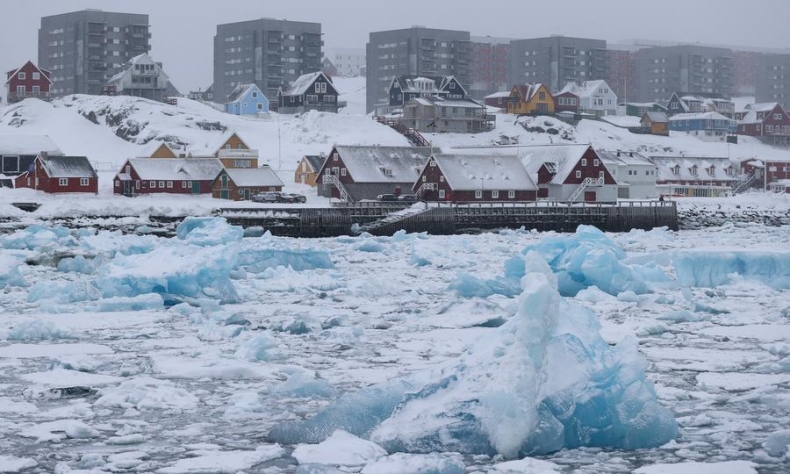
Unchecked desire for power, justified under the guise of security, threatens not just regional peace but the credibility of the entire international system.
The world was still dealing with the consequences of the U.S. operation in Venezuela when a new crisis emerged in the Arctic. President Donald Trump has openly stated that the United States should take over Greenland, the vast autonomous territory of the Kingdom of Denmark, which is a NATO member. His statements, ranging from offers to purchase the island to implicit threats of force, have been met with near-universal condemnation. Denmark, Greenland, the European Union, and NATO partners have all rejected the notion outright. This is not a debate over geography; it is a clear warning that U.S. foreign policy, when motivated by ambition rather than cooperation, treats sovereign nations as strategic prizes rather than partners, undermining the key objective of the UN Charter—respect to state sovereignty, treaties, alliances, and the rules meant to govern global stability.
National security or strategic cover?
Trump’s public rationale is familiar: national security. He claims that Greenland is critical amid alleged Russian and Chinese encroachment in the Arctic. Yet the reality is more nuanced. China has never deployed military forces in the Arctic, and Russian activity, while present, is closely monitored and does not justify unilateral seizure. Trump has gone further, suggesting that military options are viable if Denmark does not comply, framing Greenland as “too critical to be left under Danish control.”
At first glance, this may appear to be a deterrent measure. But Denmark already hosts U.S. military infrastructure under NATO agreements. Greenland contains key facilities for missile warning and Arctic surveillance that defend both U.S. and allied security without ceding sovereignty. Researchers point out that the Russian and Chinese threat in the region is exaggerated, revealing that Trump’s national security claims serve as a familiar pretext to commandeer territory under the guise of strategic necessity. Much like the Venezuela operation, this rhetoric turns security into justification for territorial appropriation, signaling that raw power can override legal and diplomatic norms when convenient.
Allies push back and global resistance
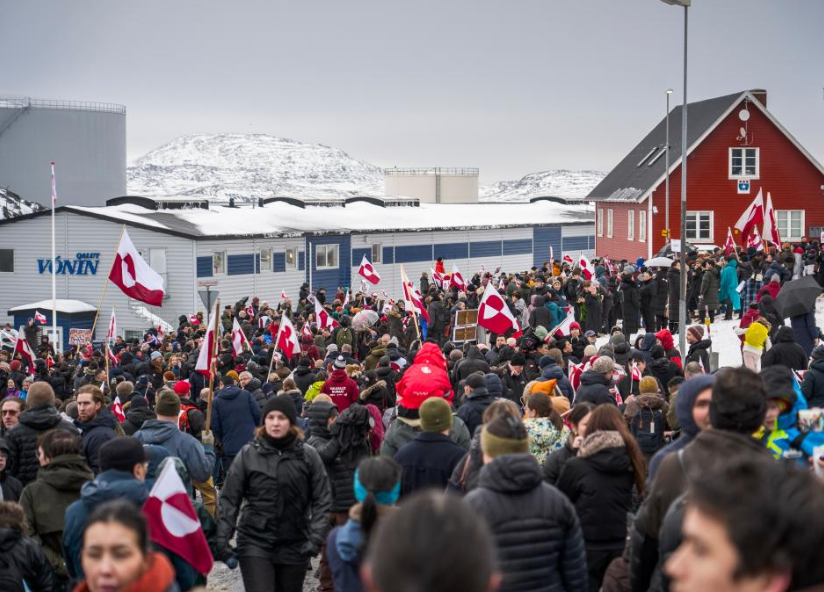
Denmark, Greenland, and European capitals responded with swift, unequivocal rejection. On Tuesday, January 13, in a moment that captured the territory’s stance, Greenland Prime Minister Jens-Frederik Nielsen declared: “If we have to choose between the USA and Denmark here and now, we choose Denmark. We choose NATO, the Kingdom of Denmark, and the EU.” Denmark’s Prime Minister warned that any unilateral move would threaten NATO itself, undermining the alliance that has underpinned Western security for decades. From Berlin to Paris, EU leaders echoed that Greenland’s future must be decided by its people, not imposed from outside. Even U.S. lawmakers expressed alarm, warning that saber-rattling could fracture long-standing alliances.
Meanwhile, Russia and China weighed in diplomatically, calling for peaceful cooperation in the Arctic. Ironically, unilateral U.S. threats strengthen rival accounts and expose the isolation of Trump’s position on the international stage. This broad pushback demonstrates, once again, that a major power is facing resistance for attempting to treat sovereign territory as negotiable property.
Sovereignty on a slippery slope
Beneath the headlines lies a greater danger: a precedent that power can override law. The post–World War II international system, under the UN Charter, NATO treaties, and decades of diplomatic practice, rests on respect for sovereignty, territorial integrity, and collective security. These principles are not conceptual; they are practical tools that prevent conflict and safeguard stability. Trump’s Greenland gambit, like the Venezuela episode, suggests that these commitments can be ignored if convenient.
Treating nations as strategic assets rather than partners threatens the very foundation of the international order. Attempting to seize Greenland without consent would breach international law, violate the UN Charter, and weaken trust between states. Smaller nations, even allies, are forced to reconsider their security calculations when norms appear flexible. Greenland’s significance is rising, both geopolitically and economically: melting ice is opening shipping lanes, and rare-earth minerals critical to defense and technology are becoming increasingly accessible. None of this legitimizes unilateral action. Denmark and Greenlandic leaders emphasize that Greenland belongs to its people, and that multilateral cooperation, not coercion, must guide Arctic governance.
The pattern is clear: when security rhetoric masks strategic gain, international norms erode. If the most powerful country in the world can assert its will unilaterally, others may follow. Alliances fray, trust erodes, and global order is imperiled.
A global test
The Greenland dispute is more than a local issue; it is a test of whether the rules of the international system still hold. If a powerful state can violate treaties and seize territory without consequence, the repercussions stretch well beyond the Arctic. Respect for international law, sovereign equality, and collective security is not optional; it is the backbone of global stability. Countries from Slovenia to Japan to South Korea, all reliant on predictable norms, are watching closely. Greenland is far from being just ice and resources; it is a point of reference for how the world responds when unilateral ambition confronts established order.
The stakes are immediate. A U.S. move to take Greenland could splinter NATO, and send a clear message that force outweighs diplomacy. Conversely, a firm international response could reaffirm that sovereignty cannot be bargained away and that treaties and alliances are not meaningless paper. Greenland has become a symbol showcasing the limits of acceptable state behavior: it tests whether principles can withstand power and whether nations will stand collectively to uphold the rules that govern global security.
The Arctic may seem remote, but the implications are urgent and global. Greenland’s fate is a warning: unchecked desire for annexing the territory of a sovereign state, power, justified under the guise of security, threatens not just regional peace but the credibility of the entire international system. The choices made in Copenhagen, Brussels, and Washington will resonate for decades. The message is clear: sovereignty cannot be optional, treaties cannot be dismissed, and the global community will remember those who defended principle and those who chose power over law.