Harmony over Hubris
 Facebook
 Twitter
 Linkedin
 Google +
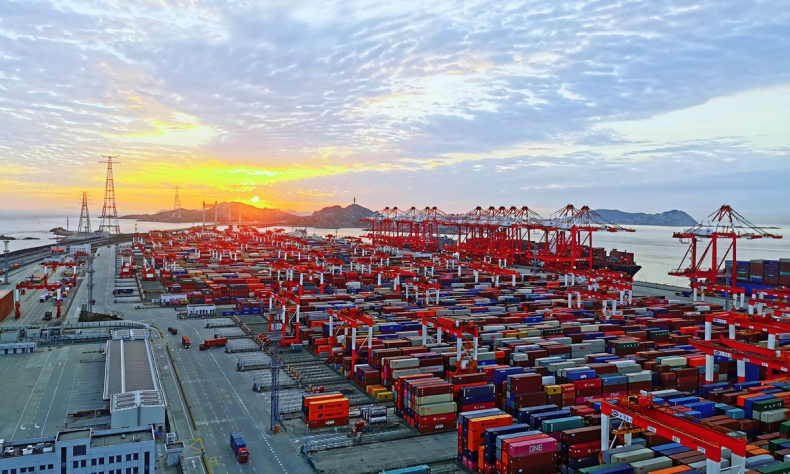
China is spearheading a new path of common prosperity, win-win international relations, and a shared future for the human community.
Humanity finds itself today at a nodal point in world history, as German philosopher G.W. F. Hegel would call it. We are in the earliest stages of a leap that will mark an era for history books in the future. A new logic of international relations, of global governance, is emerging.
Three decades ago, the United States and its Western allies proclaimed, in the words of political theorist Francis Fukuyama, the “end of history.” Capitalist “liberal democracy” was considered to be the culmination of human development. It was held that we were now in a “post-ideological” world.
Interestingly, this Western hubris of a post-ideological world came conjoined with the neoconservative Project for the New American Century (PNAC), which championed U.S. unipolar hegemony, imperial unilateralism and the frequent use of regime change wars to spread the creed of so-called “American values.”
It would seem, then, that the “post” in post-ideological simply referred to any framework which sought to challenge the PNAC paradigm developed by the architects of the new world order in Washington.
History has now shown that such bold proclamation suffered from the same imperial hubris as Athenian statesman Pericles’ Funeral Oration–the march of history couldn’t have more clearly contradicted the boastful pronouncements each made.
Today a new paradigm of multilateralism and multipolarity is emerging. President Xi Jinping states in the fifth volume of Xi Jinping: The Governance of China, “History has once again brought humanity’s modernization process to a crossroads: Do we seek polarization or common prosperity?… A zero-sum game, or win-win cooperation?”
Modernization, as Xi holds, is an inalienable right of all countries. Such a right cannot be exercised by the bulk of humanity within the narrow confines of the PNAC and its upholding of U.S. unipolarity and unilateralism. Countries cannot modernize and develop when trapped in an endless cycle of unpayable debts to U.S. dominated global financial institutions. Sovereignty is integral to modernization.

Two logics of development and international relations are today presented to humanity.
The first seeks to perpetuate the unipolar world order based in Washington. Economically it seeks to continue making Wall Street, the Military-Industrial Complex and the whole network of U.S. controlled finance capital richer, all the while the vast majority of humanity (including regular Americans themselves) grow poorer and more indebted. Geopolitically it wants to continue a paradigm of international relations based on a zero-sum game: Either you do as the U.S. says, or you suffer the consequences–these can vary from outright war to unilateral coercive measures such as sanctions.
An alternative paradigm, however, is now evidently in the mix. It is championed by China and most other countries of the Global South. This paradigm keeps in mind the popular dictum championed by President Xi that humanity lives in a community with a shared future. Our actions today build the edifice which the future descendent generations will live in collectively. In a world as globalized as ours is, it is truer than ever that what we build today will genuinely be a shared future for humankind that we will be held accountable for.
Thus, this alternative paradigm champions the ancient Silk Road spirit of peace and cooperation, openness and inclusiveness, mutual learning, and mutual benefit. It rejects imperial unilateralism, unipolarity, and zero-sum games. It affirms multilateralism, multipolarity and the logic of win-win relations between states. As Xi poetically puts it in Xi Jinping: The Governance of China, “flames grow higher when everyone adds wood to the fire.” “Win-win cooperation is the sure way to success in launching major initiatives that benefit all,” Xi adds. “Helping others is also helping oneself.”
Global trends are showing that the bulk of humanity seeks to move in the latter direction. With the exception of the few elites who benefit from U.S.-based unipolarity, unilateralism and hegemonism, the grand majority of humanity is evidently moving in the direction of multilateralism, multipolarity and win-win international relations. The shift that has occurred in the last two to three decades in global trade shows plainly the preference of China over the U.S. as a trading partner for most countries of the world. As the old Bob Dylan phrase goes, “you don’t need a weatherman to know which way the wind blows.”
At the crossroads, it does seem like a pretty sure bet to assume that humanity will be taking the route premised on mutual development and prosperity.
In all honesty, such a development should not surprise us. We should have never expected the paradigm of the PNAC, which promotes prosperity for rich Western elites, but poverty and debt for the rest of humanity, to have lasted as long as they presumed it would. The Project for a New American Century turned out to be the Project for a New American Decade, a project sustained by imperial force, economic sanctions and media deception.
But today the tides are turning. China is spearheading a new path of common prosperity, win-win international relations, and a shared future for the human community.
Humanity will inevitably benefit from it, yet it must first confront the final thrashings of the old logic as it fades. In this moment of transition, we must act with unity and resolve.
The author is an adjunct professor of philosophy at Southern Illinois University, Carbondale, the U.S., and secretary of education of the American Communist Party.