Head of the Chinese Mission to the EU Cai Run: China’s 15th Five-Year Plan Opens a New Chapter of China-EU Cooperation
 Facebook
 Twitter
 Linkedin
 Google +
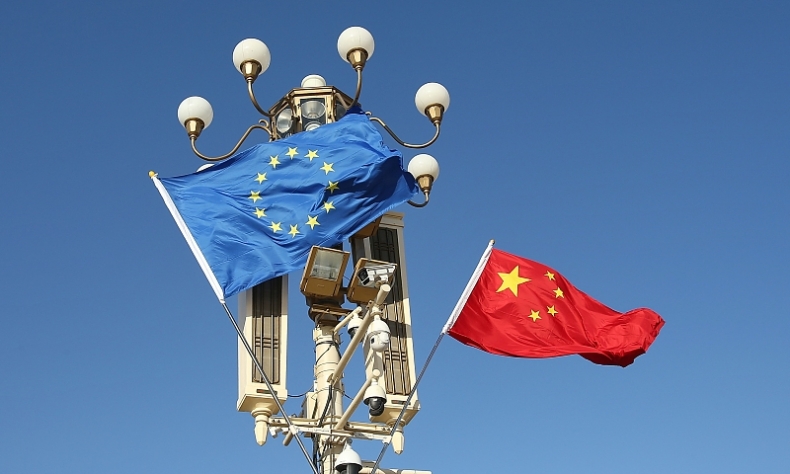
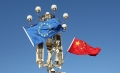
Amid a fluid and turbulent international situation, China and the EU, as two major global forces, two major markets, and two major civilizations, bear important responsibilities for world peace and development.
During the 2026 Two Sessions, China Today conducted an exclusive interview with Ambassador Cai Run, Head of the Chinese Mission to the European Union (EU). The year 2025 marked the 50th anniversary of the establishment of diplomatic relations between China and the EU. As 2026 begins the implementation of the 15th Five-Year Plan (FYP), China-EU relations are also embarking on a new journey for another round of 50 years of cooperation. At this juncture, Ambassador Cai Run provided in depth answers on issues including the future prospects of China-EU relations, Europe’s response to the 15th FYP, the opportunities the Plan brings to practical China-EU cooperation, and how China and the EU can jointly safeguard multilateralism. His insights present a broad vision for the future development of China-EU relations.
China Today: Last year China and the EU jointly celebrated the 50th anniversary of diplomatic relations. This year marks the beginning of the 15th FYP, and China-EU relations are also embarking on a new journey for the second 50 years of cooperation. Looking ahead to the next five years, how do you view the prospects for the development of China-EU relations?
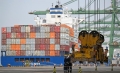
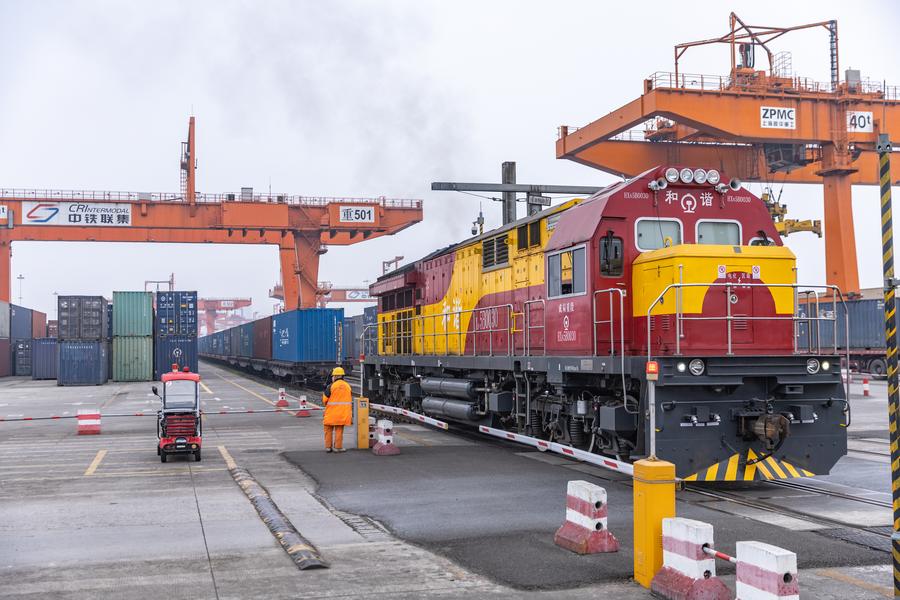
Cai Run: The year 2025 was an important moment linking the past and the future in China-EU relations. Through the joint efforts of both sides, China-EU relations achieved new progress. President Xi Jinping met with President of the European Council António Costa and President of the European Commission Ursula von der Leyen during their joint visit to China. They held in-depth discussions on the development of China-EU relations and reached important consensus, providing strategic guidance and direction for the relationship. Premier Li Qiang co-chaired the 25th China-EU Leaders’ Meeting with the two EU leaders, effectively advancing the development of China-EU relations. China and the EU also held a new round of the High-Level Strategic Dialogue and the High-Level Dialogue on Environment and Climate Change. China and the European Parliament simultaneously lift reciprocal exchange restrictions, restarting normal interactions between the legislatures, which is of great significance for promoting the healthy and stable development of China-EU relations. China-EU economic and trade cooperation achieved growth against all odds. According to China’s statistics, China-EU trade reached $828.1 billion in 2025, an increase of 5.4 percent. China’s direct investment in the EU grew by more than 40 percent year-on-year, while the EU’s investment in China also expanded. The stock of two-way investment between China and the EU exceeded $280 billion. China-Europe Railway Express has operated more than 120,000 trains in total, reaching 232 cities in 26 European countries.
Standing at a new starting point, we are full of confidence in the future of China-EU relations. In the face of a uncertain and turbulent international situation, China-EU relations carry greater strategic significance and global influence, and both sides share this understanding. The development of China and the EU is deeply interconnected, and practical cooperation across various fields has ample potential and resilience. Strengthening cooperation serves the fundamental and long-term interests of both sides. Since the beginning of this year, European countries’ leaders have visited China intensively, and both sides have reached a series of important consensus and substantive cooperation outcomes. Many insightful figures and media voices in Europe generally believe that developing relations with China is an important measure for responding to external turbulence. “Made in China” enjoy great popularity among Europeans, while a “Chinese language craze” and “Spring Festival fever” have generated tremendous attention across Europe. European people, especially the younger generation, show strong interest in China and hope to better understand and learn about the country. Of course, there are also some differences, frictions, and challenges between China and Europe.
We believe that as long as China and the EU remain true to the original intention of establishing diplomatic relations, uphold their partnership positioning, actively implement the important consensus reached by their leaders, seize opportunities, and respond to challenges, we will surely write a new chapter of mutual respect, seeking common ground while shelving differences, openness and cooperation, and mutual benefit and win-win results, thus enabling each other to achieve mutual success and delivering benefits the world.
China Today: The proposal for the 15th FYP outlines a grand blueprint for China’s development over the next five years. Based on your observations, how have various sectors in Europe responded to this proposal? What are their main areas of focus?
The Fourth Plenary Session of the 20th Central Committee of the Communist Party of China held last year reviewed and approved the proposal for the 15th FYP, attracting widespread attention across Europe. The Chinese Mission to the EU organized events including the Briefing on China, the China-EU Forum, and thematic seminars to comprehensively explain the proposal to various sectors in Europe and discuss the bright prospects of mutually beneficial China-EU cooperation. Overall, European attention is mainly focused on three aspects.
First, many believe the Plan reflects China’s unique advantages. Many European friends highly appreciate China’s governance philosophy of carrying a blueprint through to the end. They admire China’s long-term planning capacity and efficient governance capability. In the face of uncertain and unpredictable external factors, China can quickly adopt measures, take initiative, and fulfilled its established goals on schedule and even overfulfilled them, demonstrating remarkable resilience.
Second, many believe it will inject stability and certainty into the world. Facing a severe and complex external environment, China’s economy achieved 5 percent growth in 2025, with notable performance in manufacturing, foreign trade, and technological innovation. The 15th FYP confirms China’s development ambitions. China possesses strong advantages in its market, industrial system, and talent resources, and will maintain policy stability and continuity while strengthening risk prevention. It will continue to serve as a main engine of global economic growth. These positive factors help stabilize external expectations about China’s development prospects and boost global confidence in development.
Third, many believe it will help open a new vision for China-EU cooperation. European observers believe that measures proposed in the Plan, such as achieving high-level technological self-reliance, building a modern industrial system, accelerating green and low-carbon transformation, and promoting efficient, convenient, and secure cross-border data flows, closely align with the EU’s focus on competitiveness enhancement, green transition, and digital development. The EU side generally believes that these policies will provide new opportunities for deepening industrial cooperation, expanding market alignment, and conducting regulatory dialogue.
China Today: The proposal for the 15th FYP emphasizes promoting high-quality development, deepening the creation of a new development pattern with the domestic circulation as the mainstay and domestic and international circulations reinforcing each other, and steadily expanding institutional opening. What new opportunities will this open for practical China-EU cooperation? How should different sectors in China and Europe position themselves and seize these opportunities?
The 15th FYP once again sends a clear signal to the world that China will continue to expand high-level opening-up and share opportunities with other countries. China has always regarded the EU as an important partner in advancing Chinese modernization and welcomes the EU side to share the opportunities brought by China’s high-quality development and high-level opening-up.
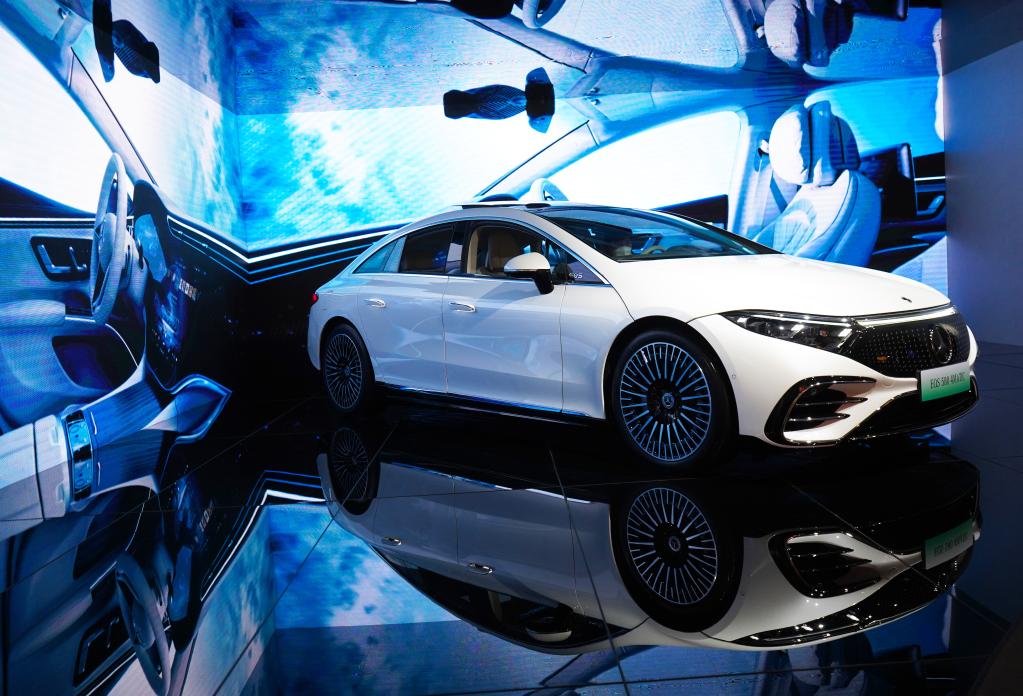
China is accelerating the construction of a modern industrial system and using high-level technological self-reliance to lead the development of new quality productive forces, promoting the deep transformation of the Chinese economy toward greener, more intelligent, and more integrated development. The Plan clearly identifies green development and artificial intelligence as key areas for future growth, which strongly aligns with the EU’s strategy of green and digital dual transition. China has advanced technologies and large-scale market application scenarios, while Europe holds advantages in design concepts and regulatory frameworks. Both sides can complement each other and fully leverage their respective strengths to expand the scale of practical cooperation.
China’s unwavering expansion of high-level opening-up will create new opportunities for China-EU cooperation. First is institutional opening, which aims to align with high standard international economic and trade rules and create a first-class business environment that is market-oriented, law based, and internationalized. Second is autonomous opening, which will continue to shorten the negative list for foreign investment and expand opening in sectors such as healthcare, telecommunications, education, finance, and insurance. Third is unilateral opening. China has already implemented unilateral visa-free policies for 50 countries, including 25 EU Member States.
The 15th FYP also provides a pathway for achieving China-EU trade rebalancing that is widely valued by the EU side. The service sector will be a key focus of China’s future opening. As China firmly implements a strategy to expand domestic demand, the huge market of 1.4 billion people, especially more than 400 million middle-income consumers, will continue to release demand in service sectors such as healthcare, elderly care, and entertainment. The EU can leverage its strengths in these areas and seize the opportunity to expand the supply of high-quality products and services to the Chinese market.
China Today: The world is currently entering a new period of turbulence and transformation, with growing concerns over deficits in peace, development, security, and governance. The proposal for the 15th FYP makes important strategic arrangements for promoting the building of a community with a shared future for humanity, and clearly proposes implementing the four major global initiatives. In your view, how should China and the EU jointly safeguard multilateralism and improve global governance to bring more stability and positive energy to the world?
Multilateralism is the area where China and the EU share the strongest consensus. President Xi Jinping has proposed the Global Governance Initiative, calling for the practice of Five Principles including sovereign equality, international rule of law, multilateralism, people-centered approach, and real results, in order to build a more just and reasonable global governance system. This proposal has received widespread attention in the EU.
Amid a fluid and turbulent international situation, China and the EU, as two major global forces, two major markets, and two major civilizations, bear important responsibilities for world peace and development. China looks forward to working with the EU to serve as defenders of multilateralism, practitioners of international rule of law, guardians of free trade, and advocates of solidarity and cooperation. Both sides should actively implement the Global Development Initiative, the Global Security Initiative, the Global Civilization Initiative, and the Global Governance Initiative, safeguard the international system with the United Nations at its core, uphold the international order based on international law, and maintain the multilateral trading system with the WTO at its core. We should jointly address global challenges such as climate change, promote political solutions to hotspot issues, and work together to advance an equal and orderly multipolar world and a universally beneficial and inclusive economic globalization.