Hydrogen Energy: Achievements and Future Directions
 Facebook
 Twitter
 Linkedin
 Google +
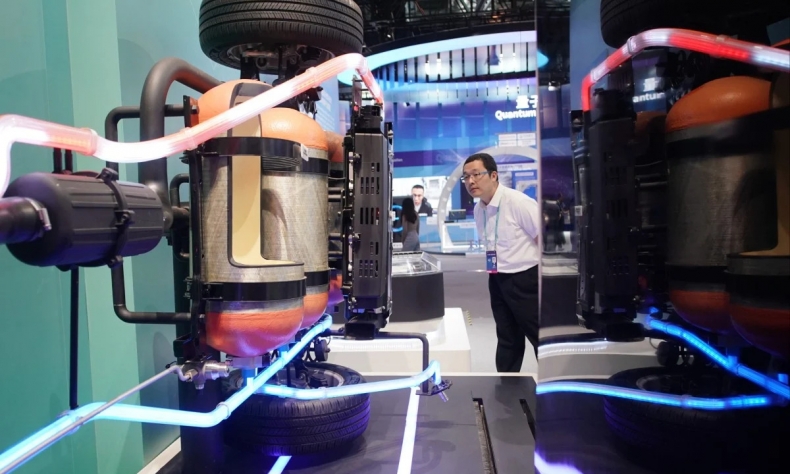
As the industry transitions from policy-driven pilots to a phase of systemic breakthrough, hydrogen energy represents not just a commitment to environmental sustainability but also a real economic goldmine.
Hydrogen energy development is transitioning from vision and planning to widespread application. To date, more than 60 countries and regions have announced hydrogen energy development strategies focused on accelerating demonstration projects and real-world deployment.
To reduce the cost of clean hydrogen and expand supply capacity, several of the world’s leading economies, including Japan and Canada, have introduced large-scale subsidy programs.
Meanwhile, major markets such as the European Union, the United States and China are investing in hydrogen refueling station networks and hydrogen corridors to overcome bottlenecks in transportation and distribution.
A new frontier
In China, hydrogen energy, classified as a frontier and emerging industry, has been included in the Government Work Report approved by the National People’s Congress, the top legislature, since 2024 to accelerate its development. The Energy Law came into effect in 2025, formally incorporating hydrogen into the national energy management system and granting it legal status equal to traditional energy sources such as coal and oil. These policies collectively strengthen the macro-strategic position of hydrogen energy as a green, new quality productive force. (New quality productive forces refer to the shift toward innovation-driven growth, technological advancement and high-quality development in different sectors of the economy—Ed.)
Now, China is evolving into the world’s largest hydrogen producer and consumer. In 2024, the country’s annual hydrogen production capacity exceeded 50 million tons, and total hydrogen output surpassed 36.5 million tons, while global hydrogen production and consumption reached approximately 105 million tons.
Green hydrogen, defined as hydrogen produced through water electrolysis using renewable electricity, has seen its global capacity expand rapidly, exceeding 250,000 tons per year as of late 2024, with over 70,000 tons added that year.
China holds a dominant position in this expansion. Completed projects in the country have a combined annual capacity of approximately 125,000 tons, representing about half of the global total. Moreover, China’s capacity additions in 2024, estimated at 48,000 tons, represented 63 percent of all new capacity installed worldwide that year.
This sustained momentum underscores China’s emergence as a leading renewable hydrogen producer and its thriving industrial ecosystem in the field.
Advantages and applications
China holds a cost advantage in producing green hydrogen via water electrolysis in regions with strong wind and solar resources. This has helped drive down green hydrogen production costs.
In resource-rich Chinese regions such as Xinjiang Uygur Autonomous Region, Inner Mongolia Autonomous Region and Qinghai Province, production costs for renewable-based electrolytic hydrogen fell to approximately $1.93-2.21 per kg, according to the 2025 China Green Hydrogen Development Report.
By comparison, in some key U.S. regions, the average annual price for hydrogen from proton exchange membrane (PEM) electrolysis was around $5.2 per kg. (PEM electrolysis is an advanced technology for producing high-purity hydrogen by splitting water using electricity, specifically designed for efficiency and compatibility with renewable energy sources—Ed.)
In parts of Europe, the annual average was about $6.53 per kg, though prices rose toward the end of 2024, exceeding $8.56 per kg.
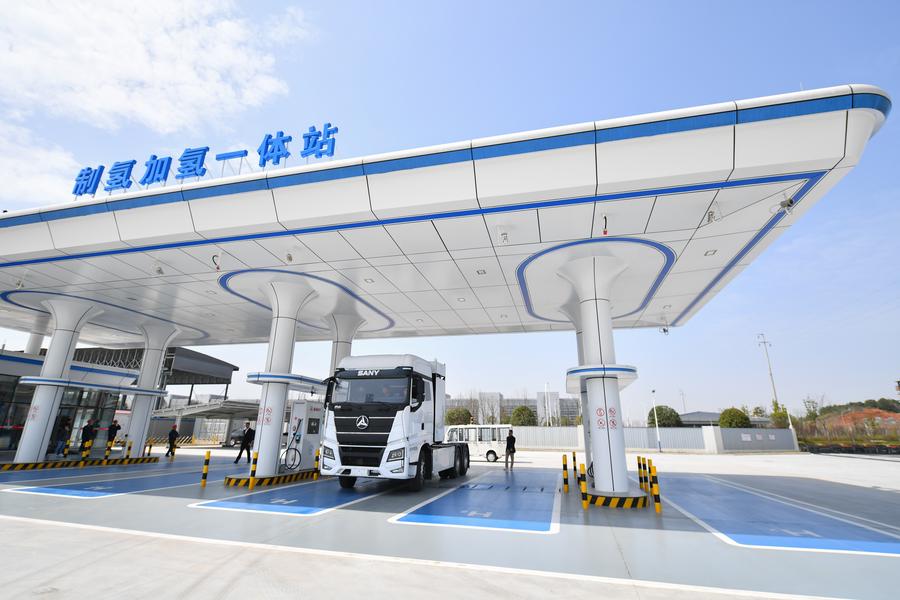
The transportation sector currently spearheads hydrogen adoption. As of late 2024, the global total of operational hydrogen refueling stations had exceeded 1,200, a year-on-year increase of over 30 percent. China contributed significantly to this growth, having built a cumulative total of 540 hydrogen refueling stations, with 134 new stations constructed that year alone. The global fleet of fuel-cell electric vehicles (FCEVs) powered by hydrogen surpassed 98,000 units. Of these, China accounted for 28.7 percent, an increase of 8.2 percentage points since Chinese national demonstration programs began.
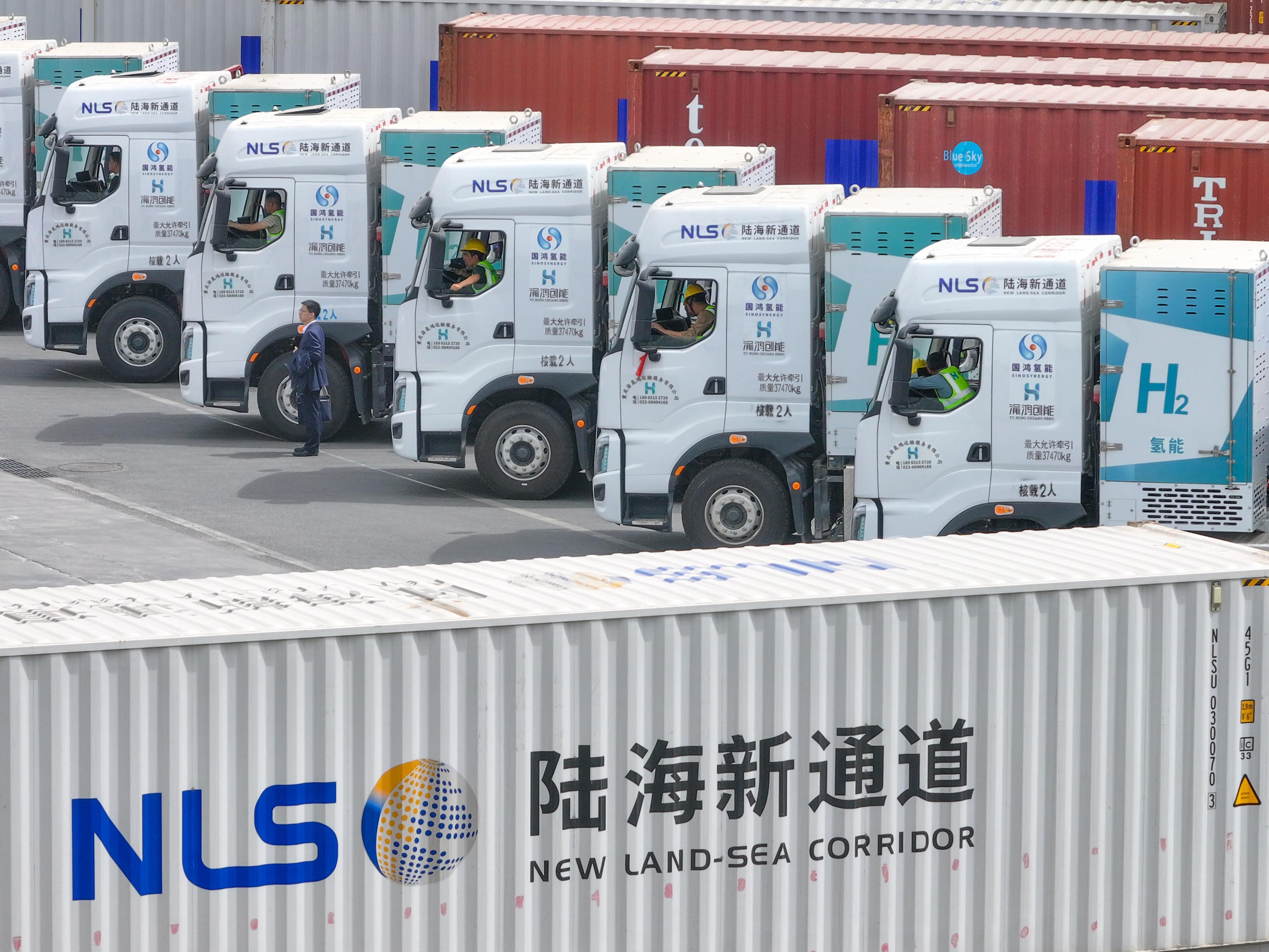
Unlike Japan and the Republic of Korea, which primarily focus on passenger FCEVs, China has strategically leveraged the advantages of FCEVs, including fast refueling, long range and cold-weather performance, to prioritize commercial applications, including heavy-duty trucks, buses and logistics vehicles.
Since the launch of China’s FCEV city cluster demonstration initiative in 2021, the country’s share of annual global FCEV sales has consistently risen, exceeding 60 percent in 2024. As of last February, five key demonstration city clusters had cumulatively deployed over 16,000 FCEVs and achieved a total demonstration mileage exceeding 500 million km, resulting in a substantial reduction of over 270,000 tons of carbon dioxide emissions.
As of late last August, Beijing alone had introduced over 3,600 FCEVs, while the Beijing-Tianjin-Hebei cluster had had a cumulative 4,719 such vehicles in operation, leading China’s five major demonstration clusters in achieving the target for FCEV deployment.
Power generation
Furthermore, industrial and distributed power generation is the primary arena for hydrogen’s large-scale future application. Global projects demonstrate the diverse potential of hydrogen in this sector. For example, in 2024, the United States reached a milestone with the commissioning of a megawatt (MW)-scale, off-grid modular data center in Mountain View, California. This facility is primarily powered by fuel cells and designed to support high-power-density computing deployments. Meanwhile, in Japan, the residential fuel-cell combined heat and power systems, known as Ene-Farm, have achieved widespread adoption, with cumulative installations exceeding 500,000 units since their launch in 2009—a clear demonstration of decentralized hydrogen energy’s viability for homes.
The Chinese Government has expanded its support for hydrogen applications beyond transportation to include industrial and distributed power generation. This shift is reflected in the 101 green and low-carbon advanced technology demonstration projects announced by the National Development and Reform Commission in December 2025, which include two MW-scale solid oxide fuel cell demonstration projects.
China’s fuel cell industry, though still largely in the demonstration phase, is poised to advance greatly during the 15th Five-Year Plan (2026-30) period, driven by national demonstration projects.
Recommendations for formulating the 15th Five-Year Plan, adopted by the Communist Party of China Central Committee in October 2025, explicitly called for the exploration of diverse technological pathways, typical application scenarios, viable business models and market regulatory frameworks to propel sectors like hydrogen energy into becoming new economic growth engines.
In response to this national strategy, local governments have moved swiftly to align their development agendas. Twenty-eight provincial-level regions are reportedly crafting hydrogen industry development strategies that leverage local resource endowments and existing industrial foundations.
North China is now focused on achieving the full-chain integration of green hydrogen, establishing a complete industrial ecosystem from production to end-use. Meanwhile, the country’s northeastern and northwestern regions are spearheading the development of integrated wind-solar-hydrogen-storage projects, leveraging their abundant renewable resources to produce green hydrogen and its derivatives like ammonia and methanol. In the south, the emphasis lies on application innovation and regional collaboration, exploring diverse application scenarios and fostering hydrogen industrial synergies.
This strategy cultivates a nationally integrated yet locally tailored development ecosystem. The concerted efforts from all regions, each with their distinct focus, are poised to jointly foster the healthy, orderly and sustainable development of China’s hydrogen industry—a market projected to reach 1 trillion yuan ($143 billion) or more.
As the industry transitions from policy-driven pilots to a phase of systemic breakthrough, hydrogen energy represents not just a commitment to environmental sustainability but also a real economic goldmine.
Han Minfang is a professor at the Institute for Urban Governance and Sustainable Development and the Department of Energy and Power Engineering, Tsinghua University; Yuan Jiao works at the same institute and the department as an associate research fellow.