Japan’s Remilitarization Must Be Stopped
 Facebook
 Twitter
 Linkedin
 Google +
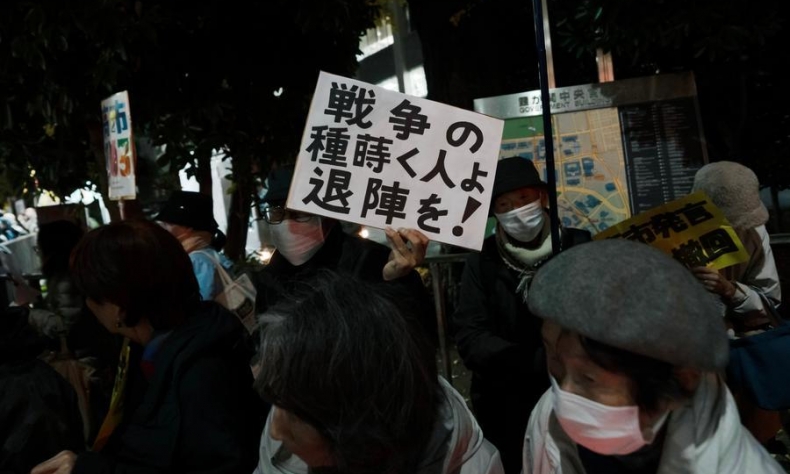
The entire world needs to come together to condemn—and stop—Japan’s accelerating militarism: For most of Asia, Japan’s remilitarization is the real survival-threatening situation.
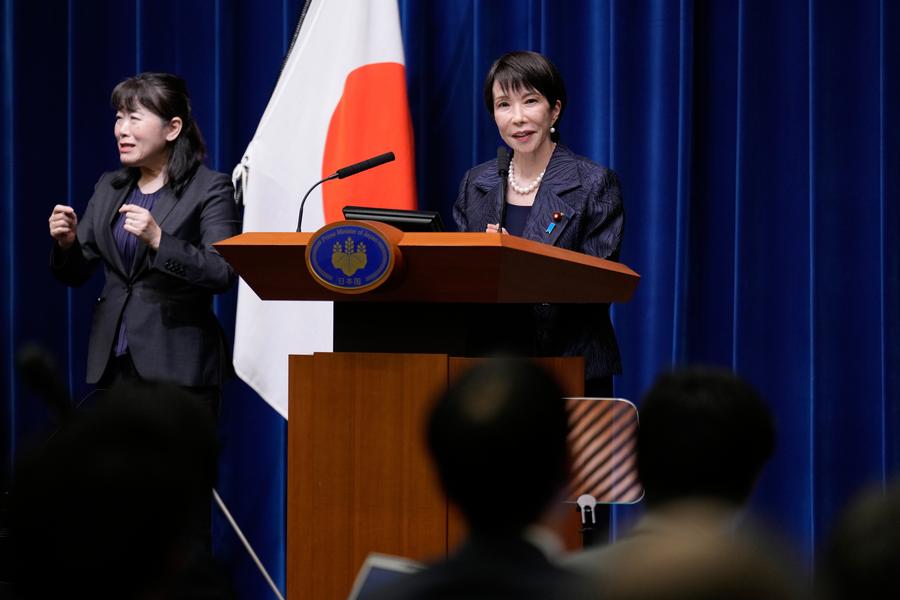
Japanese Prime Minister Sanae Takaichi stunned the world when she declared publicly in the Japanese legislature that the Chinese mainland’s “use of force on Taiwan” could constitute a “survival-threatening situation” for Japan that would allow Japanese military intervention in “collective defense.”
Words matter. Especially when they are words with legal force, uttered in an official capacity.
These words are legal terms of art that authorize the aggressive use of the military according to Clause 4 of Japan’s Peace and Security Act of 2015.
Applied to Taiwan, it allows expeditionary military force against China. Since Japan acknowledges the one-China policy in the 1972 Sino-Japanese Joint Communiqué, this would constitute a violation of international law. In fact, it would be a war of aggression.
Alternatively, if we adhere to the legal fiction that the Japanese military is only defensive, Takaichi has stated its defensive perimeter extends to China’s Taiwan Province—nonsense, given that Japanese surrendered colonial control in 1945.
If we put the shoe on the other foot—if any third country had said that the domestic affairs of another country’s internal provinces were a survival-threatening issue, we would all recognize it as a belligerent, casus belli pretext.
To permit an external state to assert such a statement against another sovereign state without consequence would render nationhood—the backbone of international law—meaningless.
Japan’s rap sheet
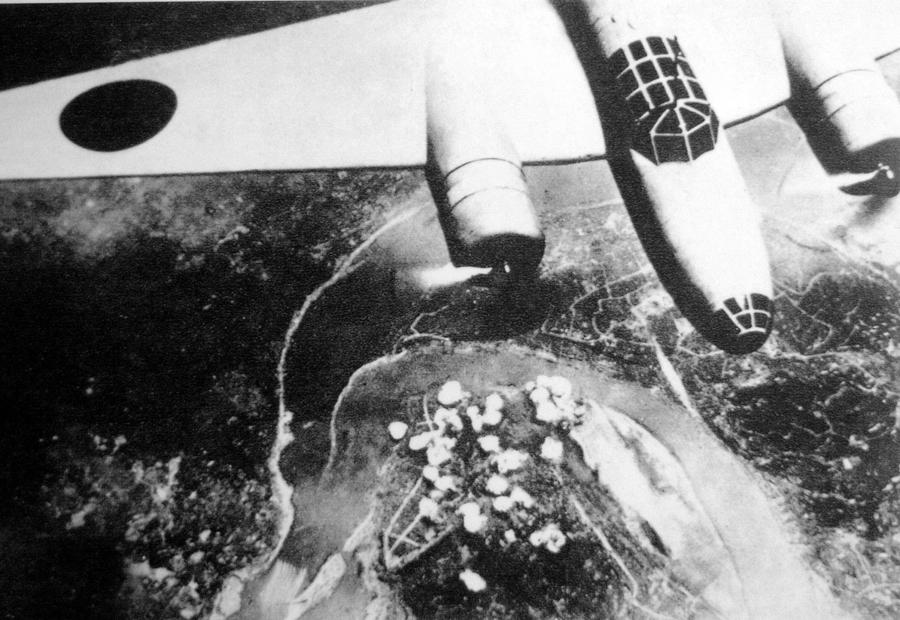
Japan’s ruling Liberal Democratic Party (LDP) was founded in 1955 to implant an anti-communist, U.S.-quisling government in Japan. Since its inception, it has been staunchly subservient, but also quietly and insistently revisionist. It has evinced little regret for Japan’s Imperial violence, and ruling factions have held hawkish aspirations to re-establish Japan as a military power—and has held power almost continuously since the mid-1950s.
Kishi Nobusuke, war criminal, LDP founder and prime minister (1957-60), dreamed of remilitarizing Japan. In 2015, his grandson, Shinzo Abe, achieved his dream: He disabled the Japanese Peace Constitution, authorizing it to wage war in “collective defense” anytime it encountered a “survival-threatening situation.”
The apple and the tree
Takaichi was actually mentored by Abe. She belonged to Abe’s Seiwa faction of the LDP (Seiwa Political Research Council), the ultra-nationalist, far-right faction that envisions a return to authoritarian, monarchical rule with an unleashed military.
The prime minister is also a member of Nippon Kaigi (the Japan Conference), the ultra-right group that dreams of reconstituting the Japanese Empire.
The group asserts that Japanese imperialism was a benign attempt to create an “Asian co-prosperity sphere.”
Nothing demonstrates the continuity of this revisionist imperial ideology more than the Yasukuni Shrine, where Takaichi has been a frequent visitor.
The shrine was created by the Meiji Emperor as a temporal Valhalla to honor loyal troops who had sacrificed themselves for the emperor. According to State Shinto, the nationalistic official religion of Japan from the Meiji Restoration in 1868 through World War II, it deifies the kami (spirits) of troops so they may be venerated for their sacrifices. As such, it rehabilitates and sanctifies over 1,000 convicted war criminals, including 14 Class A war criminals.
Given this, visiting the shrine is to intentionally prize the criminality of the Japanese empire—an insult to the conscience of the world.
Geopolitical considerations
It is impossible to consider these things in only a domestic light: Japan is a U.S. client state. It surrendered to the United States, its constitution was written by it, its ruling party put into power by it, and its economy has been manipulated by it, for example, during the 1985 Plaza Accord (an agreement between the world’s wealthy nations to lower the value of the dollar in an effort to reduce trade imbalances—Ed.). It is currently militarily occupied by 53,000 U.S. troops with 70 bases.
In fact, Japan has always colluded in U.S. wars: As a bombing/logistics platform during the Korean and Viet Nam wars in the 1950s and 1960s, and then as an active, boots-on-the-ground partner in later wars.
War against China would be the final chapter of Japanese re-militarization: Japan would provide military muscle, provision key military supply chains and do shipbuilding and repair.
This is why the Barack Obama administration pulled the Republic of Korea into a trilateral military alliance with Japan and the U.S. and why Japan has a U.S. space force base and a NATO liaison office.
Japan is also militarizing the islands closest to China’s Taiwan Province with missiles. This aligns with the war games study conducted and published by U.S. think tank the Center for Strategic and International Studies, which concluded Japanese participation is essential: Japan is the military linchpin.
This also dovetails with Japan’s doubling of its military budget, now amounting to 7.5 percent of government budget. The contradictions of a “pacifist” country with a military budget larger than that of 182 countries should make everyone pause. If budgets are moral statements, then moral depravity is the only conclusion to draw from such an appropriation.
Subcontracting for U.S. war
These things signal that Takaichi’s statement is not a personal lapsus, but an expression of deep-rooted Japanese intentions that dovetail with the U.S. agenda: using Japan to contain and fight China.
U.S. Under Secretary of War for Policy Elbridge Colby’s demand last July that Japan clarify its position in the case of the Taiwan contingency underlines this U.S. agenda.
No opprobrium is too strong for Japan rearming for aggressive war. Even those who seek to harness and use this militarism against China may ultimately come to regret this, if past history is any indication. A loose cannon is a danger to all. A nuclear-armed Japan, with a history of unbridled atrocity, is a global threat.
China seeks win-win, mutually beneficial relations with everyone, a community with a shared future for humanity. It has put forward concrete proposals and institutions to realize this difficult yet necessary historic vision. This is the only way for peace and stability, the only way forward for the world. The entire world needs to come together to condemn—and stop—Japan’s accelerating militarism: For most of Asia, Japan’s remilitarization is the real survival-threatening situation.
The author is an award-winning U.S. journalist, political analyst and educator focusing on the geopolitics and political economy of the Asia-Pacific.