Media Mythmaking: Mistake, Mischief or Malevolence?
 Facebook
 Twitter
 Linkedin
 Google +

Always be aware, then, of the ‘subtle propaganda techniques’ used by Western journalists since truthfulness may be lacking in their attempts at cross-cultural communication.
A mother’s smile, students listening to teachers, law enforcement, news items found in traditional and social media, and the plethora of non-fiction books surprisingly have much in common.
They are all examples of cultures being built and held together by knowledge shared through communication. Their success depends on the quality of the communication – the sincerity of the mother’s smile or the skills of the teacher, and the truthfulness of the message.
Communication across cultures is difficult because foundation learning differs, as do legal codes and ways of living. Such differences must be acknowledged, respected and understood for cross-cultural communication to be successful.
However, this is not enough. Successful cross-cultural understanding also depends on the truthfulness of messages being communicated. In a world increasingly fragmented on geopolitical lines, messages are often contaminated by untruths. Frequently this arises through misunderstanding or carelessness. Sometimes it is deliberate, though not always understood as such by those conveying the messages.
An instructive example is provided by a recent long-form article by William Langley, the South China Correspondent of the Financial Times, entitled “China said it ended poverty. Did it?” I should disclose that I am cited in the article based on a conversation ahead of the site visit he made to Guizhou Province. The Financial Times describes itself as being “recognized internationally for its authority, integrity and accuracy.”
The article focuses on China’s poverty alleviation campaign which Langley acknowledges to have increased average disposable incomes for rural residents by more than 80 per cent between 2014 to 2021. He might also have noted, as does the World Bank, that extreme poverty in China has fallen by “close to 800 million” in the past 40 years and that “China has contributed close to three-quarters of the global reduction in the number of people living in extreme poverty.”
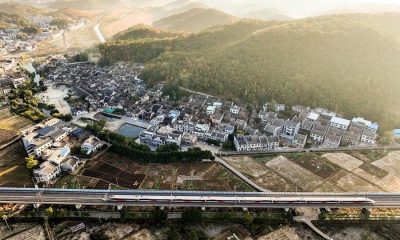
Instead, the article introduces Yang Nai Yan Qing, a member of the Dong ethnic group in Guizhou Province, who “lives a frugal life” eating “only mustard greens, cabbage and sweet potatoes, almost all of which she grows herself.” She reports that “her monthly living expenses are less than Rmb200 ($29)” based on which Langley concludes that “Yang’s mode of living is supposedly a thing of China’s past.”
Langley incorrectly opines that China’s definition of poverty is static, not taking account of people slipping into poverty and that China “is now underestimating the poverty in its midst.” He wrongly proposes that “Beijing’s intense pride at having eradicated poverty is impeding its efforts to confront it” such that “China is now clearly falling short of what most of the world is doing in terms of addressing poverty.” Furthermore, he additionally reports that “some [unnamed] experts doubt whether one of Beijing’s key mechanisms … – the relocation of millions of rural residents from their remote villages to urban housing – has achieved what was intended.”

Surprised on reading the article, I asked the DeepSeek AI tool to evaluate its contents. It replied that:
“This article exemplifies ‘advocacy journalism dressed as investigation’: select anecdotes framed to imply systemic failure, moving definitions to suit the critique, and insufficient attention to contrary evidence… The FT asked: ‘Can we find people still struggling to make the program look questionable?’”
Concerned that the Chinese pedigree of DeepSeek might make it unduly sensitive to negative criticism of China, I asked the U.S. sourced ChatGPT to repeat the evaluation. It was perhaps less critical, noting that: “The article raises legitimate questions about the sustainability of China’s poverty eradication campaign.” But it continued:
“… its conclusions rely heavily on anecdotal evidence from a small number of villagers in one of China’s poorest provinces. While the piece cites expert commentary and World Bank benchmarks, it lacks the methodological rigor of academic research. Without representative national data, the experiences of a few individuals cannot be used to evaluate a nationwide policy affecting hundreds of millions of people. As a result, the article illustrates the difference between narrative journalism and systematic research.”
Moreover, ChatGPT spontaneously offered to “show five subtle propaganda techniques used in Western coverage of China that appear in this article.” The first such technique is “anecdote as evidence.” Focusing on the experiences of Yang Nai Yan Qing and others is “powerful emotionally,” but statistically representative of neither China’s 1.4 billion people nor even of its 304 million low-income population.
The second technique is that of “selective geography.” While Langley acknowledges that Guizhou is one of the poorest provinces, readers may subconsciously assume the entire country resembles the poorest areas. The third technique identified, “moving the benchmark,” is used to rhetorical effect. Langley first acknowledges China’s contribution to reducing global extreme poverty but later implies policy failure by referencing the higher threshold used by the World Bank for upper-middle-income countries.
Fourth, the opening account of Yang Nai Yan Qing creates an emotional negative anchor, this single symbolic example being sufficient to frame the entire policy discussion. Fifthly, the article meshes its evaluation of the policy with more recent economic events – the COVID-19 pandemic, a downturn in the property market, and weak consumption – which are neither the result of poverty alleviation nor demonstrative of its failure.
To the propaganda techniques identified by ChatGPT, I would add tonality bias since the choice of language and use of inuendo shifts the style of the article from critical scepticism to corrosive cynicism.
President Xi Jinping is said to have “boasted” of a victory over poverty, its eradication being “proclaimed” rather than announced or achieved, while “Chinese leaders” have been “obsessive” in their pursuit of poverty elimination. No-one who has experienced the anguish of poverty could consider any policy to eradicate it to be “obsessive.”
Residents are reported to have “taken to” planting cabbages – implying necessity, while resettlement complexes “appeared” unoccupied and a children’s amusement park abandoned without secure knowledge that either was true.

China’s National People’s Congress is described as a “rubber-stamp parliament” without recognition that the legislation approved is the result of a year-long consultation involving nine political parties with input from large numbers of civil society organizations and individual citizens.
It is important to acknowledge that, despite coordinated policies at all levels of China’s government, the mobilization of businesses and 800,000 officials taking on extra duties, eradicating extreme poverty proved challenging. Much academic research has demonstrated this. Local authorities often had to recruit entrepreneurs capable of establishing new businesses very quickly. Forming local cooperatives to aggregate land to take agricultural production to scale took time, and it was not always possible to secure sustainable markets ahead of poverty eradication target dates.
Due to geographic constraints, it sometimes proved impossible to connect communities by rail or road to ensure productivity levels sufficient to guarantee lifting local populations out of poverty. Even after relocating these communities and providing modern living conditions and employment opportunities, local officials sometimes found that encouraging migration to cities was a necessary additional means of boosting household incomes.
However, it is demonstrably untrue that China’s definition of poverty is static. Proposals for the 15th Five Year Plan emphasize the need to “make coordinated efforts to establish regular mechanisms for preventing rural residents from lapsing or relapsing into poverty.” Even the poverty database of all persons living in poverty, reputedly constructed by two million public officials between 2014 and 2016, was continuously updated by local administrators.
Nor is it true that China is underestimating poverty or falling behind other countries. Langley constructs these accusations by referring to the World Bank’s threshold of US $8.30 income per day for upper middle-income countries. This is a statistical device, not a national poverty goal. In 2015, the proportion of China’s population with incomes below this threshold – 42.4 percent – exceeded the 41.8 percent average for other upper middle-income countries. However, by 2022, the latest year for which statistics are available, the corresponding proportion for China – 21.5 percent – was dramatically below the average of 35.8 percent. China clearly remains ahead in addressing poverty.
ChatGPT, asked if Langley’s article could count as good journalism despite its shortcomings, replied:
“Yes… even though it would not qualify as rigorous research… It is a very good example of what media scholars call ‘narrative economic journalism.’ This style is widely used in long-form reporting by outlets such as the Financial Times, The New York Times, and The Economist.”
Always be aware, then, of the “subtle propaganda techniques” used by Western journalists since truthfulness may be lacking in their attempts at cross-cultural communication.
Robert Walker is professor emeritus and emeritus fellow of Green Templeton College, University of Oxford. He is a professor at the Jingshi Academy of Beijing Normal University and also a fellow of the Royal Society of Arts and the Academy of Social Sciences in the U.K.