Navigating the Overcrowded Orbit
 Facebook
 Twitter
 Linkedin
 Google +
Outer space is a global commons, and its future must be built on shared stewardship.
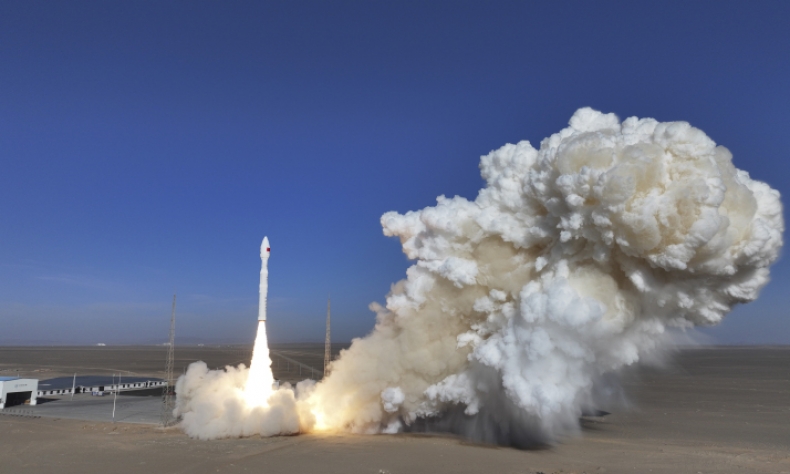
A near-collision between satellites in orbit has sparked a debate between American aerospace company SpaceX and Chinese satellite launch company CAS Space. According to a public post published by Michael Nicolls, Vice President of Starlink Engineering at SpaceX, on December 13, 2025, satellites launched by the two companies had come within just 200 meters of one another. While Nicolls blamed the incident on a lack of pre-launch communication and coordination, CAS Space representatives maintain all standard orbital safety protocols were followed and the near miss occurred nearly 48 hours after their responsibility as launch service provider had ended.
The episode exposes not only a technical disagreement, but also a growing divide in how spacefaring nations interpret and manage orbital risk. One side emphasizes procedural compliance; the other, real-time responsiveness. Behind these differing approaches lies a far more troubling question: As Earth’s orbit becomes more crowded by the day, have we done enough to ensure that a near-miss doesn’t turn into a catastrophic collision?
Why 200 meters matters
In everyday life, 200 meters is a brief walk on a city street. But in the crowded and fast-moving corridors of low Earth orbit, it represents a perilously narrow gap, one that, if misjudged, can have catastrophic consequences.
While space may seem boundless, the orbital highways around Earth are becoming increasingly congested as global satellite deployment accelerates. Within the space industry, a 500-meter separation is widely recognized as the threshold at which collision-avoidance protocols are triggered. Anything closer, and risk escalates sharply.
Satellites in low Earth orbit can travel at speeds exceeding 7.8 km per second. At such velocities, a distance of 200 meters can vanish in milliseconds. A minor miscalculation, signal delay, or technical fault leaves little or no time for corrective action. It’s comparable to two bullet trains crossing paths in three-dimensional space, without a shared rail network or centralized traffic control.
This is not just a theoretical concern. In February 2009, the active U.S. Iridium 33 satellite collided with the defunct Russian Cosmos 2251, creating thousands of debris fragments. A decade later, in 2019, the European Space Agency conducted an unprecedented maneuver to avoid a potential collision with a Starlink satellite after coordination efforts had failed and projected risk levels exceeded internal safety thresholds.
Each close call carries long-term implications. Even a single collision can produce a cloud of debris that lingers for decades, threatening other spacecraft and amplifying the risk of what scientists call the “Kessler Syndrome,” a runaway cascade of orbital collisions. In this light, near-misses are not routine, they are urgent signals that global space governance must evolve as fast as the orbital environment itself.
A governance gap
Public debates over near-misses in space often zero in on assigning responsibility: Did one operator fail to coordinate? Did another neglect to share data? But a deeper, systemic issue should not be overlooked, namely, the lack of a robust, enforceable framework for space traffic governance.
Currently, satellite operators must provide essential data, orbital parameters, design specifications and frequency usage, prior to launch. These submissions are reviewed by national regulators and, in some cases, international bodies to evaluate potential interference or collision risk. If conflicts are identified, adjustments may be negotiated before launch approval. Yet this regulatory attention largely ends the moment the payload reaches orbit.
This static approach is increasingly mismatched with the dynamic realities of modern space operations. Large satellite constellations, such as Starlink, are in constant motion, regularly adjusting altitude, inclination and phase to optimize performance or respond to evolving technical and commercial demands. These post-launch maneuvers often fall outside the scope of existing oversight, creating difficulty for collision prediction and response.
Unlike aviation or maritime sectors, where traffic is governed by detailed protocols, control systems and centralized authorities, orbital space operators rely on informal communication channels, bilateral data exchanges, or proprietary automated collision-avoidance systems. What once worked in an era of sparse orbital traffic is now inadequate in a world where thousands of satellites routinely crisscross the same altitude band.
Recently, SpaceX urged all satellite operators, regardless of nationality, to share precise ephemeris data. This information, which defines a satellite’s exact trajectory and motion, is essential for accurate collision forecasting. Yet not all players are willing to disclose this information. National security interests, commercial confidentiality and concerns about data misuse have made transparency difficult, leading to uneven access and asymmetric risk.
This tension between the need for operational transparency and the realities of strategic and economic competition lies at the core of today’s governance vacuum. The orbital environment is becoming more unpredictable not because technology is lacking, but because the rules for cooperation and accountability remain incomplete.
The push for order
Against this complex backdrop, the concept of Space Traffic Management (STM) has gained traction as a central pillar of global space governance. At its core, STM seeks to establish a structured, cooperative approach to managing the growing population of satellites, spent rocket stages and orbital debris, ensuring that outer space remains safe, navigable and accessible for future generations.
STM is built on three foundational pillars. First, the timely acquisition and transparent sharing of accurate orbital data to build shared situational awareness. Second, the joint assessment of potential collision risks and coordinated decision-making around avoidance maneuvers. Third, the establishment of clear norms regarding responsibilities and expected behaviors.
Despite widespread acknowledgment of the need for such a framework, efforts to build a binding international STM regime remain slow and fragmented. The fundamental obstacle is strategic: Outer space activities are closely tied to national sovereignty, economic competitiveness and defense priorities. As a result, many states remain reluctant to submit to centralized rules or cede authority to international bodies, particularly in the absence of universal trust.
Unlike civil aviation, which is governed by the International Civil Aviation Organization, there is no equivalent entity with rulemaking or enforcement power for outer space. What exists is a patchwork of voluntary guidelines, national regulations and informal coordination mechanisms, useful, but insufficient to meet the demands of today’s orbital environment.
Technical disparities further complicate matters. While leading space powers and private firms may operate sophisticated tracking systems and predictive analytics, many emerging space actors depend on shared or publicly accessible data, which may be less precise or outdated. This imbalance makes true coordination difficult, especially when collision warnings or maneuver decisions rest on conflicting assessments.
Even seemingly straightforward issues, such as how close is “too close,” who should move first or how liability is determined, are deeply political. They raise questions not only about physics but about fairness, responsibility and international equity. As with other global commons, rule-making in space is inherently about balancing risk, cost and power.
Nevertheless, promising developments are underway. Advances in autonomous navigation, AI-driven risk assessment and more agile propulsion systems are enhancing the technical feasibility of STM. Meanwhile, diplomatic initiatives, such as UN guidelines on the long-term sustainability of space activities and bilateral agreements among major space powers, are creating soft norms that may evolve into harder rules.
A particularly promising approach lies in building STM from the ground up: encouraging nations to develop strong domestic regulatory regimes, enhance data transparency and engage in technical cooperation. From this foundation, interoperability and common standards can emerge through sustained dialogue—especially if guided by shared recognition that a stable orbital environment is in every actor’s interest.
Whether through coordinated innovation or sustained international dialogue, the goal remains the same: to prevent space traffic from becoming an unmanaged hazard and to avoid catastrophic collisions.
Looking beyond
Although the recent near-miss ended without damage, yet it is a stark warning: Space safety cannot continue to rely on luck.
Orbital space underpins the world’s critical infrastructure, ranging from global communications and navigation to disaster monitoring and climate research. Managing it through operator-led decisions and informal practices is no longer sustainable.
Outer space is a global commons, and its future must be built on shared stewardship. Establishing clear, fair and enforceable space traffic rules is no longer a distant ambition. It is the groundwork of a sustainable space economy and a peaceful orbital order. Cooperation offers a path to a more secure and equitable future, one where the benefits of space are protected for all.
Xiao Junyong is executive director of the Center for Science and Technology and Human Rights Studies at the Beijing Institute of Technology; Fu Xing is an assistant research fellow at the center.