‘New Imperialist’ and Elegy for the International Order
 Facebook
 Twitter
 Linkedin
 Google +
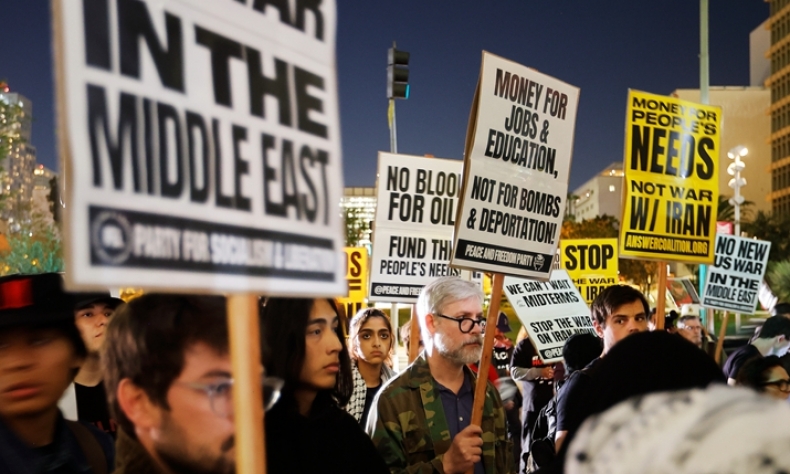
The ‘new imperialist’ America represented by the Trump administration is dragging the international order into an era of chaos, where ‘might makes right’ dominates.
On February 28, the U.S., in coordination with Israel, launched a military strike against Iran, claiming the lives of Iran’s Supreme Leader Ayatollah Ali Khamenei, who was convening a meeting at his official residence, along with a host of senior military and political officials.
This was yet another instance of the Donald Trump’s administration trampling on the fundamental norms of international relations and principles of international law, violating the sovereignty and security of other nations, and perpetrating atrocities against their leaders—following the January 3 raid by U.S. special forces in Caracas that abducted Venezuelan President Nicolás Maduro and his wife.
In response, the Chinese Government, alongside numerous members of the international community, has resolutely opposed and strongly condemned these actions.
The aggression and its stated logic
Trump and his administration, adhering to a “new form of brutalism and candor in U.S. foreign policy”—a pragmatic, aggressive approach that prioritizes power, self-interest and practical outcomes over idealism or diplomatic niceties—and the principle of “peace through strength,” has shown little interest in providing reasons to justify these overseas military operations. They framed the Venezuela operation as a strike against drug cartels and the attack on Iran as bringing “justice for the people of Iran.”
Yet, the underlying logic of these actions was interconnected. First, they aim to create a chilling effect, dismantling the “arc of anti-Americanism” led by the most vocal left-wing governments in Latin America and the “axis of resistance” supported and run by Iran in the Middle East, thereby intimidating global “anti-American forces.” Second, they pursue the energy greed agenda by gaining more control over oil pricing and manipulating the international oil market to seize multiple economic, financial and strategic benefits, thereby limiting the profits of export-oriented economies. Third, they seek to generate more accomplishments for domestic political effect, consolidating the Republican base in an attempt to reverse the party’s increasingly apparent losses in the 2026 midterm elections.
The Iranian quagmire
Shortly after Trump returned to power in January 2025, he threatened to reclaim control over the Panama Canal and asserted sovereignty claims over Greenland, part of Denmark. He even suggested that Canada should become the “51st state” of the U.S. Following the successful operation in Venezuela, the Trump administration unveiled a new wish list, which not only includes long-standing adversaries like Cuba and Iran but also neighbors such as Colombia and Mexico, and even allies such as Canada and Denmark. It has intimidated these nations into complying with U.S. demands for interference in their internal affairs and violations of their sovereignty.
It now appears that this wish list has a high rate of fulfillment. The Panamanian Government has already adopted a cooperative stance toward U.S. demands, including those that exclude Chinese companies from benefiting. During the World Economic Forum in Davos this January, Trump “formed the framework of a future deal with respect to Greenland” with NATO Secretary-General Mark Rutte. In February, the U.S. provided precise intelligence to Mexican Federal Security Forces, enabling them to eliminate the country’s top drug lord, Nemesio Oseguera Cervantes. In May, Colombia is set to hold presidential elections, and its leftist president, Gustavo Petro, who has strained relations with the U.S., is constitutionally barred from seeking reelection. Meanwhile, the Cuban people are suffering under economic and fuel crises, with the U.S., which orchestrates these hardships, intensifying its blockade while using negotiations as bait to plot a “friendly takeover” of Cuba.
The overly confident Trump administration’s rash decision to press the button on war with Iran may not have been well-considered, let alone part of a medium- to long-term strategic plan. Unlike previous U.S. overseas military operations, the Trump administration appears inclined to “hit and run”—destroying without building, without aiming to transform Iran’s governance structure.
Iran is neither a small nor weak nation; its internal dynamics are exceedingly complex. Currently, its military apparatus has fragmented into various branches and factions, leaving the U.S. without a clear counterpart or effective means to communicate and control the intensity of the conflict. Moving forward, the U.S. will face challenges in determining how to achieve victory and how to exit, with the possibility of prolonged conflict, unforeseen losses and the need to continuously commit more resources.
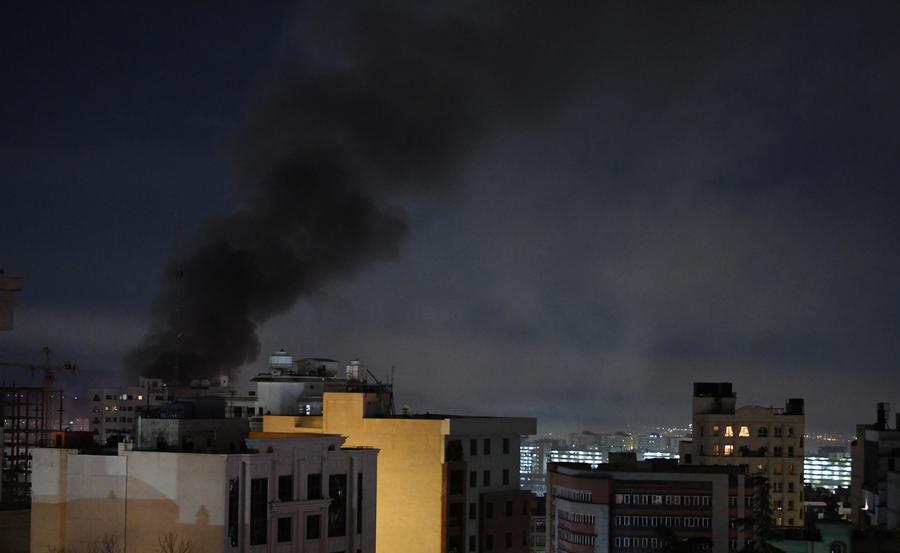
Even if the Trump administration declares victory and withdraws from the Iranian theater amid triumphant fanfare, it will inevitably leave behind a chaotic mess in the Middle East. An Iran lacking effective central control and experiencing localized radicalization will, in the long run, backfire on regional peace and stability, as well as on America’s hard and soft power and its alliances. More importantly, the storm unleashed by Trump’s aggressive actions since his return to office has followed a trajectory of “striking with force initially, then weakening on successive strikes.” This has exacerbated political divisions and even factional splits within the “Make America Great Again” (MAGA) camp, making the likelihood of launching new large-scale risky actions against specific countries before the midterm elections diminishing.
The tragedy lies in the immense disruption and damage inflicted on the international order by the Trump administration’s actions and where it is leading the world.
The strategic shift
In the first year of Trump’s second term, under the banner of “America First,” his administration has undertaken a rather radical adjustment of U.S. global strategy. The basic direction was to completely abandon liberalism’s reliance on economic globalization to maintain U.S. dominance and expand the American model of governance, instead restoring imperialist methods. It prioritized the U.S. homeland and the Western Hemisphere, with the Indo-Pacific taking a secondary role. The administration greatly reduced military presence and financial commitments in non-core regions to focus on addressing “systemic challenges.” It is also reshaping the operational model of America’s global alliance system, transforming it into a unilateral strategic tool rather than prioritizing the protection of allies as in the past.
The fundamental principle guiding the current adjustment of U.S. global strategy is the so-called “the Trump Corollary to the Monroe Doctrine”—forbidding any major power outside the Western Hemisphere from interfering in its affairs and prohibiting any nation from achieving absolute dominance over regions beyond the Western Hemisphere.
It is increasingly evident that the strategic adjustment being undertaken by the Trump administration is not merely about retrenchment but about reallocating resources to fully leverage existing military and technological advantages. The goal is to suppress adversaries, deter major powers and coerce allies, all to maintain America’s global hegemony while slowing its decline. Trump is acutely aware that his time in power is limited to just two or three years, and he is hastily engaging in strategic “pick-and-choose” actions in different parts of the world to clear the path for the later restructuring of global strategic resources.
On February 14, U.S. Secretary of State Marco Rubio, in his speech at the 62nd Munich Security Conference, extended an invitation to European partners to jointly build a new international order. Before boarding his flight to Munich, Rubio grimly told reporters, “The old world is gone, frankly, the world I grew up in, and we live in a new era in geopolitics.”
Chinese diplomat Fu Ying, also present at the conference, offered her observations: The order that the U.S. and Europe claim has “ended” is one in which the U.S. played a dominant role, the West held all the advantages, and the U.S. leveraged economic globalization to sustain prosperity. The new order they seek to build is still a hegemonic one where Western civilization remain central, their so-called “authoritarian states and their alliances” like China and Russia are sufficiently suppressed and unable to “threaten” the West, and the Global South remains subordinate.
To build this so-called new order, the U.S. and Europe need to reconfigure their roles—Europe assumes more responsibility for its own defense, while the U.S. rebuilds its strength to focus more intently on countering China. In essence, the goal is to form a joint will and action to prevent the leadership of the future global order from slipping away from the West.
If this observation holds true, it reflects Trump’s wishful thinking. The “new imperialist” America represented by the Trump administration is dragging the international order into an era of chaos, where “might makes right” dominates.
However, China, along with many Global South countries and some medium-sized Western powers, will not allow the international order dictated by the U.S. to swallow up global peace and development.
Instead, they will strengthen coordination and cooperation, play a balancing role, and push history forward beyond hegemonic bullying and zero-sum competition, toward a future based on true multilateralism and a bright, multipolar world.
The author is a distinguished expert at the Center for International Security and Strategy, Tsinghua University.