Reading Between the Lines
 Facebook
 Twitter
 Linkedin
 Google +
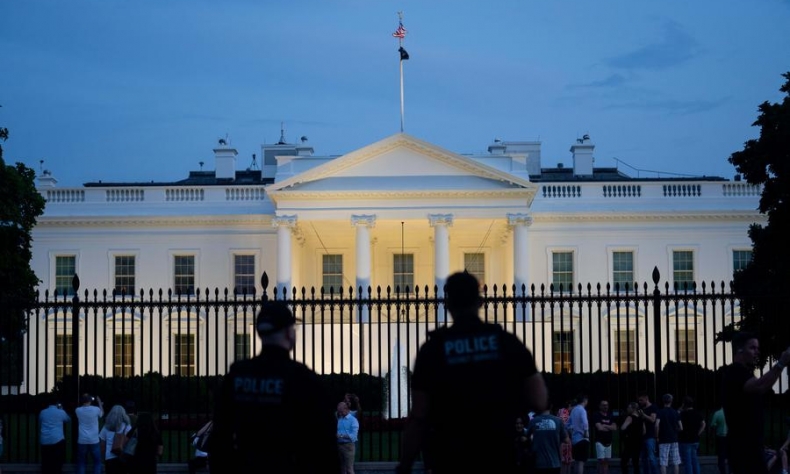
Consequently, the political and economic traps have been fully exercised from one president to the next, reflecting a deeper logic in U.S. strategic thinking: the logic of hegemony and imperialism.
In recent weeks, many analysts and pundits have offered numerous interpretations of the U.S.’ new National Security Strategy, published by the White House on December 4, “reading the tea leaves,” trying to divine what’s altogether new and what simply remains. Is the U.S. retreating or advancing? Is it respecting China or advancing the first and second island chain strategies?
(The terms “first island chain” and “second island chain” are strategic concepts in geopolitics and military strategy, particularly within the context of U.S. defense planning in the Asia-Pacific region. These concepts are not officially defined U.S. Government strategies but are widely discussed in strategic studies—Ed.)
The document’s central argument is that both the U.S. and the world have been changed fundamentally by one man in the months since President Donald Trump’s second inauguration early this year.
Yet regrettably, it’s impossible here to refute all the falsehoods the text asserts. But this was expected from a president and a nation that depend on such nonsense to perpetuate the myth of American superiority, including the basic assertion that Washington has both the will and capacity to dominate global affairs, above all because it is now more powerful and respected.
The continuities that persist?
This kind of propaganda is nothing new. No doubt we all recall the pretense of principles asserted by Joe Biden’s presidency, the return to democracy having saved the U.S. from an alleged coup attempt by Trump, followed by targeting “authoritarian” states guilty of resisting American imperialism while triggering a war against Russia.
Consequently, as Marxists, we must return to the fundamental question: What fundamental changes have happened in the American mode of production, its economic base and superstructure? Strip away the superficial cult of personality and what are the fundamental changes in American foreign policy? Or, more to the point, what are the continuities that persist despite shifting tactics?
Let’s give one example of a Marxist reading of U.S. foreign policy toward Europe, since so many Europeans are fixated on what they view as Trump’s abandonment of shared principles and perhaps even shared security, and his willful meddling in European politics, encouraging a renaissance of rightwing parties.
The U.S. has long found itself strategically at odds with the European Union, formally founded by the Maastricht Treaty, which entered into force in November 1993.
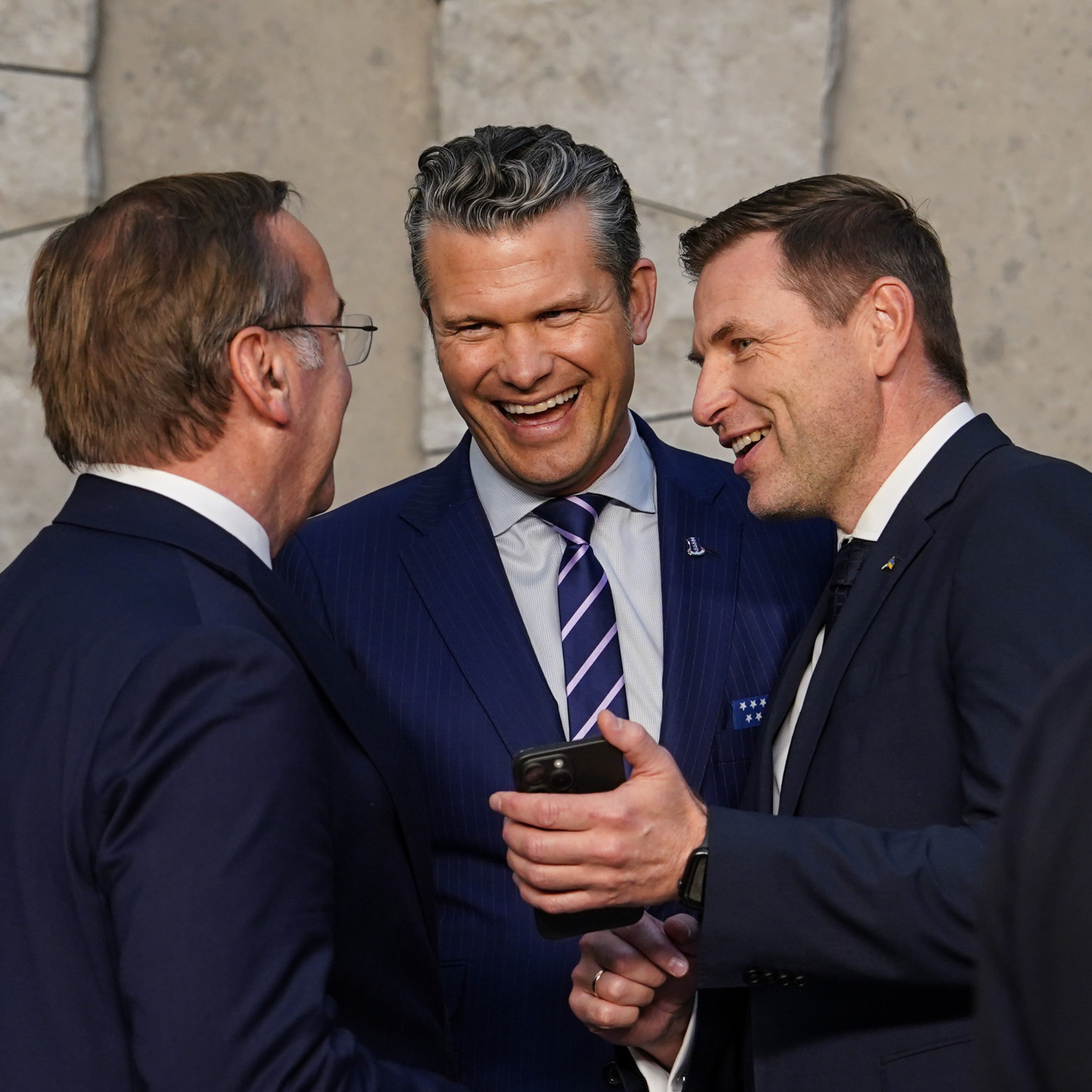
While it would be unfair to assert the EU and the euro were created solely to resist U.S. hegemony, many believe this was an important motivation. These projects did not realize their full potential, in part due to disparate values and development levels in the EU, which prevented market harmonization and an effective federal system, but also because the European approach to counterbalancing the U.S. and Russia produced unsustainable, contradictory dependencies. In short, sticking with and expanding NATO, to Russia’s dismay, while buying vast quantities of cheap energy from Russia to America’s dismay, was a recipe for disaster, and all the more so because it mistook dependencies as opportunities for exploitation.
The bottom line is that the U.S. did provoke a proxy war in Ukraine, one that all but cut off Europe from cheaper Russian fuel supplies (even though European purchases of Russian energy by some estimates in 2024 still exceeded European contributions to Ukraine). Meanwhile, Europe has turned to the U.S. to help meet energy needs. This was always a U.S. strategic objective, as was reinforcing the U.S. dollar in its specific function as the petrodollar.
A question: How can the U.S. meet increased energy demands? The Biden administration—supposedly the green alternative to Trump—made more fossil fuels available by expanding energy production in once-sacrosanct areas of Alaska, which Trump now embraces as a radical return to oil contra “woke lunacies” like concerns for climate change. These are dark continuities, despite rhetorical differences from one administration to the next.
Indeed, one of the most haunting passages in the recently released document concerns Trump’s vision of “energy dominance:” “Restoring American energy dominance (in oil, gas, coal and nuclear) and reshoring the necessary key energy components is a top strategic priority. Cheap and abundant energy will produce well-paying jobs in the U.S., reduce costs for American consumers and businesses, fuel reindustrialization, and help maintain our advantage in cutting-edge technologies such as AI. Expanding our net energy exports will also deepen relationships with allies while curtailing the influence of adversaries, protects our ability to defend our shores, and—when and where necessary—enables us to project power. We reject the disastrous ‘climate change’ and ‘Net Zero’ ideologies that have so greatly harmed Europe, threaten the U.S., and subsidize our adversaries.”
The strategic objectives
Later, the document states: “The Ukraine War has had the perverse effect of increasing Europe’s, especially Germany’s, external dependencies. Today, German chemical companies are building some of the world’s largest processing plants in China, using Russian gas that they cannot obtain at home. The Trump administration finds itself at odds with European officials who hold unrealistic expectations for the war perched in unstable minority governments, many of which trample on basic principles of democracy to suppress opposition. A large European majority wants peace, yet that desire is not translated into policy, in large measure because of those governments’ subversion of democratic processes.”
The U.S. has largely achieved its strategic objectives in Ukraine and Europe. Here we must include the first Trump administration, which supported Brexit, further undermining the EU. The only difference between Trump and Biden is that Trump has now revealed the true face of American strategic policy by asserting that Russia isn’t really a threat to Europe, at least not one that Europeans themselves can’t counter collectively, as long as they move in tandem with his political vision, which also aligns with various rightwing movements in Europe. We can therefore understand this new document as advancing his and Biden’s efforts to meddle in European affairs.
Consequently, the political and economic traps have been fully exercised from one president to the next, reflecting a deeper logic in U.S. strategic thinking: the logic of hegemony and imperialism. And we need not invoke the “cunning of reason” to illustrate the underlying conspiracy. Some might consider it a twist of fate that it was the Europeans who invented these kinds of dark international games and then allowed themselves to believe they had somehow transcended the same while freeriding morally on U.S. power and Russia energy, only to find such “principles” denuded.
And yet now, we’re seeing some European critics pointing to the hagiographic elements of the new strategy and saying this has more to do with Trump than the U.S. This perspective risks neglecting the strategic continuities from Trump to Biden to Trump and plays into quixotic and still lingering hopes U.S. foreign policy will swing in the opposite direction in future elections.
The author is a professor of politics and international relations and director of the Center for Ecological Civilization at East China Normal University in Shanghai. He is also a senior research fellow with the Institute for the Development of Socialism with Chinese Characteristics at Southeast University in Nanjing.