Takaichi’s Mandate Can’t Overcome Japan’s Structural Traps
 Facebook
 Twitter
 Linkedin
 Google +
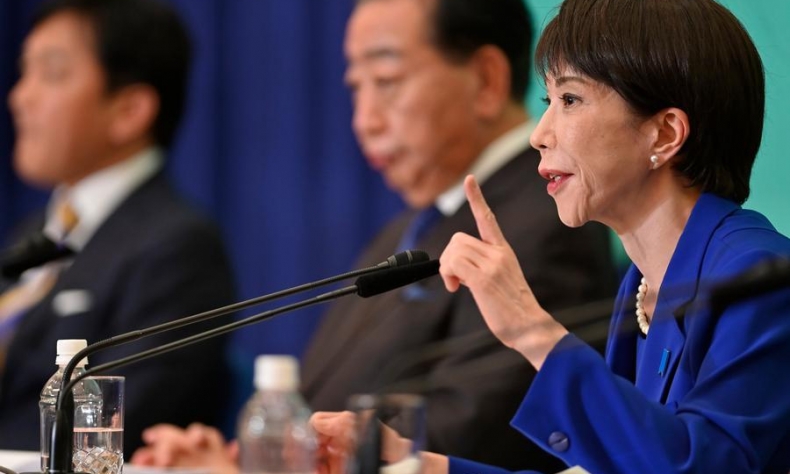
The core paradox facing Tokyo is this: Japan seeks strategic autonomy while relying on American security guarantees, and it escalates rhetoric toward China while remaining economically interdependent.
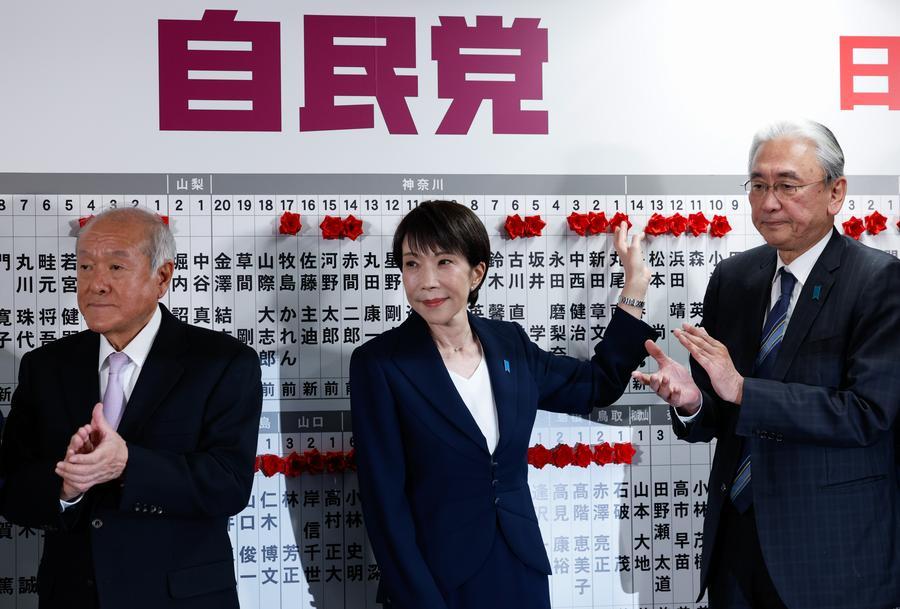
The snap election victory of Japanese Prime Minister Sanae Takaichi marks one of the most decisive political realignments in postwar Japanese history. Her party’s supermajority in the 465-seat lower house clears the path for aggressive fiscal stimulus and tax cuts. It also enables constitutional revision, expanded national security authorities and a more confrontational posture toward its neighbors in Northeast Asia, particularly China.
Financial markets reacted with short-term enthusiasm. The Nikkei 225 surged as investors welcomed the elimination of political uncertainty. A supermajority means no legislative gridlock, no internal party resistance, no serious parliamentary brake. Yet clarity of power is not clarity of strategy.
Japan now faces a convergence of crises: economic fragility, demographic contraction, fiscal overextension and geopolitical escalation. Takaichi’s mandate gives her freedom of action, but it does not guarantee freedom from consequence.
Japan’s macroeconomic position remains structurally precarious. The country’s public debt is roughly twice the size of its entire economy, the highest ratio in the developed world. The proposed two-year suspension of the 8% food tax would cost approximately 5 trillion yen ($33 billion) annually. Markets, meanwhile, remain sensitive to any signal that Tokyo might draw from foreign exchange reserves or liquidate portions of its U.S. Treasury holdings.
Japan has long relied on a delicate equilibrium: ultra-low rates, domestic bond absorption and monetary accommodation. That equilibrium depends on confidence in fiscal discipline, currency stability and institutional predictability. Expansionary fiscal policy in a low-growth, aging economy is not automatically reckless. Japan has endured decades of deflationary drag. But stimulus without structural reform risks reinforcing debt dependency rather than generating durable productivity gains.
If bond yields rise sharply, debt servicing costs increase. If the yen weakens significantly, import prices surge, particularly for energy and food. In that scenario, the very households meant to benefit from tax relief face renewed inflationary pressure. In short, the room for error is narrow.
However, the more combustible dimension of this electoral mandate lies in security policy. Takaichi’s statement about possible military intervention over Taiwan prompted countermeasures from Beijing, including restrictions on seafood imports, critical mineral curbs and travel advisories.
Takaichi’s camp frames the election result as a signal that Japan will not be intimidated. But escalation rhetoric in East Asia carries structural asymmetry: China is Japan’s largest trading partner, Japanese manufacturing supply chains remain deeply intertwined with China, and a full economic decoupling would be profoundly disruptive. More importantly, the deterrence logic underpinning Takaichi’s stance assumes unwavering U.S. backing. That assumption is increasingly questionable.
Japan’s postwar security architecture rests on a bilateral security alliance. The durability of that alliance has been treated as axiomatic since 1951. But axioms in geopolitics eventually expire. The United States today is deeply divided at home, financially strained and stretched thin by commitments in both Europe and the so-called “Indo-Pacific region.” Meanwhile, global trust in Washington is declining among both adversaries and allies.
American foreign policy is now arbitrary. Commitments are frequently reframed, renegotiated or rhetorically inflated without clear material follow-through. An alliance is only as credible as the domestic political stability of its guarantor. If Washington’s commitments are contingent on electoral cycles, factional battles or transactional negotiation, then allied strategic planning built on automatic U.S. intervention becomes structurally risky.
A declining hegemon can still project military force, but one that has lost credibility becomes unpredictable. That unpredictability is the core danger.
Takaichi’s strengthened majority opens the door to amending Article 9 — the constitutional clause that has kept Japan officially pacifist since World War II. Article 9 has served as both a legal restraint and a symbolic anchor of postwar identity. Formalizing the status of the Self-Defense Forces or creating emergency powers would represent a fundamental shift in Japan’s constitutional order.
Constitutional revision is not inherently destabilizing. All states adapt to new realities. But timing matters. Revising Japan’s pacifist foundations now, amid escalating rhetoric over Taiwan, rising regional tensions and uncertain alliance guarantees, compounds strategic risk. Militarization premised on external guarantees is viable only when those guarantees are stable.
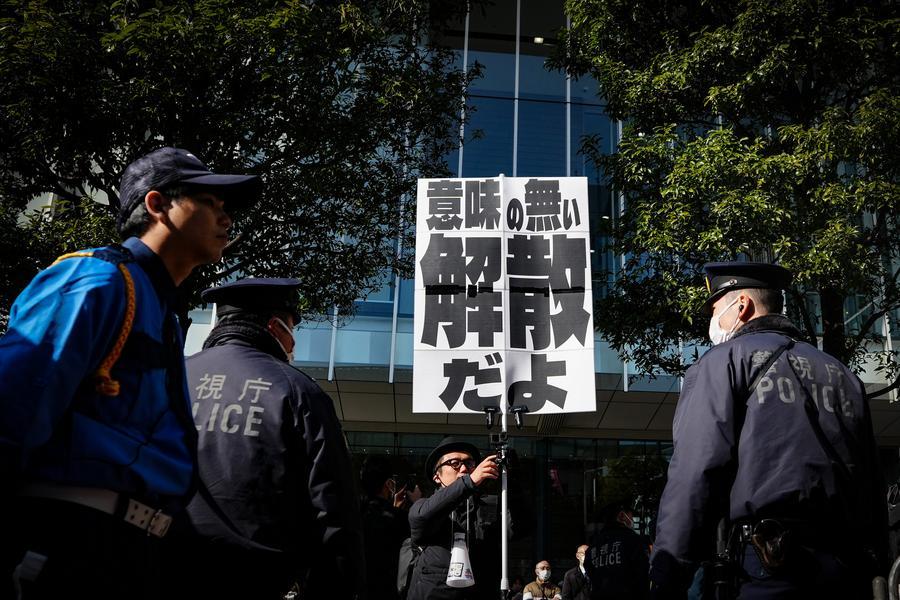
The core paradox facing Tokyo is this: Japan seeks strategic autonomy while relying on American security guarantees, and it escalates rhetoric toward China while remaining economically interdependent. Hard-line postures can generate domestic political cohesion in the short term, but they rarely resolve structural constraints.
If a conflict were to erupt over Taiwan, Japan’s geographic proximity would expose it to direct retaliation for any intervention. The U.S. mainland would face no such risk, even if U.S. military assets in the region were involved. Japanese infrastructure, ports and bases would be direct targets. Strategic bravado without sovereign strategic capacity becomes dependency disguised as strength.
Takaichi may have secured a popular mandate through her snap election victory, but she has yet to win market confidence, stable relations with China, or reliable long-term U.S. alliance ties. Short-term stock rallies do not eliminate sovereign debt arithmetic. Electoral supermajorities do not eliminate geopolitical asymmetry.
The Japanese state has historically excelled at incremental adaptation. The risk now is acceleration — rapid fiscal expansion paired with constitutional revision and regional hardening — in a global environment defined by instability.
East Asia is entering a multipolar phase: China’s economic gravity is structural, America’s political volatility is structural and Japan’s demographic contraction is structural. Policy can mitigate structures, but it cannot ignore them. The most dangerous error would be to assume that the U.S.-led regional order of the past 75 years can be replicated indefinitely.
If Japan seeks resilience, it will require fiscal credibility, economic diversification, diplomatic redundancy beyond binary alignment and strategic realism about the limits of external guarantees. Electoral triumph is a moment of empowerment, surely. But it is also a moment of responsibility.
A hard turn in foreign policy amid a fragile economic footing and uncertain alliance reliability may prove not a restoration of strength, but an exposure of vulnerability. History tends to punish states that mistake momentum for invulnerability.
Bradley Blankenship is an investigative journalist, columnist, author, political analyst and the founding chairman of the Northern Kentucky Truth & Accountability Project, a local U.S. anti-corruption network and civic oversight body.