The Epstein Files: Shattering the West’s Illusion of Moral Superiority
 Facebook
 Twitter
 Linkedin
 Google +
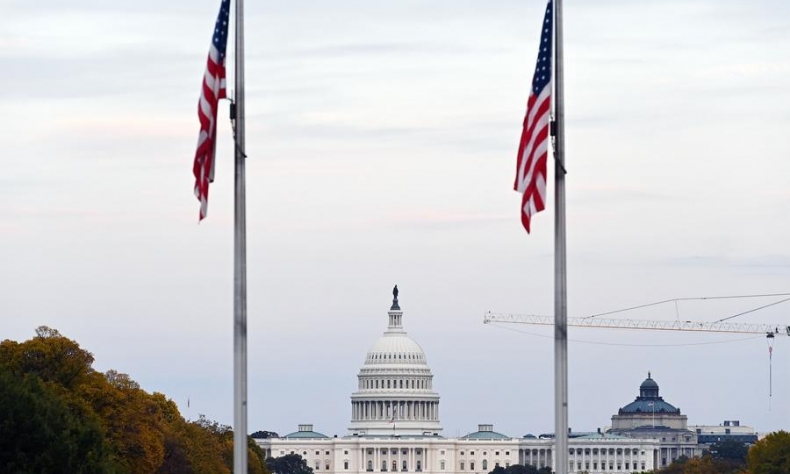
The Epstein files are more than a scandal; they are a mirror reflecting the West’s decayed core.
In the waning days of January 2026, the U.S. Department of Justice (DOJ) unleashed a digital deluge: over 3 million pages of documents, supplemented by thousands of videos and images, all tied to the sordid saga of Jeffrey Epstein. This latest tranche follows previous releases made in response to the Epstein Files Transparency Act, signed by U.S. President Donald Trump in November 2025, and brings the total number of pages released to nearly 3.5 million. The new release has not merely revived old scandals–it has ignited a global reckoning.
The files paint a damning portrait of an expansive network weaving through the corridors of power in politics, business, academia and royalty, spanning continents and implicating figures from Trump and Bill Clinton to Elon Musk and former royals. Allegations of sexual predation, including against minors, pedophilia and other crimes swirl around these elites, yet no new charges have materialized. What emerges is not just a tale of individual depravity but a systemic rot that erodes the West’s long-claimed mantle as the beacon of moral and civilizational superiority.
For decades, the collective West–led by the United States and its European allies–has positioned itself as the global arbiter of human rights, democracy and ethical governance. From the podiums of the United Nations to the battlefields of regime-change operations, Western leaders have wielded accusations of human rights abuses as weapons against adversaries in the Global South.
Think of the interventions in Iraq, Libya and Syria, often justified under the guise of protecting innocents from tyrannical regimes. Sanctions against Iran, Venezuela and Russia have been framed as moral imperatives to curb corruption and oppression. Non-governmental organizations (NGOs), funded by Western governments and philanthropists, have served as the vanguard of this crusade, channeling billions into “democracy promotion” and human rights advocacy. Groups like the National Endowment for Democracy (NED), established during the Cold War to advance U.S. interests abroad, have been lauded as champions of freedom. Yet, the Epstein files lay bare the hypocrisy at the heart of this narrative.
The documents reveal a web of complicity among the very architects of Western moral posturing. Epstein, a convicted sex offender who died under mysterious circumstances in 2019, cultivated relationships with presidents, prime ministers, billionaires and intellectuals. His infamous “Lolita Express” jet and private island allegedly hosted gatherings where exploitation thrived, shielded by wealth and influence. The files include e-mails, photos and records that detail interactions with figures like Bill Gates, former Obama officials and European elites, raising questions about who knew what and when. While direct ties to organizations like the NED aren’t explicitly documented in the releases, the broader ecosystem of Western-funded NGOs and think tanks–often intertwined with the same elite networks–now faces scrutiny.
Epstein himself donated heavily to Democratic causes in the 1990s and early 2000s, including to Hillary Clinton and John Kerry, underscoring how financial influence permeates the machinery of “values-based” foreign policy. Critics have long accused the NED of serving as a covert arm of U.S. foreign policy, funding opposition groups in countries like Venezuela to undermine elected governments under the banner of democracy. Now, with Epstein’s scandal exposing the moral bankruptcy of Western elites, these efforts appear not as altruistic endeavors but as projections of a tainted superiority complex.
The attempted cover-ups and obfuscations amplify this erosion. The DOJ’s release was marred by blunders: unredacted documents initially exposed victims’ identities and nude images, prompting swift takedowns and further redactions. Victims’ advocates decry this as “revictimization,” with lawyers arguing that redactions protect potential abusers more than survivors. The department admitted to redaction errors, and while Congress can now view unredacted versions, the public faces a heavily censored trove. Over 6 million pages reportedly remain unreleased, fueling suspicions of political interference. This opacity echoes historical patterns: Epstein’s 2008 plea deal, brokered by then U.S. Attorney Alexander Acosta (later Trump’s Labor Secretary), allowed him to evade serious consequences, highlighting how power insulates the powerful. Such maneuvers not only delay justice but also reinforce perceptions of a two-tiered system–one for the elite, another for everyone else.

This scandal’s global ripple effects are profound, particularly in the Global South, where Western moral lectures have long bred resentment. Countries in Africa, Asia and Latin America, frequent targets of sanctions and interventions, now point to the Epstein files as evidence of Western decadence. In Zimbabwe and South Africa, documents suggesting financial ties between Epstein and former leaders like Robert Mugabe and Jacob Zuma have sparked domestic probes, but also broader critiques of hypocrisy.
The Epstein files make one thing unmistakably clear: the West has lost any moral authority to lecture non-white societies about ‘superiority.’ Even in the Arab world, voices mock Western pretensions, arguing that if the U.S. can’t police its own elites, it has no business dictating terms elsewhere.
Europe, too, feels the sting more acutely than the U.S. In Britain, the files have toppled careers: Peter Mandelson, former UK ambassador to Washington, resigned amid revelations, and King Charles stripped his brother Andrew Mountbatten-Windsor of his title.
Political crises unfold from Bratislava to New Delhi, with the World Economic Forum launching investigations into its CEO’s Epstein ties. This contrasts with a more muted U.S. response, where fallout remains largely partisan sniping rather than systemic reform. The disparity underscores a transatlantic divide, but collectively, it tarnishes the West’s brand. The release of the Epstein files has again stripped away the carefully polished mask of the so-called “civilized West.”
The corrosion extends beyond geopolitics to the fabric of Western societies. Trust in institutions–already frayed by events like the 2008 financial crisis and the COVID-19 pandemic–plummets further. When elites preach human rights abroad while allegedly abetting horrors at home, cynicism reigns. NGOs, once seen as impartial, now appear as extensions of a corrupt system. The NED, for instance, has faced accusations of partisanship and discrimination, with critics arguing it delegitimizes conservative politics while advancing U.S. agendas. In Poland, a former NED grantee announced the end of funding amid the scandal’s shadow, prompting questions about tainted associations. These exposures don’t just embarrass; they delegitimize the entire apparatus of Western soft power.
If the West is to salvage any credibility, it must confront this moment head-on. Prosecutions, if evidence warrants, should transcend political affiliations. Transparency must replace obfuscation–release the remaining files, unredacted where possible and let justice prevail. NGOs and governments should undergo audits to sever ties with compromised networks. Above all, the West must abandon its paternalistic lectures and engage the Global South as equals, recognizing that moral authority is earned through actions, not assertions.
The Epstein files are more than a scandal; they are a mirror reflecting the West’s decayed core. For too long, the illusion of superiority has justified interventions and sanctimony. Now, dragged through the mud, that shine is gone. The Global South watches, ready to assert its own paths. The question is whether the West will reform or cling to a hollow throne. The world awaits an answer.
The author is an Adjunct Professor at Queensland University of Technology, Australia.