The Fuxian Blueprint: Charting a Path to Lasting Peace
 Facebook
 Twitter
 Linkedin
 Google +

In demonstrating that lasting peace is best constructed by empowering disputing parties to find their own way forward, with respectful support from a trusted neighbor, the Fuxian blueprint offers a valuable contribution to the global repertoire of conflict resolution.
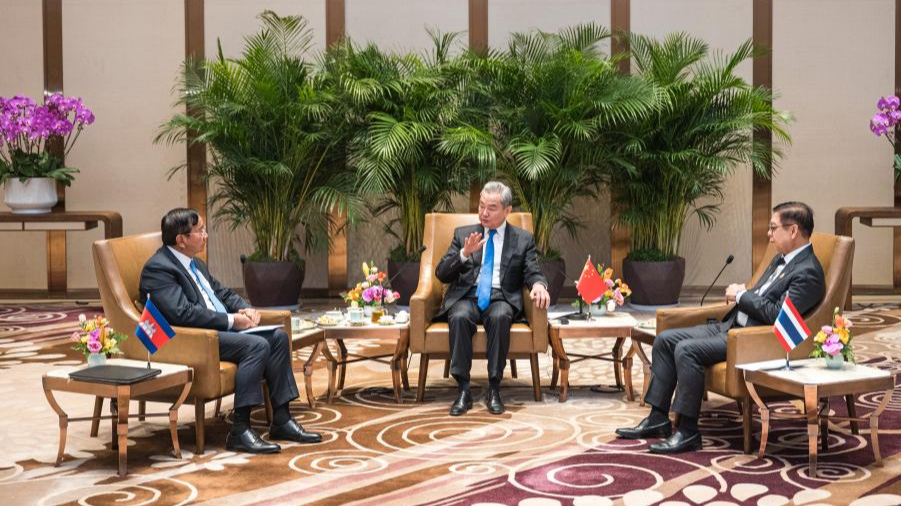
In late December 2025, as a fragile ceasefire took hold between Cambodia and Thailand, a significant diplomatic gathering occurred beside the tranquil Fuxian Lake in China’s Yunnan Province. The meeting of Chinese, Cambodian and Thai foreign ministers and senior defense officials offered a distinctive, patient and highly effective approach to conflict resolution—one that could be termed the “Fuxian blueprint.”
The genius of this model lies first in its foundational philosophy: the conscious abdication of traditional mediation’s commanding role. Throughout the press release following the meeting, China meticulously positions itself as a facilitator. The primary actors are unequivocally Cambodia and Thailand, who “will work to,” “agree to” and “express commitment.” This is the practical embodiment of a core principle often articulated by Chinese diplomacy: promoting peace talks “without imposing its will or crossing the line.”
By forgoing the part of an arbiter handing down solutions, China creates a neutral, less pressurized space for dialogue. This respectful posture ensures that any progress made is owned by the parties themselves, building a more durable foundation than any externally imposed solution ever could.
Beyond its philosophy, the document impresses with its structured, holistic and pragmatic roadmap. It outlines a logical, five-pillar architecture for building sustainable peace, moving far beyond the simple cessation of hostilities.
The immediate and critical task, it states, is consolidating the ceasefire. Here, China’s support moves from rhetoric to actionable commitment: offering “all necessary support” for humanitarian de-mining—a direct tackle of a deadly trigger for conflict—and providing “substantive assistance” to ensure the ASEAN Observer Team functions effectively. This addresses the urgent need to transform a paper agreement into a ground reality.
The text identifies the “next key step” to be the resumption of normal exchanges. It wisely shifts focus from the military to the human dimension, emphasizing the restoration of livelihoods for displaced people, with China pledging immediate humanitarian aid. This understanding—that societal and economic reconnection builds the essential glue for political reconciliation—demonstrates a deep grasp of peacebuilding.
The document then guides the process toward rebuilding political trust, notably by creatively linking bilateral healing to broader regional cooperation. The agreement by Cambodia and Thailand to foster a positive atmosphere for the upcoming Lancang-Mekong Cooperation Leaders’ Meeting is a diplomatic masterstroke. It provides a natural, low-stakes “platform” for re-engagement, anchoring their strained relationship within a shared framework of developmental interests.
Ultimately, the document frames the “long-term goal” as the full improvement of bilateral relations and a shared responsibility for regional stability. It elevates the dispute from a bilateral issue to a matter of regional interest, committed to principles enshrined in the UN and ASEAN charters.
The profound impact of this Fuxian blueprint is multi-layered. For Cambodia and Thailand, it provides a viable step-by-step pathway out of the crisis, reducing the political risk of direct concession. For ASEAN, China’s steadfast deference to its “central role” and concrete support for its mechanisms actively strengthens the organization’s authority and cohesion in managing its own affairs. For the wider world, and particularly for a region weary of great-power rivalries, the Fuxian blueprint presents a compelling alternative. It stands in stark contrast to mediation styles that prioritize rapid, high-profile declarations for domestic political gain over sustainable outcomes—approaches that often yield agreements which, as past experience shows, may collapse due to a lack of local ownership.
In demonstrating that lasting peace is best constructed by empowering disputing parties to find their own way forward, with respectful support from a trusted neighbor, the Fuxian blueprint offers a valuable contribution to the global repertoire of conflict resolution.
It suggests that in the complex art of peacemaking, sometimes the most powerful role is not that of the leading actors, but of the adept stage-setter for others’ success.
The author is a research fellow at the Institute of State Governance, Huazhong University of Science and Technology.