The Golden Reshaping
 Facebook
 Twitter
 Linkedin
 Google +
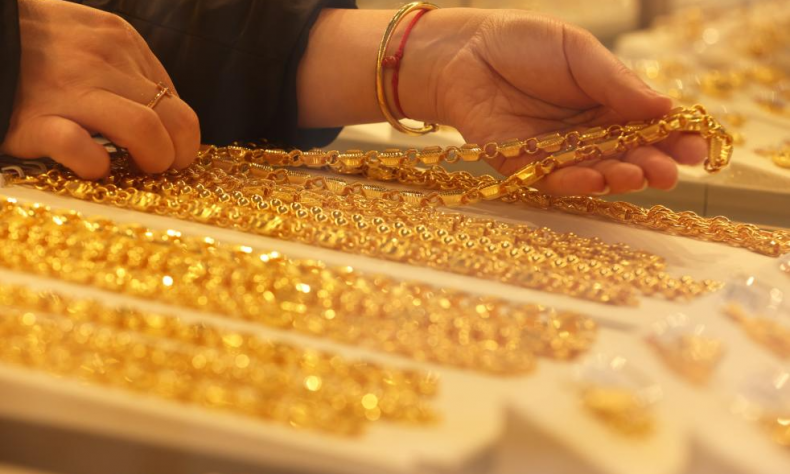
Against the backdrop of accelerating de-dollarization, rising gold prices signal a systemic reshaping of the dollar-centric international monetary system.
Gold prices have been more than usually volatile in recent months, with prices making multiple sharp swings since the start of 2026. In an environment of elevated uncertainty, these price movements are not simply a matter of supply and demand; they signal a much broader shift toward the acceleration of de-dollarization and the reshaping of the global monetary system.
Last year, international gold prices surged by about 70 percent, the largest annual gain since the 1979 oil crisis. According to the Gold Demand Trends Full Year 2025 report, released by the World Gold Council (WGC) on January 29, total global gold demand reached a record 5,002 tons last year. Against the backdrop of persistent geopolitical and economic uncertainty, gold investment worldwide hit an all-time high of 2,175 tons—up 84 percent year on year—making it the primary source of the year’s growth.
The continued accumulation of gold reserves by central banks is a core driver of this bull market. Purchases by central banks, totaling 863 tons, slowed from their recent pace but remained historically elevated and geographically widespread in 2025, the report said. Central banks began increasing gold holdings after 2010. From 2022 to 2024, annual net central bank gold purchases exceeded 1,000 tons for three consecutive years, with their share of total demand rising to over 20 percent.
Heightened investment activity also drove global gold exchange-traded-fund holdings to grow by 801 tons last year, the second strongest annual growth on record.
According to WGC senior market analyst Louise Street, looking ahead to 2026, there are few signs of easing economic and geopolitical uncertainty, and the strong momentum in gold demand seen in 2025 is likely to continue. In a recent report, leading global financial institution Goldman Sachs also predicted robust central bank gold demand in 2026, in part because gold reserves held by emerging-market central banks remain relatively low.
Accelerating de-dollarization
For decades, the U.S. dollar has dominated the global economy, serving as the primary currency for international trade and foreign exchange reserves. However, as the global political and economic landscape evolves, some countries and regions have reduced their reliance on the dollar in international economic and financial activities. This has taken the form of greater use of local currencies in bilateral trade, adjustments to foreign exchange reserve structures, reduced holdings of dollar-denominated assets and increased allocations to other currencies or assets. This process is commonly referred to as “de-dollarization.”

The wave of central bank gold purchases behind the current gold bull market is a key manifestation of de-dollarization (A bull market is a market that is on the rise and where the economy is solid—Ed.). While the dollar’s dominant status is unlikely to be challenged in the short term, rising geopolitical risks and erosion of confidence in the dollar have prompted central banks to accelerate de-dollarization efforts as a means of risk diversification.
Many observers trace the start of this gold bull market to 2019, when the U.S. Federal Reserve began a new rate-cutting cycle. After the outbreak of the Russia-Ukraine conflict in 2022, the United States’ extensive use of economic and financial sanctions further undermined confidence in the dollar. This prompted central banks—especially those of emerging-market economies—to embark on sustained, strategic gold accumulation.
Following Donald Trump’s return to the White House for his second term as U.S. President in January 2025, his unpredictable and confrontational policy approach has further accelerated the de-dollarization trend. Trump’s “reciprocal tariffs” on U.S. trading partners last April triggered several episodes of simultaneous decline of U.S. equities, Treasury bonds and the dollar. U.S. invasion of Venezuela in January intensified global risk-off sentiment (decreased appetite for risk among investors, pushing them toward lower risk investments such as gold and bonds—Ed.). Trump’s attempts to acquire Denmark’s autonomous territory Greenland and his use of tariffs to pressure Europe to agree also led some Nordic pension funds to liquidate their U.S. Treasury holdings.
Concerns have also grown over the U.S. Federal Reserve’s independence. Trump has stepped up pressure and interference targeting the Fed, the central bank of the United States which is responsible for U.S. monetary policy. Although tensions between the White House and the Fed have eased somewhat recently, amid Fed Chairman Jerome Powell’s impending departure last May and Trump’s nomination of Kevin Warsh to take over the post, the struggle for control of U.S. monetary policy is set to continue shaping U.S. and global financial markets.
A recent report by multinational investment bank Morgan Stanley notes that Trump’s policy stance on debt, trade, sanctions, national security and key institutional arrangements is likely to be a decisive factor in determining the pace and trajectory of global de-dollarization.
Reshaping the global monetary system
Historically, gold has experienced two 10-year bull markets since 1970. The first occurred in the 1970s, following the collapse of the Bretton Woods system based on the convertibility of gold to the dollar. Two oil crises triggered global inflation, pushing gold prices from around $35 per ounce to $850—a more than 24-fold increase. In the 1980s, however, the Fed’s aggressive rate hikes curbed inflation, strengthened the dollar and substantially raised the cost of holding gold, leading to a steep price collapse.
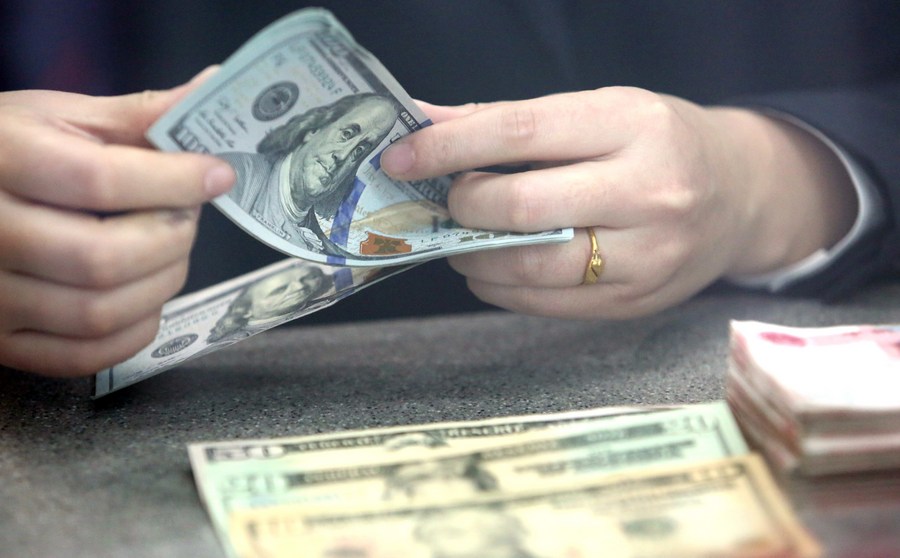
The second bull market unfolded in the 2000s, driven by the bursting of the U.S. dot-com bubble, the global financial crisis, the European sovereignty debt crisis and the rise of emerging economies. Gold prices climbed from around $250 per ounce to a peak of $1,920, a gain of more than 650 percent in total over a decade. As the Fed gradually exited quantitative easing and the dollar strengthened, gold entered a period of adjustment after 2012.
Where these two previous cycles were the result of gold being used primarily as hedge against inflation, the current bull market reveals a shift to its use as a hedge against geopolitical risk and weakening confidence in the dollar. Against the backdrop of accelerating de-dollarization, rising gold prices signal a systemic reshaping of the dollar-centric international monetary system.
As central banks continue to increase their gold reserves, rising gold prices have boosted the dollar value of those holdings. By mid-2025, the share of U.S. Treasuries in central bank reserves (excluding the Fed) had fallen below 25 percent, while gold’s share had exceeded 25 percent. This was the first reversal of their proportions since 1996.
Meanwhile, the dollar’s share of global foreign exchange reserves has continued to decline. International Monetary Fund data show that the share of dollar reserves held by global central banks has fallen from about 70 percent two decades ago to approximately 56.92 percent by the third quarter of 2025. A June 2025 report by the European Central Bank showed that, based on market valuation, gold accounted for 20 percent of total global foreign exchange reserves, making it the world’s second largest reserve asset after the U.S. dollar.
A report released on June 24, 2025, by independent central banking think tank the Official Monetary and Financial Institutions Forum found that among 75 central banks managing $5 trillion in assets, one third plan to increase gold reserves over the next one to two years, with particularly strong demand from emerging-market central banks. Forty percent said they intend to further raise gold holdings over the next decade. At the same time, central banks are showing growing interest in non-dollar assets such as the euro and China’s renminbi.
This rise in gold prices reflects profound changes in the international monetary system, with the restructuring process likely to be gradual and incremental. The future system may evolve into a “1+2+N” framework: The dollar remains dominant but with a steadily declining share; the euro and the yuan serve as key alternative currencies; and gold, other major currencies and digital currencies are supplements. In other words, the global reserve system is shifting from dollar-centric unipolarity toward multipolarity.
At present, gold still accounts for a relatively small share of the reserve assets of most emerging-market central banks, leaving considerable room for further increase. Over the long term, amid de-dollarization and the restructuring of the global monetary system, gold’s role as a “ballast stone” is likely to become even more prominent.