The RMB’s Strategic Moment
 Facebook
 Twitter
 Linkedin
 Google +
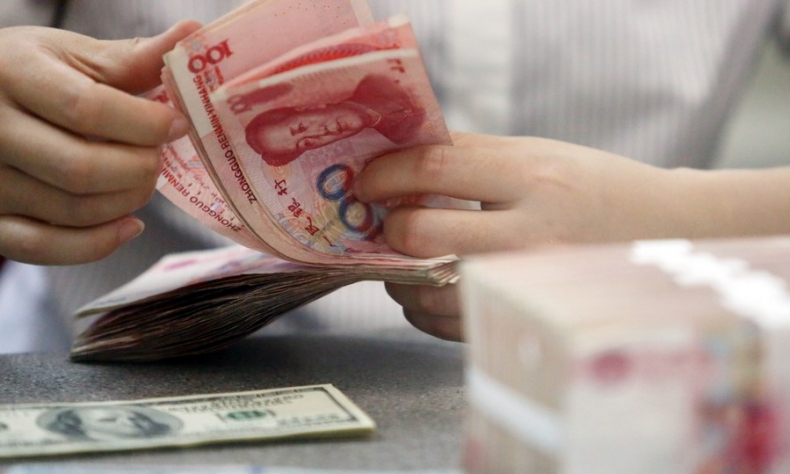
Beijing’s aim is not to replace the dollar immediately but to position the RMB as a trustworthy global currency capable of balancing a fragmented international monetary system.
President Xi Jinping has outlined a very clear and ambitious monetary goal: to develop a “powerful currency” capable of widespread use in global trade, investment and foreign exchange (forex) markets, ultimately aiming for it to become a reserve currency worldwide.
Published in the February 1 edition of the official Communist Party of China Central Committee journal Qiushi, Xi’s commentary was more than just a typical policy reflection. It was a strategic signal that China plans to move from a cautious, gradual approach to renminbi (RMB) internationalization to a more coordinated national initiative.
Compared to today’s global monetary landscape, Xi’s statement seems more aspirational than disruptive. The International Monetary Fund reported late last December that in the third quarter of 2025, the U.S. dollar still made up about 57 percent of worldwide official forex reserves, a decline from 71 percent in 2000, yet it remains dominant. The euro accounted for roughly 20 percent, while the RMB was sixth, accounting for just 1.93 percent of reserves.
Macroeconomic vs. political
These figures highlight the gap between China’s aspirations and its current standing in the global monetary hierarchy. However, the importance of Xi’s statement lies less in its immediate market effect and more in its political message. By personally declaring a move from passive support to actively building a “powerful currency,” Xi directly instructs the entire government to unify policy, regulation and reform efforts toward this goal.
The message’s timing is crucial, especially today—amid rising uncertainty in global financial markets. Factors such as a weakening U.S. dollar, increasing geopolitical tensions, and concerns over the politicization of U.S. monetary policy are prominent. The appointment of Kevin Warsh, an ally of American President Donald Trump, as Federal Reserve chair has caused unease among investors.
There is widespread concern that macroeconomic decisions may be subject to political interference, risking the Fed’s independence and causing volatility in both stock markets and the dollar. From Beijing’s viewpoint, these events reveal weaknesses in the dollar-centric system and suggest that it is now time to shift from defensive to strategic actions.

China’s leadership has long aimed to internationalize the RMB, but Xi’s remarks represent China’s clearest and most comprehensive statement of the ultimate goal. He associated the development of a strong currency with the need for a robust central bank capable of effective monetary management, globally competitive financial institutions and international financial centers able to attract global capital and influence worldwide pricing. Notably, these comments were originally delivered in a 2024 speech to senior regional officials but were only published now, indicating a deliberate decision to amplify the message amid a period of global financial flux.
Beijing’s aim is not to replace the dollar immediately but to position the RMB as a trustworthy global currency capable of balancing a fragmented international monetary system. Since 2022, the RMB has risen to become the world’s second largest currency in trade finance, highlighting China’s key role in global trade. However, its use as a store of value remains constrained.
A matter of trust
The paradox of China’s currency is the clear discrepancy between its strong trade position and its limited financial influence. Although China is the world’s leading exporter, the RMB makes up just 3 to 5 percent of international transactions via SWIFT (Society for Worldwide Interbank Financial Telecommunication), while the dollar still handles about half of all global dealings. Many Chinese companies also choose the dollar for their foreign trade, mainly due to risk management rather than political reasons.
This contradiction stems from deep-rooted structural and institutional constraints. The main barrier to the RMB’s internationalization is China’s closed capital account. Unlike the U.S. or the Eurozone, where capital flows freely across borders, China enforces strict controls on cross-border financial transactions. These restrictions are driven by legitimate concerns about exchange-rate volatility and capital flight during stressful times, but they also pose risks for international investors. A currency cannot become truly global if its convertibility can be limited by government decisions during crises. Reserve currencies need not only strong economic support but also mobility and trust.
Another limitation concerns the depth and trustworthiness of China’s financial markets. Global central banks and major institutional investors need liquid, transparent and legally reliable instruments to store reserves. U.S. Treasuries serve this purpose for the dollar. Although China’s bond market is sizable, it remains difficult for non-residents to access, with transparency issues and ongoing concerns about the rule of law. Many investors worry that political factors could influence dispute resolution. Without strong institutional trust, the RMB cannot rival the dollar as a safe-haven asset.
Reduce dollar dependence
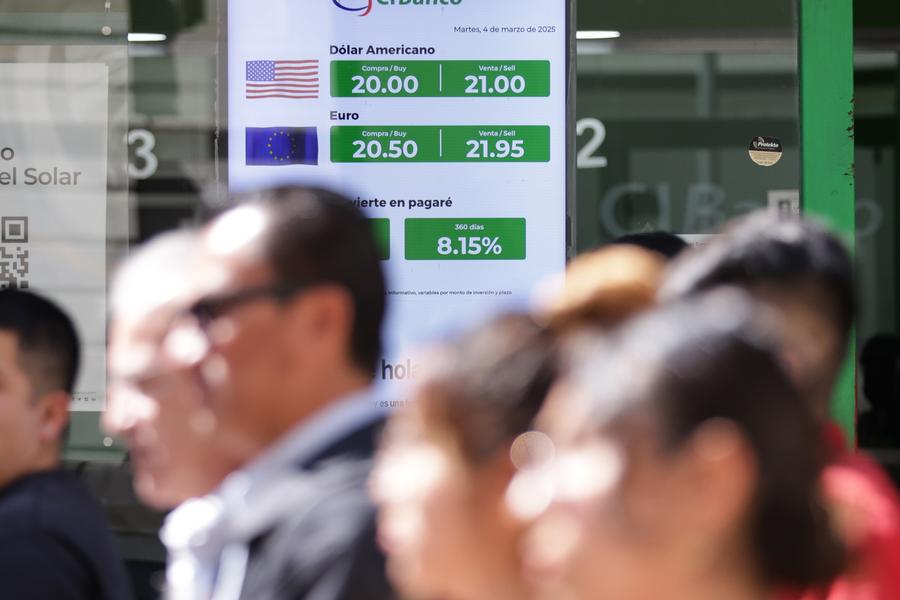
Network effects strengthen the dollar’s dominance. Historically, global commodity markets, such as oil, metals and agricultural products, are priced in dollars. Chinese companies gain from this arrangement: buying raw materials in dollars and selling finished products in dollars reduces currency risk. The separate onshore and offshore RMB exchange rates increase transaction costs and complexity, making wider use less attractive.
To address these challenges, China has a complex reform agenda. It must gradually and credibly liberalize its capital account, accepting occasional currency fluctuations. Financial reforms should improve transparency, make it easier for foreign investors to access markets, and enhance legal protections for investors.
Simultaneously, Beijing is exploring alternative routes beyond traditional liberalization. Developing digital payment systems, such as the digital RMB and platforms like mBridge, aims to minimize dependence on dollar-centric correspondent banking and SWIFT networks.
(mBridge is a multi-central bank digital currency platform being developed for cross-border payments. Its key founding members are the central banks of the Chinese mainland, Hong Kong Special Administrative Region of China, Thailand and the United Arab Emirates—Ed.)
Technological innovation could help China overcome some of the structural obstacles of the current system.
Geopolitically, expanding RMB-denominated trade in key commodities represents another lever. Establishing liquid RMB-based oil and gold markets and persuading BRICS partners and Gulf states to use them would generate structural demand for the currency.
(BRICS is the acronym for an emerging-market cooperative mechanism that initially comprised Brazil, Russia, India, China and South Africa—Ed.)
If raw material flows can be integrated into an RMB-centered ecosystem, the dollar’s dominance would gradually erode.
Most analysts concur that China’s long-term aim is not to dominate monetary systems but to establish a multipolar currency structure. In this framework, the RMB would sit alongside the dollar and euro as one of several key currencies, primarily supporting Asia and the Global South at large. While Xi’s statements are not likely to disrupt global markets immediately, they signal a formal strategic shift already felt by investors.
The author is former prime minister of Kyrgyzstan, a distinguished professor of the Belt and Road School at Beijing Normal University and author of the book Central Asia’s Economic Rebirth in the Shadow of the New Great Game (2023).