The Spring Festival and the Rise of the New Chinese Consumer
 Facebook
 Twitter
 Linkedin
 Google +
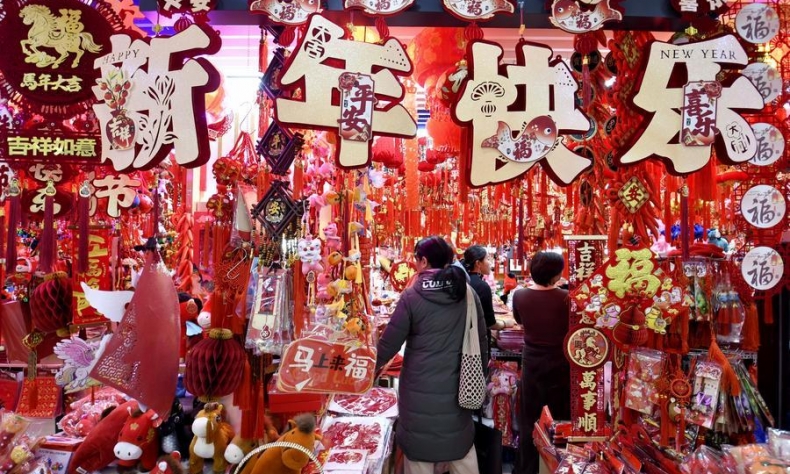
The 2026 Spring Festival suggests that the Chinese consumers are not just resilient but are becoming more sophisticated, prioritizing quality of life and emotional well-being over sheer accumulation.
To understand where the global economy is heading to, one must often look at the largest annual human migration move on the planet. As we enter February 2026, the arrival of the Year of the Horse in China is offering more than just a cultural spectacle. It is providing a real-time stress test of a fundamental shift in the Chinese economic model: the move from an investment-led, export-heavy mechanism toward one fueled by the Chinese consumer. The scale of passengers transport during this year’s Spring Festival period is staggering. Official estimates project a record 9.5 billion cross-regional trips during the 40-day travel rush. To put that in perspective, that is more than one trip for every person on Earth. While the sheer logistics of moving such a population are impressive, the real story lies in what these travelers are doing once they reach their destinations.
For years, observers of the Chinese economy have wondered when the transition to a consumption-based society would truly take hold. In 2026, we are seeing the answer. Late last year, the Central Economic Work Conference made expanding domestic demand its top priority. This was not merely rhetorical. The government has extended the official Lunar New Year holiday to nine days, specifically designed to give people the time and flexibility to spend. This policy priority is translating into a massive surge in service consumption. Unlike previous decades, where holiday spending was dominated by the purchase of physical goods, the current trend is toward experiences. We are seeing a “Consumption 4.0” era, where spending on travel, dining, and cultural heritage is outpacing traditional retail.
The data from the early days of this travel rush is instructive. Railway and aviation trips are expected to hit 540 million and 95 million respectively, both historical peaks. However, it is the nature of this travel that is most revealing. There is a burgeoning trend of “reverse tourism,” where travelers avoid overcrowded Tier-1 cities in favor of culturally rich, “hidden gem” locations like Quanzhou, Jingdezhen, and Lanzhou. This geographic diversification is critical for China’s broader economic strategy. By spreading tourism dollars into inland provinces and smaller counties, the country is effectively using the Spring Festival to address regional inequality. When a family from Shanghai spends their holiday budget in a heritage hotel in Fujian or a ski resort in Hebei, they are injecting liquidity into the local service economy, creating a multiplier effect that sustains small businesses and encourages infrastructure investment.

Beyond the movement of people, the financial commitment behind this holiday is unprecedented. The Ministry of Culture and Tourism recently launched a nationwide campaign rolling out over 360 million yuan in consumption vouchers and subsidies. This targeted stimulus is being met by a consumer who is increasingly confident in the value of “experiential” assets. Hotel bookings on major platforms like Fliggy have surged by over 70 percent compared to last year, while car rentals and chauffeured tours have nearly doubled. This suggests that the Chinese middle class is no longer just saving for a rainy day but is actively investing in leisure, which is a key requirement for any stable, developed economy.
Perhaps the most surprising development in 2026 is the internationalization of the Spring Festival. Following the UNESCO inscription of the festival as an Intangible Cultural Heritage of Humanity in 2024, China has seen a surge in inbound tourism. Flight bookings by foreign visitors for the holiday period have jumped significantly, with some European and Russian markets seeing triple-digit growth. This is the result of a “visa-free” policy expansion and the streamlining of mobile payment systems for international users. By making the Spring Festival a global event, China is not only boosting its services trade but also reinforcing its “soft power” through a shared cultural experience.
Of course, challenges remain. The shift toward a consumption-led economy is a long-term effort that requires sustained consumer confidence. Yet, the early indicators from this February are promising. With over 360 million yuan in consumption vouchers being deployed and “trade-in” programs for high-tech electronics gaining steam, the government is successfully aligning seasonal traditions with modern economic goals. The 2026 Spring Festival suggests that the Chinese consumers are not just resilient but are becoming more sophisticated, prioritizing quality of life and emotional well-being over sheer accumulation. If this momentum continues, the Year of the Horse may be remembered as the moment when China’s domestic market truly became the primary engine of its economic future.
The article reflects the author’s opinions, and not necessarily the views of China Focus.