The Strait of Hormuz: Trump’s Looming Waterloo?
 Facebook
 Twitter
 Linkedin
 Google +
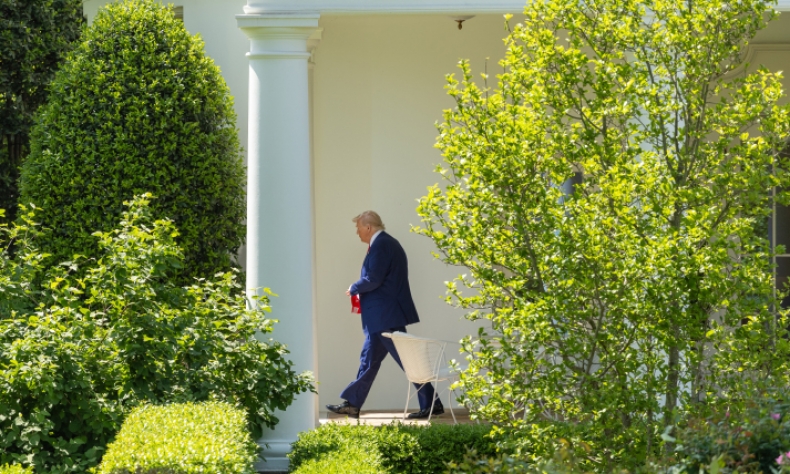
The Strait of Hormuz may prove to be Trump’s Waterloo, but one defined not by cannons, but by political overreach.
It seems that the Strait of Hormuz has become a defining test for U.S. President Donald Trump, with the strategic waterway threatening to upend his political future. Trump claimed aboard Air Force One on March 29 that Iran had agreed to most of a “15-point plan”—a boast he amplified by dubbing the waterway “Trump Strait.”
Tehran swiftly dismissed the claims as “excessive, unrealistic and unreasonable,” with Iranian parliamentary speaker Mohammad Bagher Qalibaf going further, alleging that Washington was seeding such reports to “manipulate financial and oil markets” and potentially lay the groundwork for assassination attempts against Iranian officials. Whether credible or rhetorical, such allegations underscore the depth of mutual distrust.
The U.S. approach against Iran, with the war beginning on February 28, rests on a misjudgment of Iranian society. The assassination of Iran’s ex-Supreme Leader Seyyed Ali Khamenei and other top officials did not topple the government, but instead unified Iran in its determination to fight foreign military intervention to defend sovereignty.
Trump told newspaper Financial Times on March 29 that he intended to “take the oil in Iran,” naming Kharg Island, Iran’s primary oil export terminal, which handles 90 percent of its crude exports, as a target, revealing a policy driven by resource appropriation.
Handling roughly one fifth of global oil trade, while the Strait has not been entirely closed, the de facto throttling of the world’s busiest chokepoint for oil has sent shockwaves through global energy markets: Oil tanker traffic has plummeted by over 90 percent compared to pre-conflict levels.
The conflict has widened as Iran’s “axis of resistance,” including Yemen’s Houthis, stepped up coordination, targeting shipping lanes and U.S. assets. Major carriers have suspended their Red Sea routes, detouring around the Cape of Good Hope—reversing hopes of normal shipping and raising global trade costs.
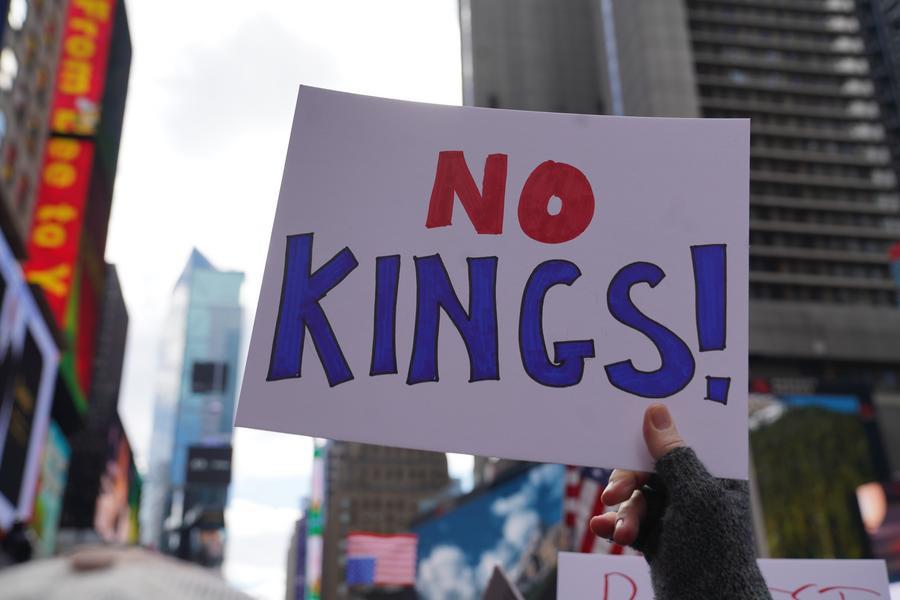
Millions showed up for the latest wave of “No Kings” protests, drawing an estimated 9 million people across more than 3,300 events worldwide on March 28, denouncing the unauthorized war and soaring living costs.
Geopolitically, Trump faces divergent agendas. French Foreign Minister Jean-Noël Barrot rejected “an imposed war on Iran,” calling for diplomacy. German Chancellor Friedrich Merz said the conflict is “not a matter for NATO,” yet Germany shares intelligence with the U.S. Saudi Arabia is torn, anxious about escalation but dependent on U.S.-provided security. Israel continues to press for strikes on Iranian nuclear facilities.
Domestically, Trump’s standing is eroding. Nearly 60 percent of Americans surveyed by an Associated Press (AP)-NORC Center for Public Affairs poll released on March 25 thought the campaign has gone too far. A March Harvard-Harris poll showed Trump’s job approval rating has dropped three points to 43 percent.
Trump’s staff shake-ups highlight internal division in Washington. Secretary of Homeland Security Kristi Noem was fired by Trump on March 5. Director of the National Counterterrorism Center Joseph Kent resigned on March 17 over policy disagreements with the Iran war strategy. Trump ousted Pam Bondi as attorney general on April 2.
The Republican Party is split. According to an AP report on April 1, with Vice President JD Vance and Secretary of State Marco Rubio viewed as the Republican Party’s strongest potential candidates in the 2028 presidential primaries, the two must balance their roles in the Trump administration with their future political plans. “It’s very obvious from the way Rubio talks about Iran and the way Vance talks about Iran that they are of different casts of mind.”
It’s almost an open secret that Vance disagrees on current Iran policy, and many senior lawmakers have already announced they will retire before the midterms in November.
With the midterms approaching, Trump’s Iran choices are tied to his survival. Doubling down risks higher oil prices and more protests; conciliation would anger his “Make America Great Again” (MAGA) base—and Israel. Trump’s own warning to Republican lawmakers—”If we don’t win the midterms… they’ll find a reason to impeach me”—sounds like a self-fulfilling prophecy.
The military operation’s cost is also staggering—$3.7 billion for the first 100 hours ($890 million daily), with total costs potentially hitting $1 trillion, according to a U.S. defense think tank. The International Crisis Group has warned that the standoff is in a “dangerous phase of informal escalation,” with neither side ready for all-out war but both escalating tensions.
The Strait of Hormuz may prove to be Trump’s Waterloo, but one defined not by cannons, but by political overreach.