Towards a Cooperative Global Future
 Facebook
 Twitter
 Linkedin
 Google +
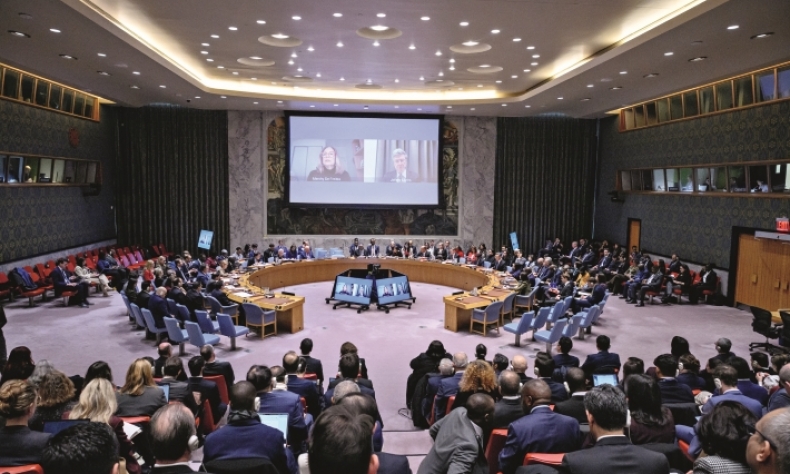
The choice facing the international community is not between order and chaos, but between a hierarchical order that breeds resentment and a pluriversal one that commands legitimacy. The GGI places its wager on the latter, not by denying history, but by insisting that its unfinished promises still matter.
As we enter the year 2026, the international system continues to receive shocks from Donald Trump, arguably the 21st century’s most disruptive US leader. His return to the White House in 2025 coincided with the 80th anniversary of the defeat of fascism and the establishment of the United Nations, the multilateral platform that carried the world’s hope for peace, restraint and collective security. The coincidence was unsettling. A world order designed to limit power now confronts a moment in which power is exercised openly, transactionally and unapologetically.
Early this year, the US military even overtly carried out a large-scale strike against Venezuela, an independent sovereign country, and captured its President Nicolas Maduro and took him to the US to face trial. Such egemonic acts of the US seriously violate international law and Venezuela’s sovereignty, and threaten peace and security in Latin America and the Caribbean region.
The first year of Trump’s renewed presidency has laid bare what has long been implicit. Tariffs, sanctions, unilateral actions and threats have displaced diplomacy. Allies and adversaries have been treated with equal indifference. Large and small states alike have been pressured into compliance through economic coercion rather than persuasion or law. Multilateral institutions have been sidelined when inconvenient and instrumentalised when useful. What once passed for leadership has hardened into domination.
This is not simply a change of style. It represents the apex of hyperimperialism, a phase in which hierarchy is no longer masked by universalist language. The rules-based order still exists on paper, but in practice rules are conditional, selectively enforced and frequently suspended in the name of national interest. The result is a global governance crisis that is moral as much as institutional.
Economic instruments have become the preferred tools of discipline. Sanctions and trade restrictions are deployed less as collective security measures than as mechanisms of punishment. India has faced penalties for strategic economic choices. Brazil has been targeted despite following due process. South Africa has been sanctioned for addressing historical injustice. Smaller states such as Lesotho have also been drawn into this logic. This is not neutral rule enforcement. It is hegemonic statecraft recast as principle. Its effects are predictable: fragmented markets, delayed development and widening inequality. Can global governance survive when sovereignty is treated as conditional and development is subordinated to geopolitical rivalry?
From declaration to action
It is against this backdrop that China’s Global Governance Initiative (GGI) must be understood. Announced in September 2025 at the Shanghai Cooperation Organisation Plus meeting, the initiative did not emerge as a technical reform proposal. Instead, it was a response to a world in which unilateralism no longer pretends to be exceptional. The GGI responds by trying to return to the first principles. Sovereign equality is treated not as diplomatic ornament, but as a governing rule. International law is affirmed, but with insistence on uniform application. Multilateralism is reclaimed as a practice rather than a slogan. Development is placed at the centre, not as charity, but as justice. Action becomes the measure of legitimacy.
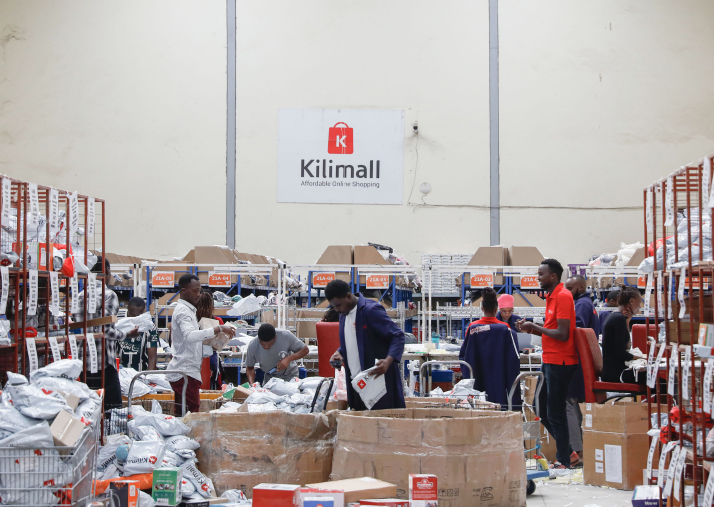
This emphasis on action is critical. For decades, global governance has been flooded with declarations that fail to materialise. Climate finance commitments fall short. Development pledges dissolve into procedural delay. The GGI seeks to change this pattern by arguing that credibility flows from delivery. Governance must be judged by outcomes rather than intent.
There is also a longer intellectual lineage behind it. The initiative echoes former Chinese Premier Zhou Enlai’s Five Principles of Peaceful Coexistence, articulated in the 1950s and centred on sovereignty, non-interference and equality. Their continued relevance is revealing. The post-war order was never fully realised, particularly for the Global South.
Beyond multipolarity
What gives the GGI contemporary force is its rejection of singularity. It advances a pluriversal understanding of world order. This goes beyond multipolarity. It recognises that no civilisation holds a monopoly on wisdom, no development path is universally transferable, and no state has the authority to dictate the terms of progress for others. For societies long subjected to external conditionalities, this language restores dignity.
The initiative also reframes peace itself. In dominant Western narratives, peace is often reduced to the absence of open conflict, even as inequality and underdevelopment worsen beneath the surface. The GGI sets a more demanding standard. Peace must be productive. It must generate inclusive growth, resilient health systems, education and technological capacity. Development becomes the foundation of stability rather than its by-product.
Critics may question whether this vision is compatible with existing international rules. It is. The initiative is anchored in the UN Charter and affirms its core principles. What it challenges is selective application. It links legality to justice and procedure to outcomes. Chinese experience enters here not as doctrine, but as practice, where governance is evaluated by whether it improves lives through infrastructure, education and technology sharing.
As 2026 begins, the prospects of the GGI depend on whether it continues to address real needs rather than presenting abstract ideals. Early signals suggest that it does. Platforms emerging from the Shanghai Cooperation Organisation Plus process are not symbolic gestures. Development finance mechanisms, security cooperation centres, and green and digital initiatives give institutional form to principles that have long lacked expression.
More importantly, the initiative offers both language and infrastructure for a Global South consensus. It’s not a consensus of grievance or retaliation, but one grounded in development, dignity and reciprocity. Fragmented voices gain coherence when they share rules and platforms. Norms shift when practice accumulates.
The first year of Trump’s presidency has shown where hyperimperialism leads. The choice facing the international community is not between order and chaos, but between a hierarchical order that breeds resentment and a pluriversal one that commands legitimacy. The GGI places its wager on the latter, not by denying history, but by insisting that its unfinished promises still matter.
The author is Director of Centre for Public Policy and African Studies, University of Johannesburg, South Africa.