Turning Black Waste into a Green Resource
 Facebook
 Twitter
 Linkedin
 Google +
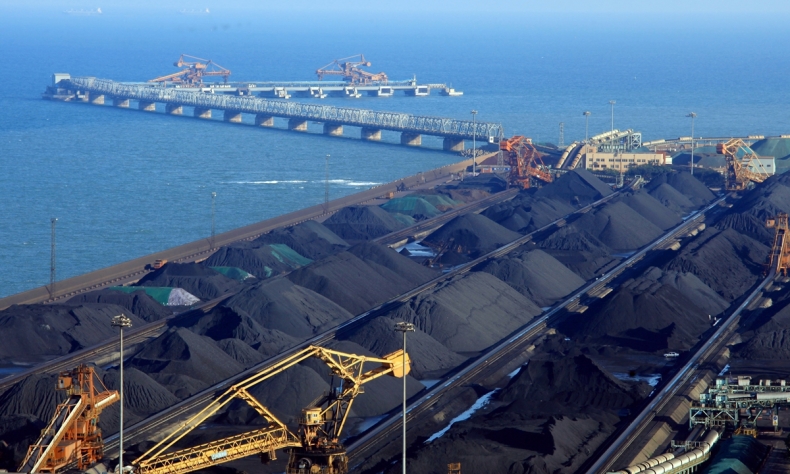
To deal with a polluted by-product of coal production, central China’s Shanxi Province has explored a governance path that addresses both the symptoms and root causes.
Coal gangue is a typical kind of solid waste produced during coal mining and washing process. Shanxi, a province renowned for its coal richness in China, has been facing the ecological challenge of coal gangue accumulation from extensive mining for a long time.
Over the past few years, local authorities have been pioneering an innovative path to tackle coal gangue by implementing a comprehensive management system and recycling initiatives. As a result, what once was known as an “ecological burden” is now being transformed into a potential resource.
Management challenges
The total output of raw coal which Shanxi’s large-scale enterprises reported for 2024 was 1.27 billion tonnes, accounting for approximately 26.7 percent of China’s national total during the same period. Since coal gangue typically constitutes over 10 percent of raw coal production, the massive daily volume of gangue generated, compounded by the large stock that accumulated over the past years, created a great challenge at one time.
In some villages within the Fenhe River Basin, many distressing scenes emerged: black particulate matter was a daily nuisance, creating a layer of dust from coal gangue on the glass windows of local homes, and landfills lacking effective protective measures led to declining groundwater quality, forcing villagers to rely on filtered water for drinking. Even more alarming was the fact that some gangue piles were situated close to tributaries of the Yellow River, where harmful substances contaminated water bodies through surface runoffs and underground seepage, threatening the ecological security of the Yellow River Basin. Despite being repeatedly penalized, certain enterprises persisted in their violations such as not taking adequate steps to reduce dust and illegal dumping. All of this posed a great challenge to local governance.
Regarding this, Li Huiquan, a research fellow at the Institute of Process Engineering of the Chinese Academy of Sciences, pointed out, “If coal-based solid waste from large energy bases was stored over a long period of time, it will not only create an excessive ecological burden but ultimately lead to the predicament of having ‘no land left for disposal.’ Then it will cause a crisis for both the government and enterprises.”
Breaking the deadlock
Confronted with these challenges, Shanxi actively took steps to control and utilize coal gangue throughout the whole coal mining and production process.
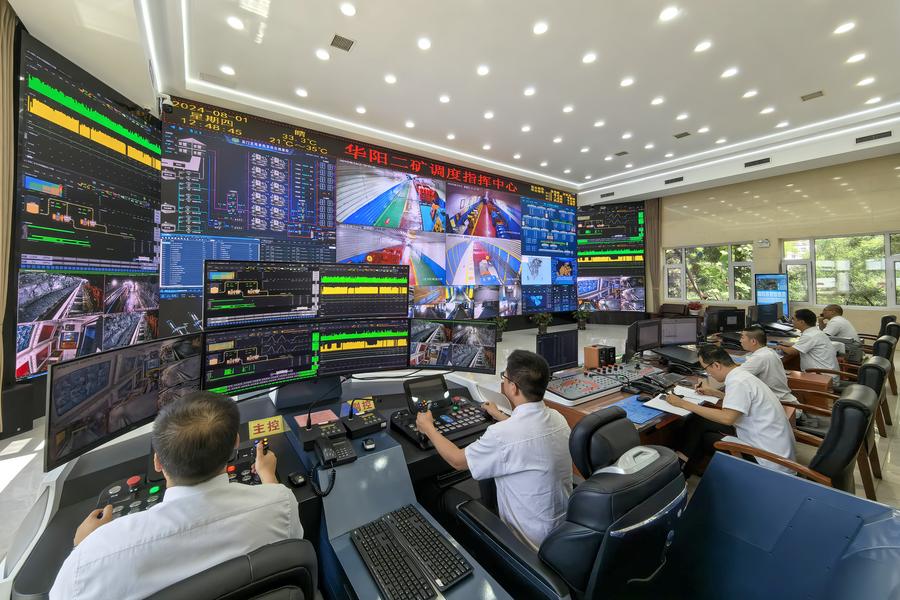
At the control center of Sanyuan Coal Mine under Jinneng Group’s Changzhi Company, real-time data on electronic screens outline a clear path for “reduction at the source.” By adopting a new mining technology, the mine is able to directly convert gangue waste into filling material that is transported through underground pipelines. This approach not only eliminates the need of storing it above ground, but also enables the mine to recycle coal resources. In 2024 alone, Jinneng Group recycled over seven million tonnes of coal resources with this technology, truly turning waste into a resource.
A more technologically advanced application is found at Shanxi Lu’an Chemical Gaohe Energy Co.’s filling and mining demonstration base. Here, coal gangue is mixed with fly ash, cementitious materials, and other components to create a paste-like slurry that is injected into underground goaves. This intelligent model not only effectively controls surface subsidence but is also a replicable template for green mining. To date, Shanxi has established a mature green mining system that consists of 55 green mining pilot demonstration coal mines and 19 gangue backfilling and filling mining demonstration mines.
Beyond underground filling, the use of coal gangue in the construction materials sector has also yielded notable results. At a new building materials plant of Shanxi Coking Coal Shanxi Coal International, this former black waste is transformed into bricks through processes like crushing, molding, and sintering. Since the plant’s establishment in 2008, it has consumed 3.06 million tonnes of coal gangue and produced 1.06 billion bricks. This recycling method not only utilizes solid waste stockpiles but also replaces traditional clay bricks, reducing the consumption of land resources.
In Shuozhou City, Shanxi, low-calorific value coal-based power generation has become a significant channel for gangue consumption. The China Coal Pingshuo Antaibao Thermal Power Project, using coal gangue and coal slime as fuel, has built a domestically leading 5G+ smart power plant. It consumes an annual amount of 1.5 million tonnes of solid waste. This model of coal-power integration and local conversion helps efficiently utilize the thermal energy in coal gangue, forming a closed-loop energy cycle.
In Gujiao, a county-level city, coal gangue is shifting from being an “ecological burden” to a valuable asset. A significant breakthrough in the research of synergistic use of resources and ecological restoration technologies has realized a win-win situation between economic development and ecological protection.
Governance for the long run
Behind technological innovation lies the solid institutional support. In July 2024, Shanxi Province issued the Solid Waste Pollution Prevention and Control Action Plan, which outlines eight main tasks and 25 specific measures, focusing on the disposal and utilization of bulk solid waste such as coal gangue.
In response to issues such as unclear standards and insufficient incentives, Niu Yanzhi, member of the Shanxi Provincial Committee of the Chinese People’s Political Consultative Conference (CPPCC), proposed the formation of regulations to prevent and control environmental pollution caused by coal gangue. She advocated for a combination of policy incentives and market mechanisms, and the establishment of stricter environmental standards and differentiated management strategies.
The CPPCC Shanxi Provincial Committee identified the “Treatment of Pollutant Discharges along the Mainstream of the Yellow River in Shanxi Province” as a key topic for special discussions at its Standing Committee meetings, during which the participating members deliberated about key aspects of ecological conservation and pollution prevention in the Yellow River Basin.
Dai Lingchun, member of the CPPCC Shanxi Provincial Committee and chairperson of Shanxi Dadi Zhonggong Environment Protection Technology Co., stated that it is essential to strictly implement the Shanxi Province Solid Waste Pollution Environment Prevention and Control Regulations. Through innovative mechanisms, policy support, market guidance, and technology, the “ecological burden” can be transformed into a development advantage, which will in turn provide strong support for the high-quality development in the Yellow River Basin.
Many other solutions were proposed as well. Hao Zhongxiang, member of the CPPCC Shanxi Provincial Committee and chairman of the CPPCC Linfen Municipal Committee, proposed the idea of building a coordinated whole-region governance system. This involves implementing the principle of “sharing responsibility for low water quality and sharing rewards for effective treatment” to promote coordinated efforts between upstream and downstream areas.
Ban Fengmei, member of the CPPCC Shanxi Provincial Committee and dean of the College of Resources and Environment at Shanxi University of Finance and Economics, recommended the introduction of a technical system for basin-wide water quality management to achieve precise closed-loop management.
Gao Li, member of the Shanxi Provincial CPPCC Committee and chairwoman of Shanxi Ruichengda Environmental Technology Co., put forward suggestions for the comprehensive improvement of the rural water environment quality in counties and cities along the Yellow River. These include online monitoring measures to reduce chemical fertilizers and pesticides while increasing efficiency.
Thanks to these explorations, the deep-seated challenges that exist in coal gangue management are gradually being resolved. From strict oversight by environmental departments to clarifying corporate responsibility, from investment in technology research to improving the policy system, Shanxi is building a governance framework which is government-guided, enterprise-led, market-driven, and participated in by the whole society. The province’s practice provides valuable experience for energy-producing regions across the country.
Standing by the Fenhe River, the once common sight of black silt is gradually being replaced by greenery. The story of black coal gangue turning “green” is a microcosm of Shanxi’s efforts to resolve the contradiction between ecology and development. It is also a vivid illustration of the green and low-carbon transition of China’s energy industry. Through all these efforts, this fertile land is poised to contribute more strength to China’s ecological progress.
Liu Jing is vice chairman and secretary-general of the Media Committee of the World Green Design Organization (WGDO) and deputy director of the Eco China channel of china.com.cn.