U.S. Push to Topple Iran Serves Global Push for Primacy
 Facebook
 Twitter
 Linkedin
 Google +
The U.S. is essentially waging war against the multipolar world, targeting both leading powers of the multipolar world while targeting and dismembering aspiring members of it.
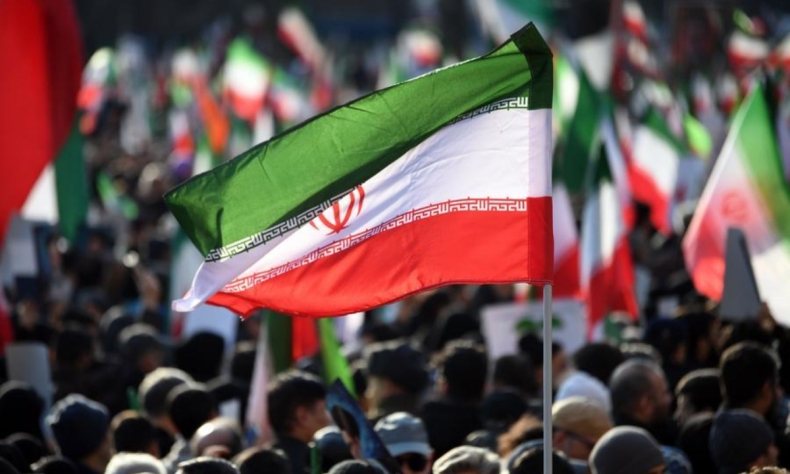
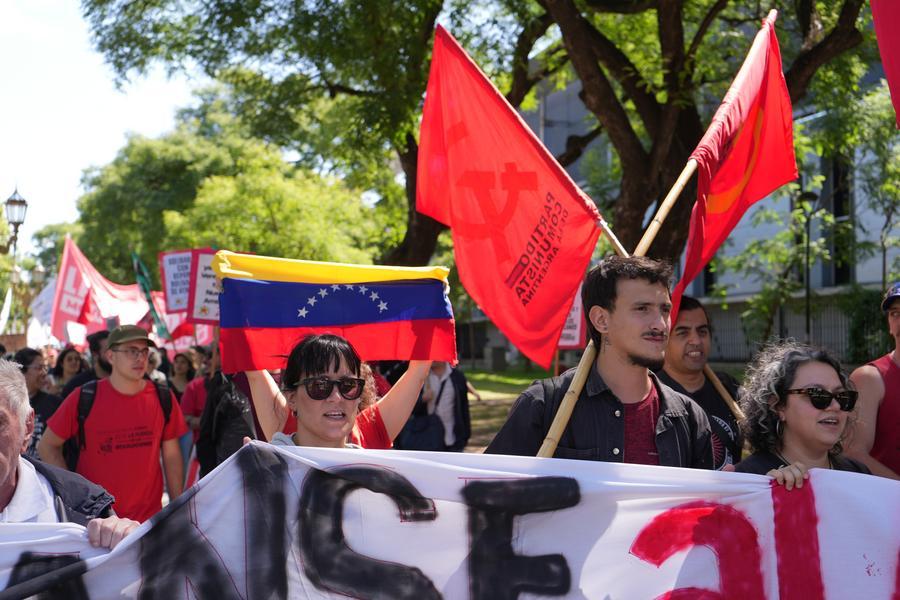
Large-scale U.S.-sponsored protests and armed militants are targeting major cities across Iran, destroying property as well as killing security personnel and civilians alike.
The Western media has deliberately mischaracterized the violence as a one-sided government crackdown, omitting any mention of armed opposition in the streets and merely conceding that, “members of the security forces have also been killed.”
In the same articles, use of Starlink satellite connections is mentioned, implying U.S. technology is being used to circumvent government efforts to restore order.
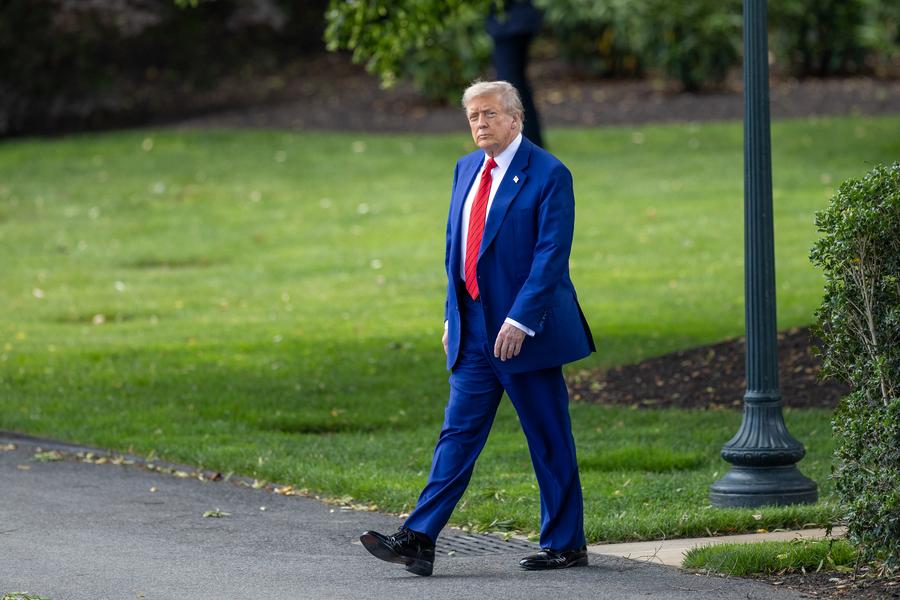
The dishonest narrative bolsters U.S. Government threats that killing protesters will be met with a military response, made at the same time U.S. President Donald Trump defends U.S. immigration agents killing an American in the street during protests against their actions.
The protests are just one part of a decades-long campaign against Iran documented by Western journalists and published in U.S. policy papers stretching back as far as the George W. Bush administration.
Long-laid plans
Following the so-called “war on terror” after the September 11 attack in 2001, the U.S. not only invaded Afghanistan (2001) and Iraq (2003), it also began targeting Iran and its network of allies across the Middle East.
In a 2007 New Yorker article, journalist Seymour Hersh noted the U.S. was working to not only undermine Hezbollah in Lebanon but was also involved in clandestine operations “aimed at Iran and its ally Syria.” Toward that end, spanning not only the George W. Bush administration, but also those of the subsequent Obama, Trump and Biden administrations, the U.S. would wage war and proxy war against Libya, Yemen, Syria, Iraq, Lebanon and, of course, Iran itself.
Despite Russian and Iranian attempts to prevent the collapse of Syria, in late 2024 it was overrun by U.S.-backed militants led by Hay’at Tahrir al-Sham, a U.S.-listed foreign terrorist organization (FTO) that was delisted under the current Trump administration—the very extremists Hersh warned about in 2007. This was accompanied by U.S.-backed Israeli strikes eliminating Hezbollah’s senior leadership in Lebanon that same year.
In mid-2025, the U.S. provided support to an Israeli strike on Iran, and then conducted its own strikes targeting not only Iran’s nuclear program, but also its ballistic missile program and air defense network. Eliminating Iran’s allies across the region in order to isolate it, using a toppled Syria as an air corridor to launch strikes directly on Iran, the use of U.S.-listed FTOs (Mujahedin-e Khalq) and street violence to destabilize and overthrow the Iranian government were all listed in the Brookings Institution’s 2009 paper Which Path to Persia?
In its table of contents it lists “Diplomatic Options,” including “An Offer Iran Shouldn’t Refuse: Persuasion,” which manifested as the Joint Comprehensive Plan of Action or “Iran Nuclear Deal,” under the Obama administration.
The paper notes using this option was not an attempt to achieve a diplomatic breakthrough, but to depict Iran as “ideologically blinkered” and as having subsequently “brought it on themselves by refusing a very good deal” in regard to pre-planned U.S. military strikes. The paper also lays out “military options” including U.S. airstrikes and a chapter titled, Leave it to Bibi: Allowing or Encouraging an Israeli Military Strike, as has since unfolded.
Another section of the paper is titled “Toppling Tehran: Regime Change,” including chapters dedicated to “The Velvet Revolution: Supporting a Popular Uprising” and “Inspiring an Insurgency: Supporting Iranian Minority and Opposition Groups.”
The paper would emphasize, “the United States could opt to work primarily with various unhappy Iranian ethnic groups (Kurds, Baluch, Arabs, and so on) who have fought the regime at various periods since the revolution. A coalition of ethnic opposition movements, particularly if combined with dissident Persians, would pose a serious threat to regime stability. In addition, the unrest the groups themselves create could weaken the regime at home. “
This is precisely what is taking place inside Iran today: The use of asymmetrical U.S. capabilities to overcome Iran’s significant conventional military deterrence, attempting to create sufficient instability ahead of an unpausing of U.S.-led military strikes on Iran in the hopes of finally toppling the government.
Beyond the Middle East
The targeting of Iran is just one part of a global U.S. foreign policy objective. Just as the U.S. has eliminated Iran’s allies across the region to isolate it, the U.S. is attacking, degrading and eliminating China’s partners around the globe to isolate China.
In just this past year, the Trump administration has escalated, not ended, the various wars inherited from the Biden administration, including CIA-organized strikes on Russian energy production and strikes on Russian energy exports.
The Trump administration has also launched new campaigns including on Iran and more recently Venezuela. All three nations count China as their primary oil export partner, and with the recent elimination of Venezuela and renewed violence targeting Iran, the U.S. will be closer than ever to fulfilling the prerequisites for a more open and concentrated confrontation with China itself.
The U.S. is essentially waging war against the multipolar world, targeting both leading powers of the multipolar world while targeting and dismembering aspiring members of it. This requires a multipolar response, not just in terms of countering America’s traditional military power, but also its so-far unchallenged domination of global information space.
U.S.-based social media still dominates the information space of virtually every nation on Earth with few exceptions. The multipolar world must not only assist each member nation in securing their individual information and thus political space, but also must create multipolar alternatives to U.S.-based and controlled platforms like X, Facebook, Instagram and YouTube, which play a disproportionate role in shaping the minds of the global public.
Without such means, regardless of military might, if the U.S. is ultimately determining what the people in targeted nations see, think and believe, it is possible for the U.S. to have these weapons pointed in entirely the opposite direction—not only at the governments of these targeted nations themselves, but once overthrown—at China and Russia themselves.
Big countries like China and Russia have demonstrated significant military capabilities forcing the U.S. to resort to an asymmetrical pursuit of primacy but only time will tell if the multipolar world can likewise demonstrate significant defense against these asymmetrical capabilities, or will continue to fall prey to them.
The author is a Bangkok-based independent geopolitical analyst and a former U.S. Marine.